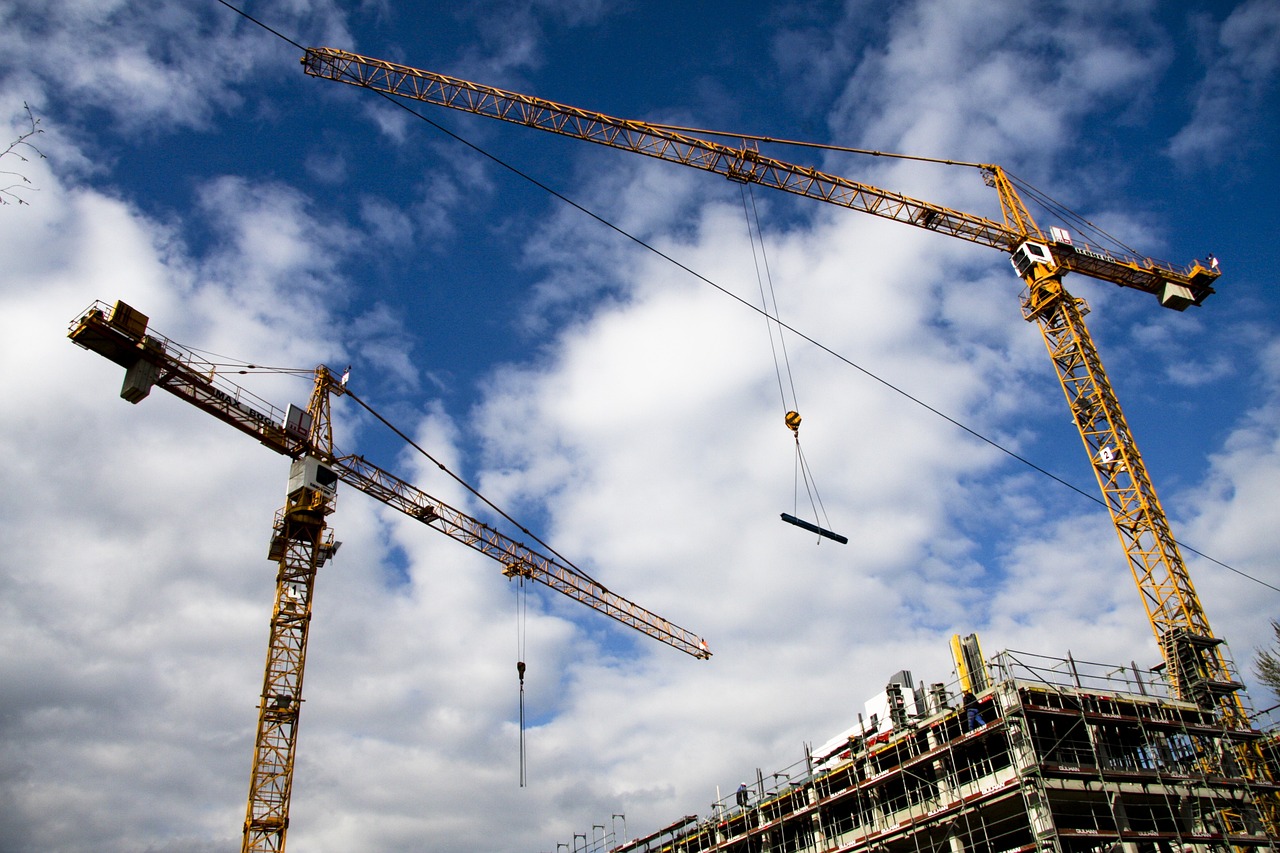
The construction industry grew last year. It strengthened by almost a tenth. However, the housing market is troubled by slow permitting.


The Czech Statistical Office published construction industry results for December of last year. They show that construction output increased by 5.3 percent during this period. The sector was successful for the rest of last year as well. Nevertheless, it is not enough. There is a particular interest in new housing.
Production in building construction, which also includes the construction of apartment buildings, increased by 2.3 percent in the last month of last year. Civil engineering construction grew by 10.9 percent. Year-on-year, the entire sector strengthened by 5.3 percent.
"In December, the construction industry thrived, with production growing both year-on-year and month-on-month, and there was growth in both building and civil engineering construction,"
stated Radek Matějka, Director of the Department of Statistics for Agriculture and Forestry, Industry, Construction, and Energy of the Czech Statistical Office, in a press release.

Construction Industry on the Rise
The construction industry was already strengthening in the fall. For example, in October it grew by 7.1 percent and in November by 6.1 percent. For the whole of last year, residential buildings recorded an increase of 8.6 percent and engineering structures by 10.5 percent. Production in both these sectors increased year-on-year in all quarters of last year.
In December, the construction of 2,774 apartments was initiated. This number decreased year-on-year by more than 11 percent. A total of 2,988 apartments were completed, which marked a year-on-year growth of 56.1 percent.
Altogether, the construction of almost 36,000 apartments was started last year, which after the previous year's growth meant a year-on-year decrease of 2.2 percent. However, the number of completed apartments increased. Their number rose year-on-year by 11.5 percent to 33,742 units.
The growth was mainly driven by the construction of family and apartment buildings, and apartments completed in non-residential buildings. More apartments were completed intensively in the second half of the year, but year-on-year growths in the third and last quarters were partly influenced by a lower comparative base from 2024. The places where the most apartments were started and where the most were completed included Prague, the Central Bohemian and South Moravian regions.
Housing Attracts
The high demand for housing has been supported by several key factors. One of the main factors was the gradual reduction of mortgage interest rates, which also led to the achievement of the second highest volume of granted mortgages in history.
At the same time, the uncertain development in stock markets affected the residential market, leading some households and investors, especially in the first half of the year, to move their funds into new apartments as a stable form of capital storage.
Furthermore, there was a gradual improvement in the domestic economic situation, but also pressure caused by the continued rise in new apartment prices and decreasing supply. The postponed demand from the previous period, especially from the years 2022 and 2023, when some buyers were waiting for more favorable conditions to make a purchase, also played a role.
Insufficient Supply
"The replenishment of supply is long-term hindered by ineffective permitting of new construction, and further development will also be influenced by a lack of suitable land and capacities in the construction industry. An improvement in the situation could occur no earlier than after 2027 in connection with the planned modifications of the new building law and the expected adoption of the Metropolitan Plan. The ongoing imbalance between very strong demand and insufficient supply will continue to put pressure on price growth,"
described the current situation in the metropolis in a press release by the chairman of the board of Skanska Residential, Petr Michálek.
While 7,380 apartments were approved in the capital city last year, of which 5,907 were in apartment buildings. According to IPR Prague, however, at least 10,000 new apartments need to be built here annually.
"The current form of the Building Act does not fulfill its purpose. Without a fundamental systemic change, a long-term sustainable development of the construction industry or the entire economy cannot be expected. And certainly not an improvement in housing availability. A solution could be brought by an amendment to the Building Act, which has already passed the first reading in the Chamber of Deputies,”
wrote LP-Life executive director of Central Group Michaela Váňová.
Interest in construction, including residential construction, can also be expected this year.
"This year, in the more affordable housing segment, demand will be driven by smaller and practical one and two-bedroom apartments with quality layouts in good transport accessibility. The premium and luxury segment is driven by quality and limited supply,
commented the development to the editor, founder of Y&T Luxury Property, Elena Jakubovič.
Sources: author's article, personal inquiry, Czech Statistical Office