The CNB did not change the key interest rate. A potential increase in the future cannot be ruled out.

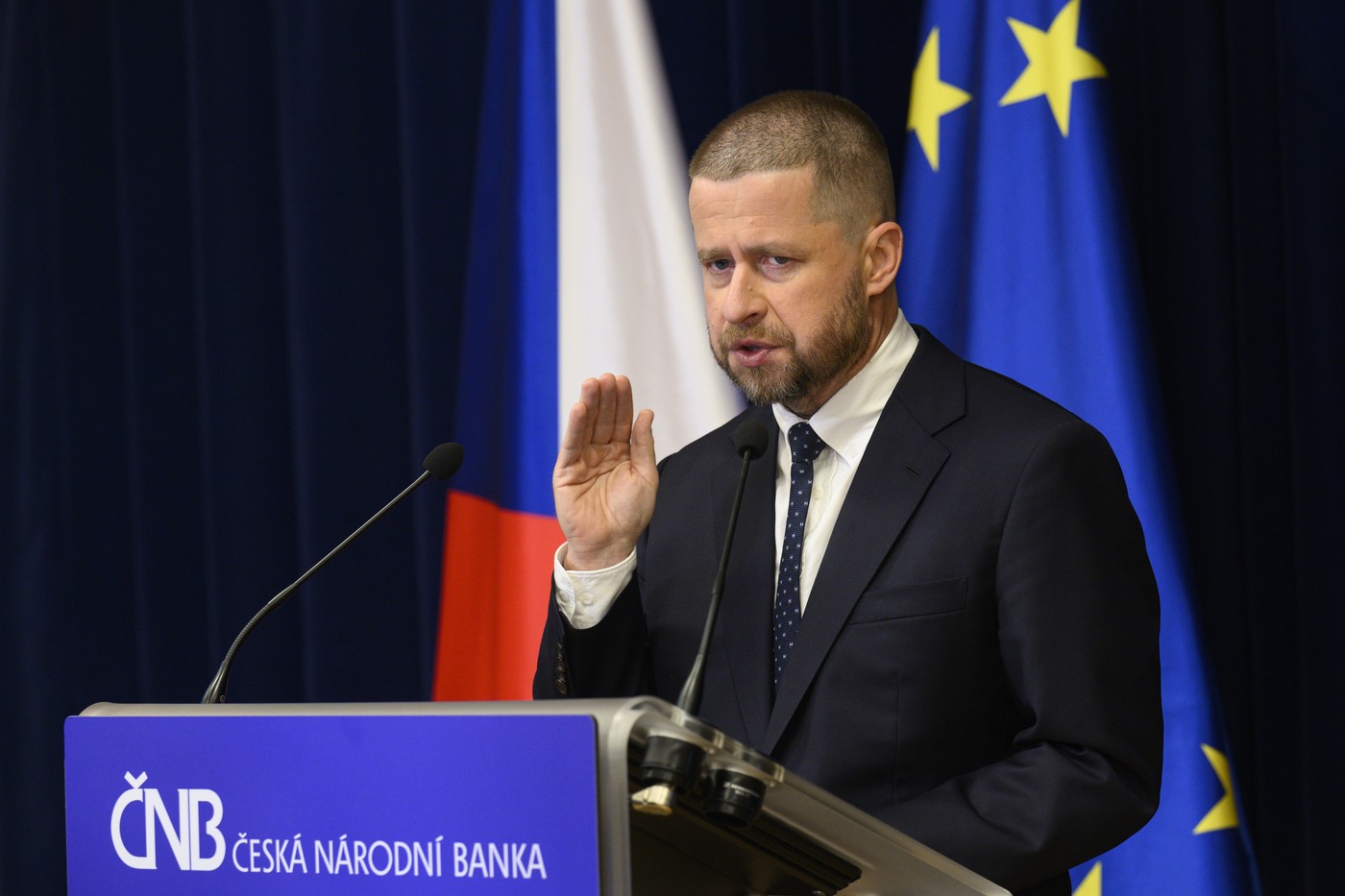
The Bank Board of the Czech National Bank unanimously decided today. The key interest rate was kept at 3.5%. The information was provided by the Director of the Communication Department of the CNB, Jakub Holas. Despite a slight acceleration in April's inflation, this conclusion was rather expected. The financial market's expectations have therefore been met. The key interest rate remains at the same level since last May.
Analysts from ČTK agreed that the result of Thursday's meeting was expected by everyone.
“No one expected the CNB to change interest rates at its May meeting. Their stability was therefore in line with the market's and analysts' expectations,”

said Jan Berka, chief economist of Portu, for ČTK.
The environment in which the bank board makes decisions remains burdened by a number of uncertainties, according to him. The greatest attention is paid to pro-inflation risks stemming from the conflict in the Middle East, he noted.
"The approach seemed clear in advance given the previous statements of CNB officials. They stated that they perceive the risks stemming from the conflict in the Middle East, but they want to wait for its further development,"
Martin Kron, an analyst at Raiffeisenbank, supported the opinion for ČTK.
Inflation still moving up
Not much has changed since the last monetary policy meeting in March. The base rate remained the same, as did inflation. It is still moving up, influenced partly by the conflict in the Middle East. Nevertheless, its figures are still low enough that the CNB does not need to take any hasty steps and can calmly monitor the gradual development of the entire situation.
"Although inflation is heading upwards, the domestic central bank is, unlike the European one, in a comfortable position. With a rate of 3.50 percent, it can currently wait for a possible early end to the conflict in the Persian Gulf and analyze its potential impact on prices,"
added Petr Dufek, an analyst at Credit Bank.
He further stated that an acute intervention is definitely not necessary now, especially since the Czech National Bank has its rates high, and yet Czech inflation is among the lowest in the entire EU.
Significant Uncertainty Troubles Michl
At the press conference, the governor of the Czech National Bank, Aleš Michl, shared his perspective. According to him, it is necessary to maintain a significantly strict monetary policy. He believes that risks prevail in the economy concerning rising inflation.
"The accelerating dynamics of loans contribute to the increase in the amount of money in the economy. The labor market remains tight, and wages continue to grow at an increased pace. Fuel prices have risen. Household consumption is also rising. Inflationary pressures are still coming from the increased growth of service and real estate prices."
summarized at the press conference.
Mortgage rates have increased despite government promises
The billboards were full of it, and promises were made one after another. It has been six months since the elections, and instead of the promised reduction, we are getting the opposite. In May, there was a slight monthly increase. According to Swiss Life Hypoindex data, this is the highest since December 2024.
"The market is further constrained by geopolitical risks, oil prices, inflation expectations, and higher interest rate swaps. Without calming down in the world, a quick return to cheaper mortgages cannot be expected. More important than the month-to-month change is the fact that the mortgage market settled back above the five percent threshold after the April jump and so far does not find a clear impulse to return to lower levels,"
said Swiss Life Select analyst Jiří Sýkora.
"Banks tend to lower mortgage rates more slowly than they raise them. They often take the opportunity to raise them quickly,"
added the head of the company's product department, Tom Kadeřábek.
Sources: original text, ČTK, press conference, ceskenoviny.cz, novinky.cz, forbes.cz