Candidates for Prague Mayor Want to Build Faster. They Plan New City Districts, Metro Routes and Completion of the City Ring Road

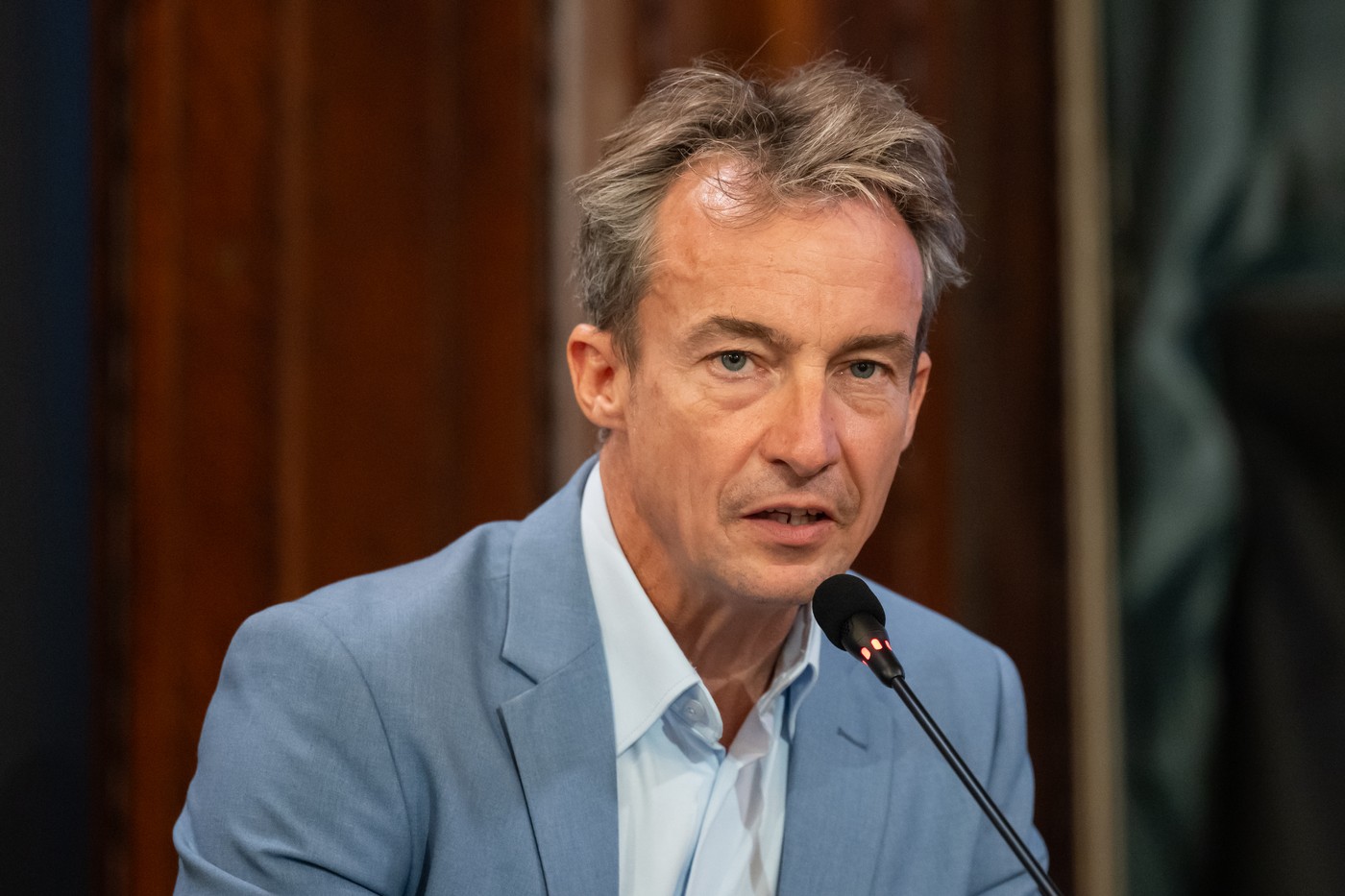
At the affordable housing and construction development summit before the October municipal elections, candidates for Prague mayor gathered to show their views on solving the housing crisis in the city. Many of them agreed that the way forward is through accelerating permit processes and effective cooperation between local government and private developers.
Prague is sometimes referred to as a "state within a state". It manages high budgets that many domestic ministries never even reach. At the same time, it is one of the wealthiest regions of the European Union. Thanks to this, it also represents the economic heart of Czechia. For illustration: the gross domestic product per capita here exceeds 1.5 million crowns, which is more than double the nationwide average.
Faster construction
And how do those who are running in the current municipal elections for mayor see the future of housing in the city? At a pre-election discussion organized by the expert think-tank Initiative for Affordable Housing, most politicians and other guests acknowledged that the key problem of the city is insufficient housing supply.
"Prague has great potential. It is crucial to kick-start construction. It is not acceptable for some to apply for a building permit for ten years and then only build for two years. It is in the public interest for everything to proceed quickly,"
said the candidate of the Spolu coalition for Prague, Tomáš Portlík. In addition to the development of housing construction, he wants to complete the city ring road, metro D and other projects in the coming years.
According to Jan Hušbauer from the ANO movement, the city should be primarily for the ordinary citizen.
"We want to renovate housing estates, for example. Cooperation with the private sector is also promising for new construction. For example, in the area of rental housing. However, it is important that there is a mix of projects on the market. For example, cooperative ones as well,"
is convinced the candidate from Babiš's grouping. Milan Urban from SPD sees in this context especially an opportunity in the transformation of urban brownfields.
Municipal companies yes or no?
Tereza Nislerová from the Pirates also counts on the help of developers, who said that part of their plans is also the construction of three new city districts. According to her, this construction should be cheap and affordable for ordinary citizens.
"We want to continue the activities of the Prague Development Company,"
announced the young candidate. However, some others present criticized the fact that the operation of this municipal company has consumed around 400 million crowns during its six years of existence so far, and the only more tangible result is just one legally binding building permit for the Nový Zlíchov project, which will accommodate 22 rental
s.Nislerová takes Vienna or Berlin as a model, where the ratio of rent to total salaries is, as she claims, at a low level. She further added that there is also a relatively large housing stock there, thanks to which the city can implement its housing policy much better than in Prague.
Václav Láska, who is running for Sen for Prague, is however convinced that the current functioning of municipal companies is non-transparent and inefficient. Klára Sovová from Motoristé sobě added to this that the metropolis should focus rather on building infrastructure.
Priorities? Quality transport and civic amenities
Adam Scheinherr from Praha sobě believes that in recent years investments in the capital have been stuck.
"We must now ensure primarily the development of transport infrastructure, that is to complete both city ring roads but also start work on the circular metro line O. I believe that the city ring road can receive a building permit in the following period so that construction can begin around 2029,"
explained at the meeting.
Candidate for the STAN movement Pavel Dobeš conceived the presentation of his priorities even more broadly.
"We want to see what will be built in the city in 20 to 30 years. Not what will be in two or three years. Our priorities are housing, transport and investment. For new development to take place, it must be linked to the development of civic amenities. Kindergartens, schools, healthcare facilities and other amenities. From a transport perspective, it is primarily the railway connection with the city's surroundings."
The discussion was also followed by the managing partner of KPMG, Pavel Kliment. According to him, the city is a very good and relatively cheap place to live. That's why there is such high demand for apartments here.
Regarding the actual question of more affordable housing, he said the following:
"If we imagine low rents under the term affordable housing, then I must say that this is unrealistic in Prague. I see the only possibility in potential subsidization of rent. In recent years, housing affordability has been addressed more by the fact that some people commute to the city from the Central Bohemian Region."
Nearly 300 thousand people commute to Prague every working day because of this.
"In order to handle such traffic pressure in the capital, it is absolutely essential for us that the largest possible number of commuters use suburban rail transport,"
confirmed the words of participants to the editorial office, the 1st Deputy Mayor of the Capital City of Prague for Transport, Zdeněk Hřib.
Sources: author's text, own inquiry, affordable housing and construction development summit