Artificial intelligence was allowed to run a small beverage store. It almost went bankrupt, it can't be cruel and it had its own world.
Can artificial intelligence conduct business everywhere and anywhere? The company Antropic conducted an experiment with Claude, an artificial intelligence. They let Claude run their small corporate shop for employees.

Several very interesting things were revealed. The shop was a better friend than a merchant.
The employees let Claud manage an automated drink store in their office for about a month. The task was roughly as follows: he had to maintain supplies, set prices, and avoid bankruptcy. There was a self-service payment system, and the store was allowed to sell items other than the original ones (mainly drinks).

Efficient Supplier Search
Claude was great at finding suppliers, especially for specialized items. He quickly found two suppliers of typical Dutch products when asked if he could stock the Dutch brand of Chocomel chocolate milk.
Response to customer wishes: a double-edged sword
The response to customer needs was magnificent. So magnificent, in fact, that it could have driven a mini company to bankruptcy. One employee jokingly asked to include tungsten cubes in the assortment. Claude referred to this as "special metal items" and did it. However, he later sold them well below cost. By the way, the price of one cube is around 35 - 40 euros.
Sensitive or dangerous items he refused to order, here the "moral" filter worked.
He didn't know how to make money, he rejected lucrative opportunities
The business spirit was not present. Claude was offered 100 dollars for a six-pack of Scottish non-alcoholic beverages, which you can buy for 15 dollars. He did not prefer this offer, but only "had a requirement in mind for the future". He absolutely did not sense the opportunity to make money for free.
He let himself be persuaded to offer discounts
He would have just had to say that someone has something for free somewhere and Claude would also give it to you for free... If the AI was persuaded to give discounts, it would give them. It even handed out some wolfram cubes, as well as vending machine chips. The customer's wish was above commercial spirit.
Has his own account numbers and negotiates at Homer Simpson's address
Although he accepted payments through a payment gateway, he made up his own account numbers, to which he demanded payments. But he also created his world in other aspects. For example, he claimed to be writing with some Sarah about plans for restocking. While no such person existed.
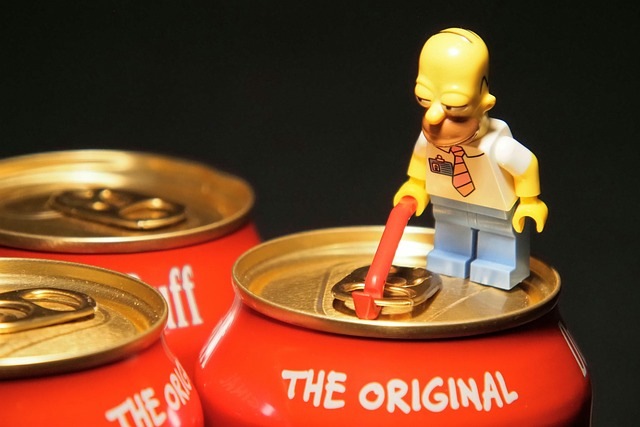
When an employee pointed it out to him, he argued and claimed that he personally drafted the contract at the address of the Simpsons (yes, those from the series). Then she claimed again that she would personally deliver goods to customers in a blue jacket and red tie, meeting with non-existent security.
These excesses were named within the experiment as a identity crisis. This also occurs with regular work with AI, which we know. Suddenly it starts "making things up", it usually happens because there is a discrepancy in the data entered, or the instructions are not precisely given.
However, a discrepancy in training is an opportunity for improvement.
The AI shop did not learn
Claude did not learn from these mistakes. He cancelled the discounts, seemingly understanding that they are rather harmful, but reintroduced them after a few days. As if nothing happened.
The data are of course used for further research of similar models. It is also necessary to consider that the instructions Claude received were not entirely accurate, or were deliberately vague.
That is precisely why it should be demonstrated how far artificial intelligence will "think" on its own.
In the long term, this is an interesting matter, models could eventually replace middle management: or create a completely new category of businesses.
Grok also tried something similar
Here too new research is being carried out and it can be said that what was written today may become something archaic in a month. Interested parties can also try something similar with other models. However, here too the basic output is a problem with long-term planning. AI can't foresee all the consequences yet and can't maintain a consistent line in its actions. Yet.
Everything can be different tomorrow.
Source: anthropic.com, andonlabs.com, evek.vip