In all fairness: Macinka's test from Munich continued on social media. He received further training from a former teacher.


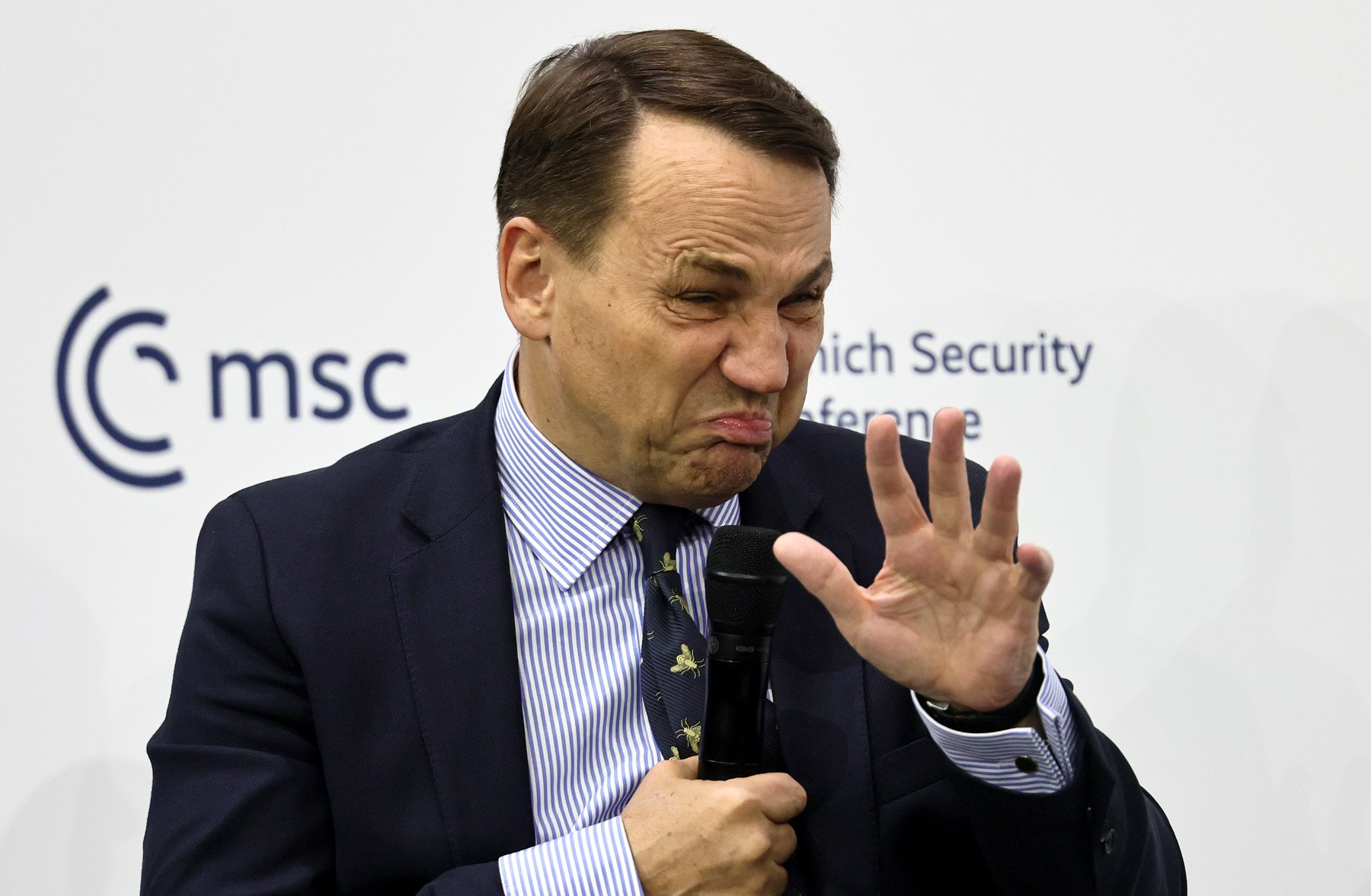
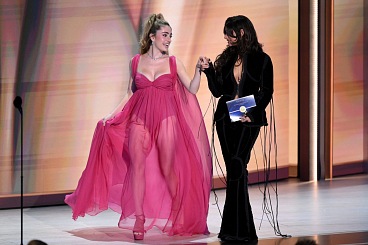
The Czech Foreign Minister follows the principle that negative publicity is still publicity, so he decided to embarrass himself at a prestigious conference in Munich attended by leading politicians discussing crucial international issues. Macinka got involved in the discussion panel with Hillary Clinton and Radosław Sikorski. Among well-known figures, it became apparent that he forgot to prepare for the event.
Of course, the card with weak English was also played. It is ironic that Macinka's predecessor at the Ministry of Foreign Affairs also had a problem with appointment to the position in front of the eyes of the former president Miloš Zeman. Zeman objected to his weak qualifications for a government position.
However, Petr Fiala (ODS) was in a dominant position towards the president and decisively cut off his attempts to interfere with the government lineup. The same cannot be said about the current head of the government.
Although Jan Lipavský only had a bachelor's degree, and the Bologna system of higher education degrees is not mentioned in the Czech Constitution, unlike the presidential role in appointing the government, he demonstrated very strong English language skills, evident in all his statements. Someone like Jana Černochová (ODS) or Alena Schillerová (ANO) could only envy him.
He might not get an A in English on a Macinka exam, but he managed to discuss effectively. The examination led by examiner Sikorski was certainly not conducted with the respectful approach Macinka is used to from Czech journalists. The Polish minister harshly pointed out the disinformation arguments of Petr Macinka in the discussion, until the unfortunate motorist's rhetorical engine seized up.
Macinka wanted to boast about a favorite disinformation regarding the unelected European Commission. Like a true disinformation, this statement contains a grain of truth. Names of European commissioners are indeed not put into ballot boxes. As Sikorski explained to his Czech counterpart, the same is true for ministers or the prime minister.
The only constitutional officials directly elected in the Czech Republic are deputies, senators, and the president. Others operate on the basis of so-called transferred legitimacy. Their function is connected to the will of those directly elected representatives. For the government, this typically happens through a vote of confidence from the Chamber of Deputies.
When Macinka babbled about how his position as a Czech minister is closer to the voters than any EU commissioner, it could only have been meant that from Třinec, where voters also live, it is closer to the Černín Palace than to Brussels.
However, if that closeness were to hold true, then the voices from Prague, which are "closer" to the ministries, are more democratic than the voices from the more distant Ostrava region. Is that what Macinka wanted to convey? Probably not. He tried to salvage his reputation by posting a piece of paper with his thesis on social media.
He talked here about the phenomenon of the democratic deficit in the European Union and wanted to show that although he was catching his breath in front of Sikorski, he had been learning at home. Perhaps his poor English prevented him from expressing a meaningful thought.
"Then and now, I know well that what is technically described as a 'democratic deficit' does indeed exist in the EU. However, it does not mean that the EU is undemocratic or that the power of its institutions does not stem from democratic elections. Minister Macinka just used once again in Munich an argumentative fallacy favored by many eurosceptics," explained Petr Sokol (ODS), who, as the minister's former teacher, assessed Macinka's university work on the X network.
He further explains that the democratic deficit in EU institutions is fundamentally based on the limitation of proportional representation. In other words, Germany has eight times more voters than the Czech Republic, but each country has one European Commissioner. These officials, whom Macinka criticized, represent national states. On the other hand, in the directly elected European Parliament, there are far more German representatives than Czech ones, and this European Parliament was something Macinka tried to highlight, or rather he complained that it has weak powers.
Did he perhaps want the stronger Germans to have more powers and for us to be merely followers in all matters? Fortunately, the EU does not work this way. However, Macinka forgot that this time he was not sitting with his friends in a pub, collectively cursing the evil EU, but discussing with someone who has real knowledge of the matter. Moreover, he decided not to treat the guy who doesn’t even know how to properly sit on a chair with kid gloves. We'll see where Macinka makes a fool of himself next time.