World on Mortgage: What I Learned About German Rentals from the Owners of Those Apartments

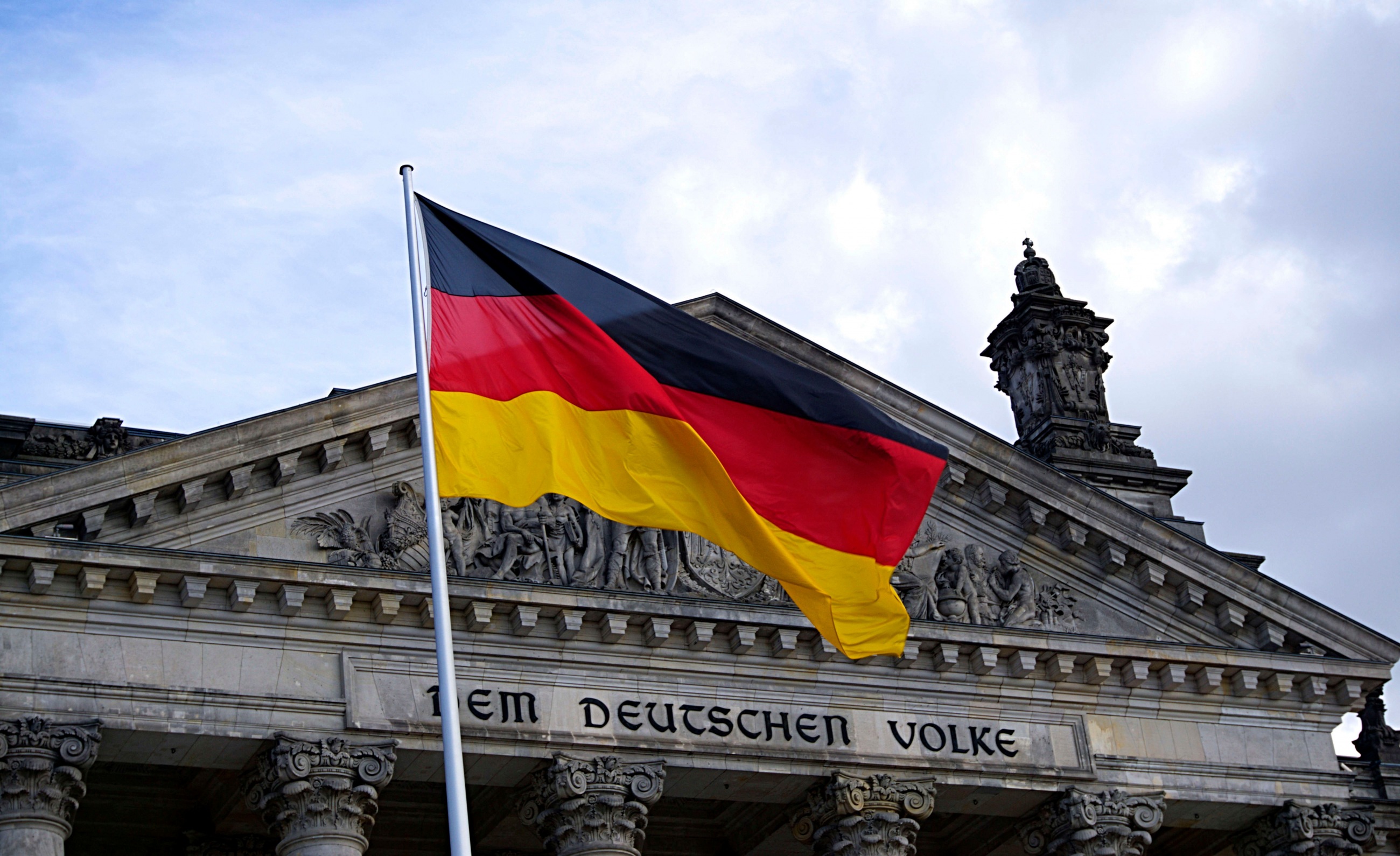
In the Czech Republic, owning an apartment is almost considered a proof of adulthood. Germany shows that a wealthy society can function differently. The majority of residents there live in rented accommodations, but surprisingly, these rental apartments are not mainly owned by the state or real estate funds. Nearly two-thirds are owned by private individuals or homeowner associations. The German model is thus based not on disinterest in property, but on the separation of ownership from residence. Someone holds the property as an investment, and someone else lives in it as their home. It has worked for a long time. However, now the system is encountering a housing shortage.
A German proverb says, "Ordnung muss sein", which translates to "There must be order". Personally, I would modify the proverb with an addendum that the most important thing is to file the rental contract into the correct folder. Trust me, you'll appreciate my joke after reading my article. The Germans even made a series called Hausmeister Krause - Ordnung muss sein about a caretaker obsessed with rules, order, and the happenings in the building. But I warn you, it's for true connoisseurs who also understand German.
The Czech concept of the correct life path is usually quite clear. First rent, then a mortgage, and finally owning a property from which no one can remove us. A person who remains renting their whole life seems to, according to this logic, have failed to complete their homework along the way.
Germans apparently do not feel such a need. In 2025, 52.8% of Germans lived in rented accommodation. Germany is even the only EU country where renters make up the majority of the population. For comparison, in France, it was 38.6 percent, in Spain 26.4 percent, and in Poland, it is 12.8 percent.
This doesn't mean that Germans don't believe in the value of real estate. Rather, they have historically created an environment where renting is not automatically seen as a failure. Renting doesn't have to be a waiting room where a person merely survives until the bank finally approves a loan. People commonly raise children in one apartment, grow old in it, and consider it their home, even though their name will never be recorded in the land registry.
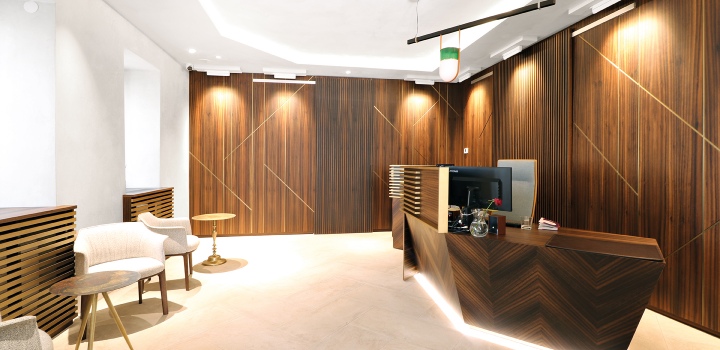
The state doesn't own apartments. Germans do.
There is a simple explanation. Perhaps Germans rent because they have a vast number of state and municipal apartments, which are cheap and accessible. Or because the German rental market is dominated by ubiquitous real estate funds.
But this is where the German story becomes truly interesting. According to the latest census, there were approximately 25 million rental apartments in Germany in 2022, which accounted for about 58 percent of the entire housing stock. Of these, 64.4 percent, or roughly 16.1 million apartments, were owned by private individuals or homeowner associations owners.
Private real estate companies owned approximately 3.5 million rental apartments. Cities and other public owners owned just under 2.7 million, and housing cooperatives approximately 2.2 million units. This means that roughly every ninth German rental apartment belongs to a public, mainly municipal owner.
And this, in my opinion, is the most interesting part of the entire German story: Germans do not have a shortage of privately owned apartments. It’s just that their owners often do not live in them.
The Typical Landlord is Not a Fund
Large real estate companies like Vonovia are visible. They have thousands of employees, huge portfolios, and their decisions make it to the media. This easily creates the impression that they dominate the German rental market.
In reality, the ownership structure is very fragmented. A representative survey of private rental property owners estimated that the monitored 11.4 million apartments were owned by approximately 5.2 million private individuals. And six out of ten of these people rented out only one single apartment. (Dserver Bundestag)
Even the incomes of most of them do not resemble the profits of real estate magnates. Approximately two-thirds of owners have a monthly rental income of less than 1,500 EUR after deducting interest. They hold properties for more than twenty years on average, and if a private individual owns an entire house, in about one-quarter of cases, they live there with their tenants.
The German model relies on millions of small owners who have accepted the fact that a property can be a long-term investment, even if they never move in themselves.
Someone else's apartment can be a real home
Why are Germans willing to send money to the owner for decades without any ownership in the end, not even a door handle? Because the tenant isn't just getting a temporary place to sleep for their money. They also gain a fairly strong legal certainty.
A German landlord cannot terminate a regular rental agreement just because they have found someone who will pay more. To give proper notice of termination, there must be a legally recognized legitimate reason. Additionally, German law restricts the use of fixed-term contracts.
In areas with a strained market, there is also the so-called Mietpreisbremse. When entering a new contract, the rent generally must not exceed the local comparative rent by more than 10%. This rule has been extended until the end of 2029. However, it is not a blanket freeze on all rents, and the law contains several exceptions.
A German tenant may not own the four walls, but they have a significantly higher chance of staying within them longer than until the next contract anniversary.

Old contracts are worth gold
Strong tenant protection also has a less pleasant side effect. It greatly depends on when the contract was signed. In the surveyed segment of privately rented apartments, the average net rent for contracts signed before 2009 was approximately 6.45 euros per square meter. For apartments rented since 2017, it was around 8.75 euros per meter. The data comes from a survey conducted in 2021 and 2022, so they do not represent current offer prices but do well in showing the difference between old and newer contracts.
An old rental contract can almost have the properties of an asset. It cannot be sold or used as collateral at a bank, but its economic value is completely real.
A person with a long-standing cheap rent naturally does not want to move. Not to a smaller apartment, nor closer to a new job, because the new contract could be significantly more expensive. The system protects those who have already found their place but can also restrict the natural movement of people between apartments.
This is where the German advantage begins to turn into a weakness. The biggest boundary is no longer between the tenant and the owner. It lies between someone with an old contract and someone who is still looking for an apartment.
A Mortgage Starts with Money for Which You Won't Get Even a Meter
Even buying your own home is not automatically more advantageous for Germans.
We must not forget the high taxes or the absence of a mortgage interest deduction for owner-occupied housing. The Bundesbank, in its research, calculates transaction costs associated with the purchase to be around ten percent of the purchase price. For a property worth 500 thousand euros, this represents about 50 thousand euros extra and the buyer doesn't get a single square meter for it.
In a country where long-term and relatively secure rentals can be obtained, it doesn't necessarily make sense to buy a
just to avoid "paying someone else." This doesn't mean that renting is always financially more advantageous. It simply means that German conditions don't make ownership the obvious winner it often is in Czech family discussions.Regulation won't build a single
The German system, however, is not a rental paradise. In 2025, 11.2 percent of the population spent more than 40 percent of their disposable income on housing. The average in the European Union was 7.7 percent.
And most importantly, sufficient construction has ceased. In 2022, 295,275
were completed in Germany. By 2025, only 206,586. Over these three years, the number of completed fell by approximately thirty percent.It would be too simplistic to declare that this decline was caused by rent regulation. Construction is influenced by material costs, interest rates, land availability, permit processes, and the overall economic situation. Germany is relatively good at protecting a person who already has a long-term contract. It has much more difficulty dealing with a young family, a new employee in the city, or a person post-divorce, who need to find a
right now.Owning an apartment is not the only path to certainty
Germany does not prove that renting is better than owning. It also doesn't prove that regulating prices will solve the housing problem. However, it shows something that we often overlook in the Czech debate: private ownership and strong tenant rights are not mutually exclusive.
Millions of German apartments are owned by small private landlords. At the same time, tenants can live in them long enough to consider them a true home. The owner creates assets and earns income. The tenant gains stability without having to invest a lifetime's savings into a single property.
Such a relationship can work. However, it needs predictable rules for both parties and enough
s so that the protection of current tenants does not turn into closed doors for everyone else. In the end, it's not just about whether a person lives in their own place or sends rent to someone else. The essential thing is that they can afford housing, stay there without worry, and have a place to move to if needed.The Germans have managed to make a rental **byt** a real home. They still need to ensure that even people who don't have a twenty-year-old lease can find one.
Sources: original text, commentary, Destatis, Dserver Bundestag, Gesetze im Internet, Bundesbank