The war in Ukraine will end when Moscow understands that it will not achieve its goals. I will vote against the government without problems, says Karel Řehka
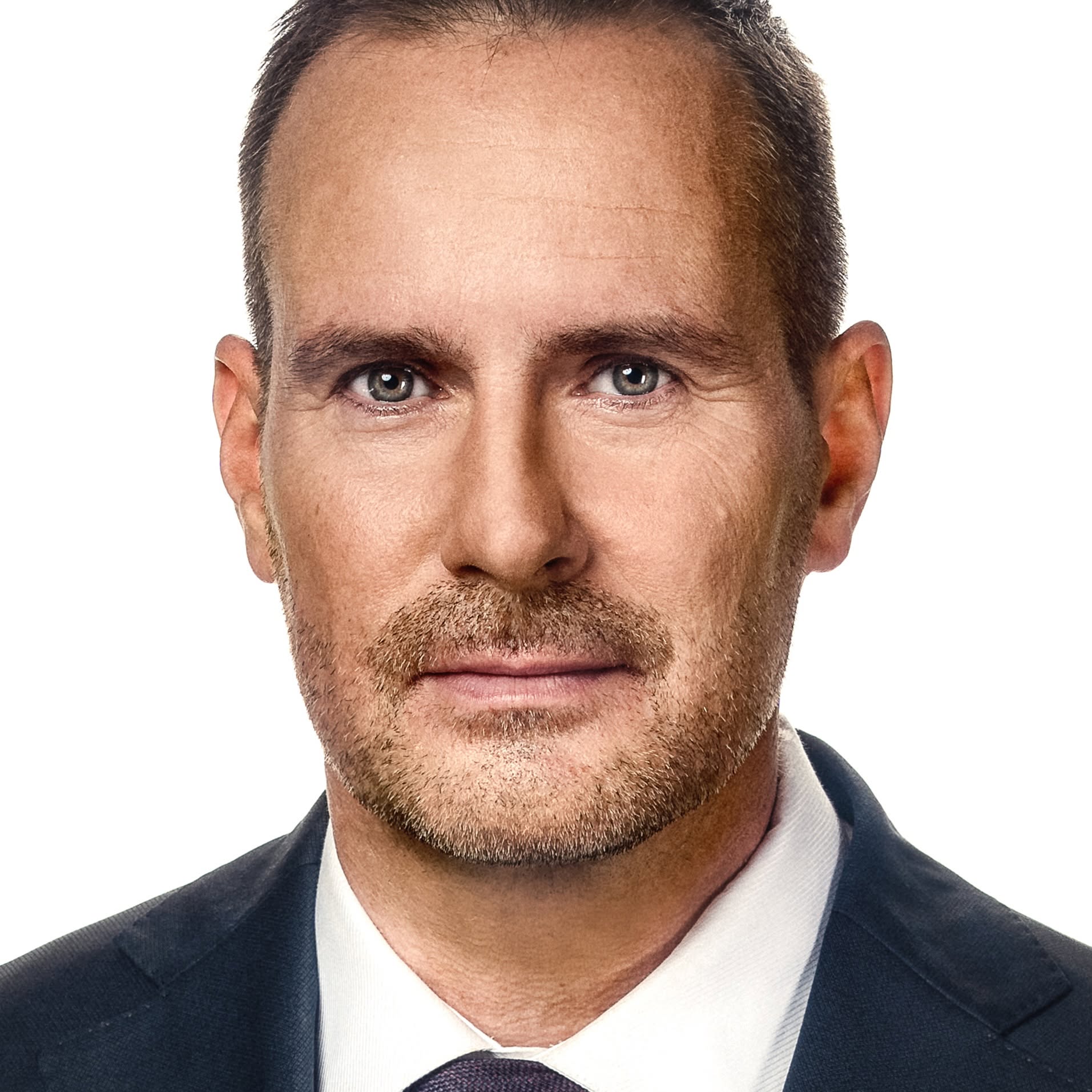
Since childhood, he dreamed of a career in the army. Eventually, he rose to the very top position. But now he has left it to throw himself into battle on a somewhat different front – this year Karel Řehka is running for the Senate. Will he miss working for the army? What would he say to people who talk about soldiers as "green brains"? And how does he think the war in Ukraine will end?
From 2022 to 2026, you served as Chief of the General Staff of the Czech Armed Forces. How much did you have to deal with politicians and what experience did you take away from it?
Very intensively. The Chief of the General Staff is obviously not a politician, but operates at the interface between military expertise and political decision-making. You negotiate with the Minister of Defence, the government, the President, members of parliament and senators, you attend parliamentary committees, explain the army's needs from a military perspective, defend its plans and point out shortcomings and risks.
Moreover, I led the army during an extraordinary time – during the war in Ukraine, a fundamental transformation of the security environment, and major modernization. So the idea that I sat at the general staff for four years somewhere outside politics and am now entering it as a completely unknown world, I really don't have that.
I experienced both agreement and very different opinions. And what I took away from it above all was respect for the fact that the roles of a soldier and a politician are different. My duty was to tell politicians as honestly as possible how I see the situation, what the army needs, and what risks I believe the state is taking. Even when it wasn't pleasant to hear sometimes. But in a democratic country, the final decision is made by the political representation, and a soldier must respect it.
And I took away one more experience: even the army isn't just about orders. The higher you get, the more you have to explain, persuade, negotiate and seek consensus. Rank may give you authority, but it doesn't automatically give you credibility or truth. And in politics, this applies even more so.
What decided that you yourself chose to engage in politics?
There wasn't one moment when I woke up in the morning and told myself I would be a politician. It matured gradually. After more than three decades in the army, I could tell myself that I've served my time. But I never perceived service just as a job or a position. It always meant a certain responsibility for me - for the country I live in - for its security, freedom and democratic values on which it stands. And that doesn't end for me by taking off the uniform.
At the same time, I don't want to stand on the sidelines and explain to others what they're doing wrong. If I feel that the experience I've gained can be useful, it seems more honest to me to be willing to take on my own share of responsibility. All the more so at a time when we shouldn't take for granted either the security of the country or a functioning democracy.
But I certainly don't think that more than thirty years of service or the rank of general somehow entitle me to a political position. I bring experience. Not the right to command. In politics, your mandate is not given by your past or your rank. It can only be given to you by the people.
How did your friends and acquaintances view this step?
The reactions were varied, which I think is good. Along with support, of course, there were also questions about whether I really need this after so many years of service and whether it wouldn't be easier to finally have some peace and quiet.
And I understand those doubts. Entering politics means greater public attention, criticism, less privacy, and it affects not only you but also the people around you. That's why I didn't want to hear only support. A person needs people around them who are capable of telling them something unpleasant or asking if they're making a mistake. After all, that's one of the things I carry with me from the army as well.
In the end, though, it's my decision and also my responsibility.
One of those who support you is also the actor Ondřej Vetchý. What do you say to that?
Ondra is primarily not "the actor Ondřej Vetchý who supports me" for me. He's one of my very good friends. Perhaps the best testament to our relationship is that he was my best man at my wedding.
I certainly value his support, but primarily on a human level. He knows me very well, not just from public functions or from the time when I wore a uniform. He knows how I think, how I work, knows my good and worse sides. And he's definitely not someone who would automatically nod along with everything I say.
At the same time, I greatly admire how much energy Ondra puts into things he considers important. He has been long-term involved in a whole range of initiatives and supports projects that he believes make sense. He doesn't perceive his profession and popularity as something that is a goal in itself. Rather as a tool through which he can help important topics and good causes reach a larger number of people. And this is exactly what I find exceptional about him.
That's why his support means something to me. Not because he is a famous actor and his name might look good somewhere, but because it comes from a person who knows me like few others do and whom I myself deeply respect not only as a friend, but also for what he does for others.
What do you think is the irreplaceable role of the Senate?
For me, the Senate is not a weaker copy of the Chamber of Deputies. Its purpose is precisely that it is different.
It should be a safeguard. It can take another look at certain decisions, with greater distance, point out a problem, return a law and sometimes simply say: let's slow down and think again about what we're doing.
During my life, I've learned that some decisions can be made very quickly, but then you spend years fixing their consequences. And it's precisely the ability to look further than the next election that I consider important for the Senate. Security, infrastructure, energy, or the resilience of the state are things that cannot be seriously addressed within a timeframe of several months.
The Senate is also part of the system of checks and balances. And the more power someone has, the more important I think it is that there exists someone who is capable of saying no, asking an uncomfortable question, or wanting some decision to be explained once more. That's where I see its significance.
What topic is personally most important to you on your way to the Senate?
For me, the protection of the values on which this country stands comes first – freedom, democracy, the rule of law, and our firm anchoring in the West. I don't take them for granted. And it is precisely the Senate that has an important role in our system to protect them. It is one of the safeguards of democracy, especially in moments when there is pressure for simple solutions, circumventing rules, or weakening institutions.
I want the Senate to have people who will defend these principles regardless of who is currently in power and who finds it convenient at the moment. For me, this is one of the main responsibilities that come with a senator's mandate.
The second major thing for me is the future of Pilsen as a truly western city. Not the last major Czech city before Germany, but the first Czech city heading West.
Pilsen has almost everything it needs for this. Strong industry, a university, technology companies, experience with drones and robotics, and Bavaria right next door. Already today it knows how to make good use of these advantages. I would like to help ensure that we can connect them even better and utilize their potential to the fullest.
It starts with transport connections to Germany, but it certainly doesn't end there. It's about cooperation between companies and universities, research, security technologies, energy, or cooperation between security and rescue services. I believe Pilsen has the potential to become the Czech center of cooperation with Bavaria and at the same time a place where modern security technologies are not only researched, but also developed, tested and manufactured.
I don't want to promise people that as a senator I will build a railway or a highway. A senator can't do that. However, they can consistently monitor whether the state is meeting its own deadlines, bring problems under public scrutiny, push for changes in laws and connect people and institutions that need to talk to each other.
I simply want to use the experience I have to help Plzeň benefit much more from where it is located and what it can do. At the same time, I want to protect in the Senate what allows us to freely decide what our country should look like in the first place.
Why do you think people should go to the polls?
Because the ability to freely choose who will represent me is not a given. It is a right, but in my opinion also a great privilege. In many countries people don't have it, and for a large part of our own history, we didn't have it either.
I have spent my entire professional life serving a country whose way of life is based, among other things, on the fact that holders of political power are not decided by the army, one party, or someone from above, but by citizens in free elections. And perhaps that's exactly why I don't consider elections a banality.
I don't want to tell anyone who to vote for. Everyone should form their own opinion and decide for themselves. But I would be glad if we valued the very possibility of voting a little bit more.
Because when I don't go to vote, it doesn't mean that a decision won't be made. Others will just make it for me. The opportunity to take a ballot, freely decide, and cast it into the ballot box without fear is a privilege that we shouldn't take for granted.
Your past as a general may be a symbol of experience and authority for some people, but for others it may raise the question of whether someone accustomed to commanding can truly listen. How do you want to convince voters that you're not coming into politics to "command"?
Anyone who imagines commanding an army as a general saying something and several thousand people saluting without thinking has a somewhat cinematic idea of what such work looks like.
Of course there are situations when a commander must decide and take responsibility for their decision. That's part of the army. But before you get to that decision, you must be able to listen to people who understand the problem better than you. You must want to hear even an opinion you don't like. And the higher position you have, the more important it is.
As Chief of the General Staff, I didn't need people around me who would just nod in agreement. I needed people who would tell me: I think you're wrong here. Because when you're deciding about the country's security or people's lives, perhaps the worst thing you can do is start believing that you're always right just because you have the highest rank.
Politics is moreover a completely different world. My general's rank doesn't give me any special right or claim in it. If I become a senator, I won't have anyone to command. I will have responsibility to the people who gave me a mandate. And without the ability to listen, in my opinion, you can't do either well – lead an army or represent people in politics.
In the army, you had to respect the decisions of civilian political representation, even if you perhaps disagreed with them. If, as a senator, you find yourself in a situation where you have to decide on a fundamental security issue against the government's opinion, how will you proceed?
I will vote against the government without any problem if I am convinced that its decision is not in the interest of the Czech Republic. And I won't care at all which government it happens to be.
We live in a parliamentary democracy. Parliament is not here to serve the government or automatically confirm its decisions. Its task is, among other things, to control, correct, and counterbalance the exercise of power. And the Senate is an important part of this system.
This is a fundamental difference from my previous role. As Chief of the General Staff, I had an obligation to give political representation my best professional opinion, warn about risks, and openly say even things that were not pleasant to hear. We could argue, I could disagree, but as a soldier, I had to respect the legitimate decisions of civilian political representation. This is one of the fundamental principles of a democratic state.
However, a senator is not subordinate to the government. They receive their mandate from voters and their responsibility is to decide according to their best knowledge and conscience and according to what they consider to be in the country's interest.
So if, based on information, arguments and experience, I believe that the government is making a mistake in some fundamental security matter, I will say so openly and vote accordingly. Not to be in opposition at all costs, but precisely because that is how parliamentary democracy is supposed to work.
Moreover, with security, it's particularly important. The decisions we make today can have consequences in ten or twenty years. The main criterion there cannot be the government's convenience, party discipline, or momentary political popularity. It must be the long-term interest and security of the Czech Republic.
Aren't you afraid that you'll miss working for the army?
I will. I have no doubt about that at all.
I spent most of my adult life in the army, I came of age in the army. I went through it from the very beginning all the way to Chief of the General Staff, experienced missions, various units, good and bad times, and most importantly, a huge number of people with whom I still have a very strong connection to this day.
So if I were to claim that one day I'll take off my uniform and the next day I won't miss anything about it at all, that wouldn't be true.
At the same time, however, I won't miss the position for the position's sake or the stars on my shoulders. What I'll miss most are the people and the sense of service that's connected with the army.
And that's precisely why I don't see running for the Senate as some escape into a completely different life. Rather as a continuation of the same thing in a different way. Because for me, service never began and ended with a uniform.
What is your prediction for the end of the conflict in Ukraine? How do you think it will turn out?
Wars usually don't end when both sides realize that peace is a nice thing. They end when at least one of them concludes that by continuing, they can't gain more than it's costing them. And Russia today, in my opinion, is definitely not at that stage.
From a military perspective, it's important that while Russia isn't achieving its declared goals at the pace it would have imagined, it still believes that time is on its side. That it has a greater reserve of people, greater industrial capacity, and above all that it can wage war longer than Ukraine and longer than the West will be willing to support it. As long as Moscow believes this, it won't have a reason to make a real compromise.
Moreover, Russia's current behavior corresponds to this. On the battlefield, we see neither a collapse of Ukraine nor any rapid Russian victory. Russian advances are very slow and at the cost of high losses. At the same time, however, Russia continues to attack, replenishes its forces, expands production, and tries to create the impression that the outcome is only a matter of time. Analyses from recent weeks show that Russian forces in 2026 are not fulfilling their main territorial objectives and their advance remains limited.
That's why I think it's a mistake to look at the end of the war only as a question of the negotiating table. Negotiations always reflect the situation on the battlefield, the ability of both sides to continue, and their idea of what will happen in six months or a year. If Putin is convinced that in a year his position will be better than today, he will have no reason to make concessions today. Conversely, if he comes to the conclusion that another year of war will not improve his situation or will even worsen it, space opens up for real negotiations.
And this is where the West plays a crucial role. Not because we should prolong the war, but precisely because its length is also influenced by the calculations Moscow makes. If Russia receives a signal that it just needs to hold out, that Western societies will grow tired, support for Ukraine will weaken and political rhetoric will gradually change, it strengthens its motivation to continue.
That's why I also perked up at the recent statement by the Russian ambassador in Prague, who publicly appreciated that the Czech government, according to her, "has softened its anti-Russian rhetoric". The Prime Minister disagreed with her interpretation, but it is interesting in itself what Moscow considers a positive signal. The Russians very closely monitor the political will of Western countries. For them, this is not some word game. It is one of the parameters by which they assess whether it makes sense to drag the war out further.
And then there's the second thing: any end to fighting doesn't automatically mean peace. From a military perspective, we must also think about what will happen the day after. Where will the units stand, what will be the security guarantees, how quickly can Russia rebuild its forces, how much time will it gain to replenish people, ammunition and equipment, and what will prevent it from starting again in three or five years.
If a ceasefire merely freezes the situation and allows Russia to regenerate its army, then we haven't resolved the war. We've just created an operational pause.
My prediction is therefore not that the war will end in any specific month or year. In my view, it will end when the Russian calculation changes: when Moscow understands that further time is no longer working in its favor, that it will not achieve its goals militarily, and that continuing the war will cost more than a compromise.
And if we want truly lasting peace, its terms must simultaneously ensure that Russia will not have the opportunity and capability to continue in a few years where it left off. That is, in my opinion, a much more important question than the actual date when the shooting stops.
What would you say to people who talk about soldiers as "green brains"?
Probably something similar to people who call soldiers "rubbers". In the army, we were often able to make fun of such expressions ourselves. Anyone who has served in it for some time knows that soldiers certainly don't lack a sense of humor.
But if someone means it seriously as an insult, I would probably recommend that they actually sit down with those "green brains" sometime and talk to them.
In the army, you meet exactly the same spectrum of people as anywhere else. They just often bear responsibility that most people in ordinary life never encounter at all. There are people who work with very complex technologies, handle cybersecurity, fly, operate, plan, lead teams, or are responsible for equipment worth billions or also for human lives, whose value is incalculable.
Of course, a uniform doesn't automatically make anyone smart, capable, or morally better. But the notion that a soldier is someone who doesn't think and just blindly follows orders is quite far from reality. Modern military, on the contrary, is built on people who must be able to think independently, make decisions under pressure, and bear responsibility for their decisions.
And perhaps I should mention one more thing. These people voluntarily accepted a commitment that when things get really bad, they won't go to protect just themselves and their families. They will go to protect even the person who calls them "green brain" or "rubber" today.
Source: own survey
Photo: Karel Řehka's archive (Facebook)