I'm taking a dead Chinese man as my husband: Our wedding will be arranged only after death. Families are looking for brides in graves


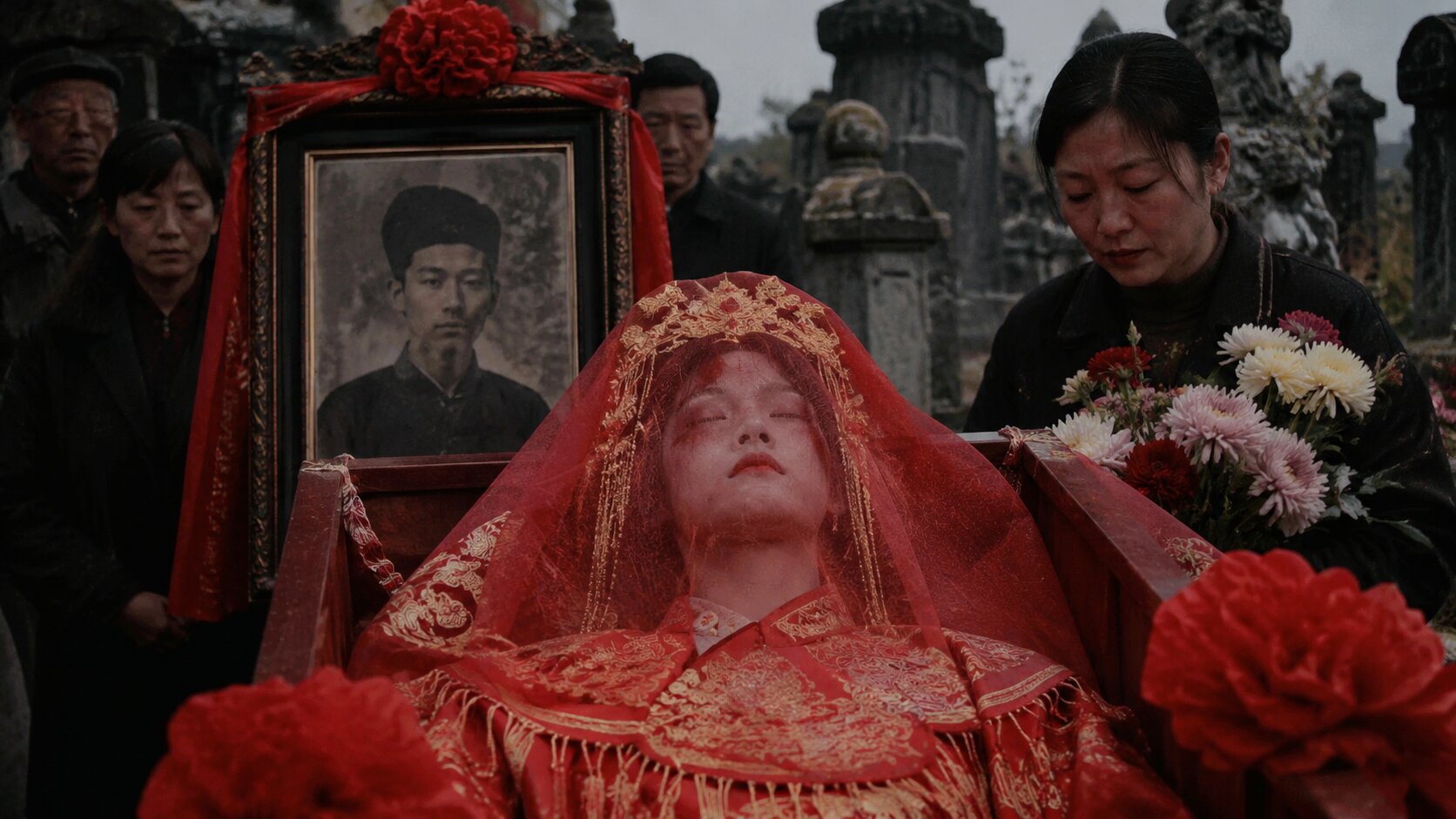
At first glance, it resembles a horror movie scenario, but in reality, it is a tradition with deep roots that has persisted in some Chinese communities to this day. Behind the idea of marriage beyond the grave lie ancient superstitions, family obligations, and fears of loneliness in the afterlife. And while for some families this ritual represents a final expression of love for their deceased child, an illegal trade in human remains has gradually developed around this unusual custom. It has a much darker form than it might seem at first glance.
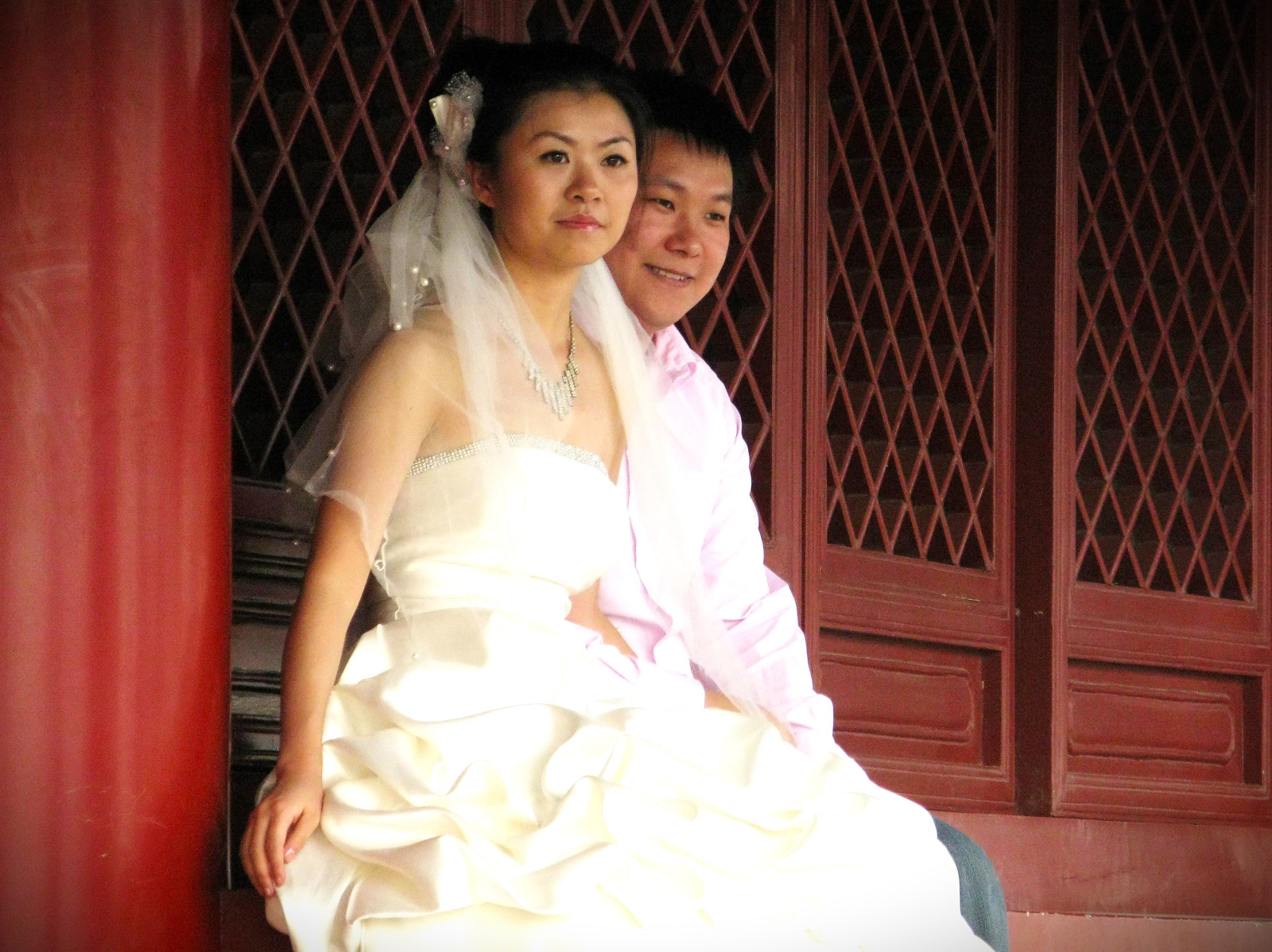
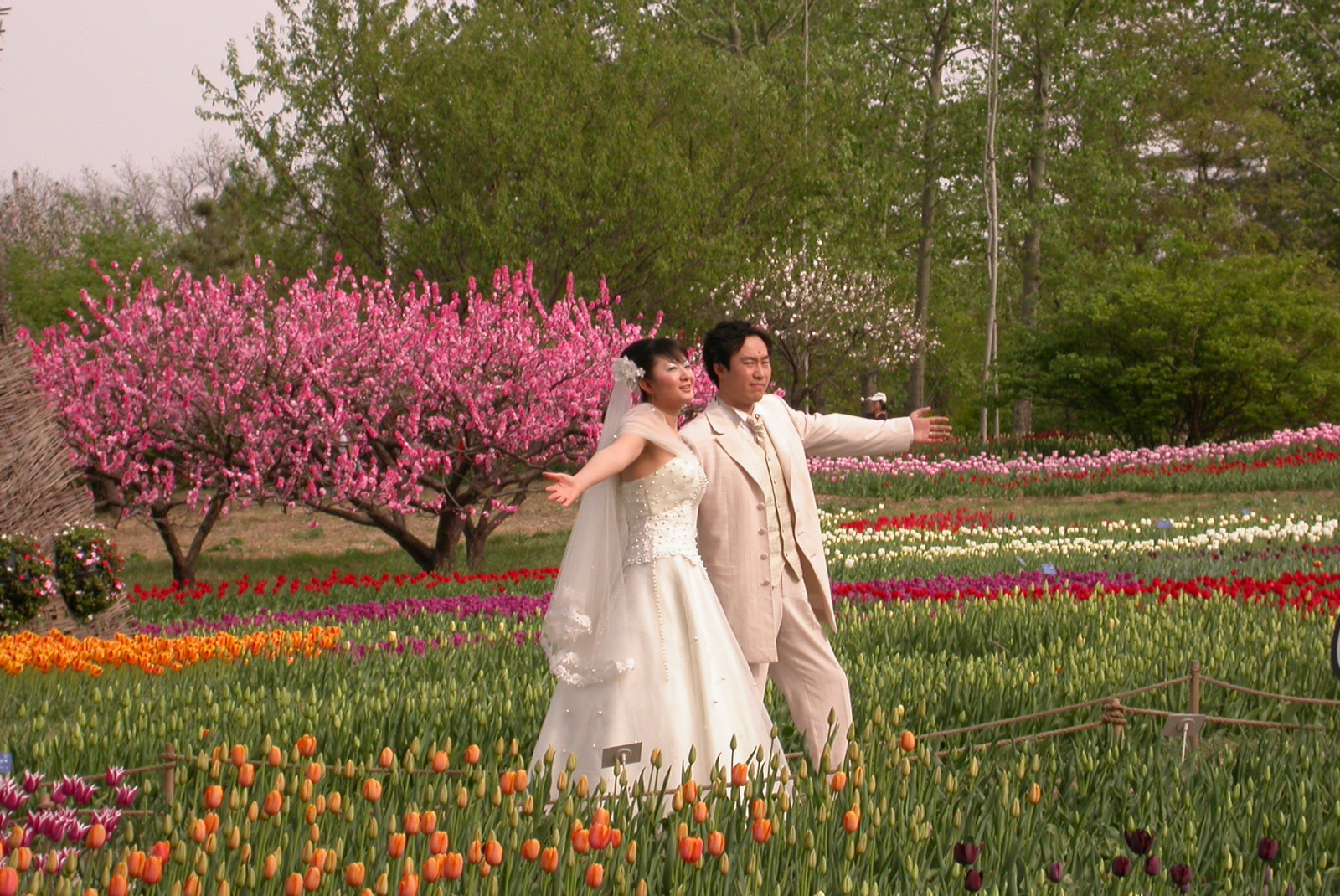
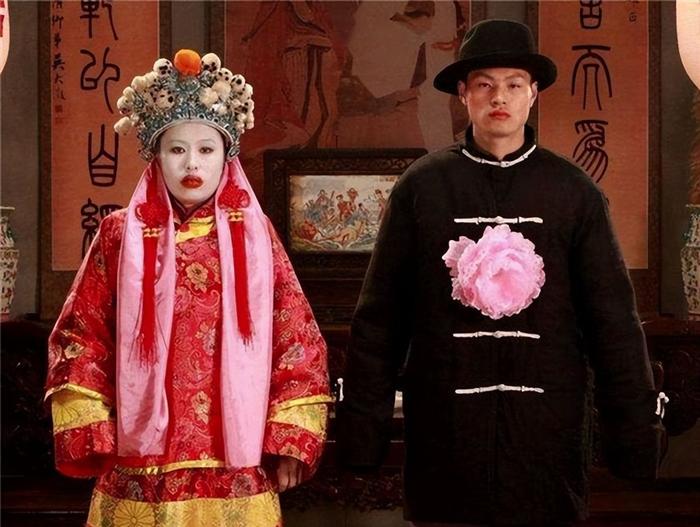
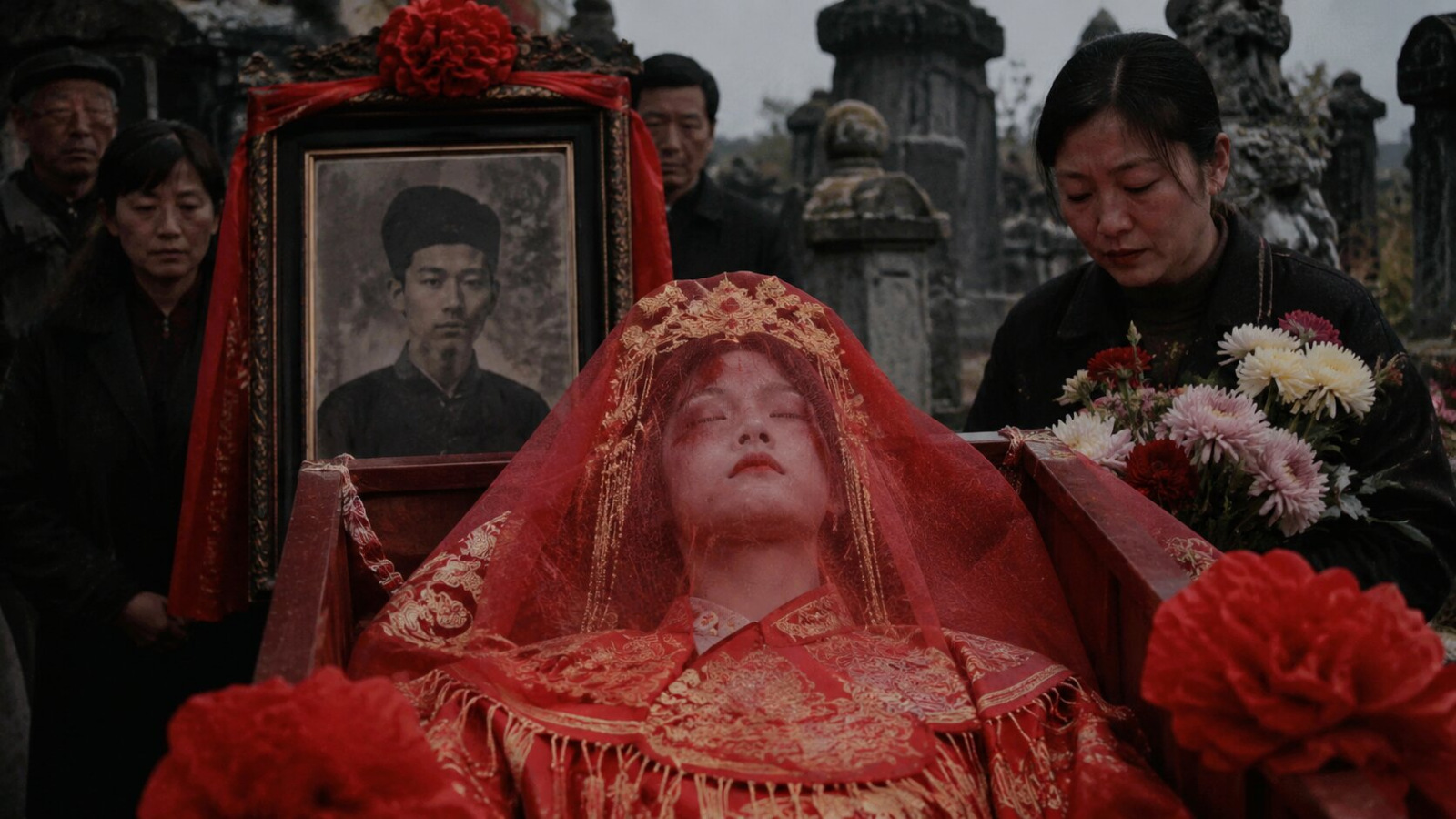
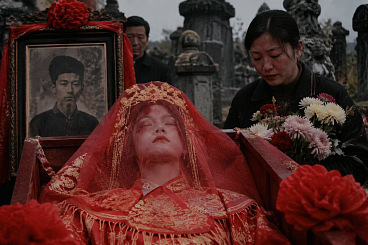
Imagine that parents are preparing their daughter's wedding. They are choosing a groom for her, negotiating terms with the other family, preparing wedding clothes and planning a joint ceremony. There would be nothing unusual about that, except the bride is a young woman who has been lying in a grave for several years. And what's even more unbelievable, her future husband doesn't have to be among the living either. In some parts of China, there exists a tradition known as posthumous marriage, in which families seek partners for their deceased relatives.
It sounds like a horror movie plot, but it's a real cultural phenomenon with deep historical roots. The Chinese know it as minghun, which translates to ghost or posthumous marriage. Its purpose was to ensure that a person who died unmarried would not remain without a partner and their place in the family even after death. However, behind this strange notion lies not only a romantic idea of love that transcends death. In the past, it could determine whether the deceased would be accepted among the ancestors, and in more recent history, an illegal trade in human remains has even developed around it.
A Wedding Without a Bride and Groom? In China, This Might Not Have Been Anything Unusual
To understand why some Chinese families approached such an unusual ceremony, we must return to traditional ideas about death and family. In the past, death was not considered a definitive break in relations between a person and their loved ones. The concept of afterlife was closely intertwined with family duties, ancestor worship, and the continuation of the family line. Marriage represented one of the most important life events.

If someone died before marriage, according to some traditional beliefs, they remained in an incomplete social status. Their soul might not have had its place in the family community, and the family feared that it would be lonely or restless after death.
As expert T. Wing Lo explains in the study Ghost Brides and Crime Networks in Rural China, published in the Asian Journal of Criminology, families of the deceased believed that unmarried adults might not be buried together with family ancestors after death. That is precisely why they wanted to find them a husband or wife. In this way, they were to secure the deceased a place in the family lineage and enable them to continue in symbolic family life. From today's perspective, this is unimaginable. However, people of that time might have felt that if their child died without marriage, their duty towards them had not yet ended.
A Story That Could Look Like Something From a Spooky Fairy Tale
Let's imagine a model situation inspired by historical descriptions of this custom. A young man dies before he manages to get married. His parents remain devastated not only by the loss of their son, but also by the knowledge that he will never experience the family life they prepared for him. In a traditional environment, they may also fear that his soul will remain without a partner and will not have its place among the ancestors. The family therefore turns to an intermediary who knows other families with a similar fate. The search for a suitable bride begins. It doesn't have to be a woman the young man knew during his life. What's important is finding a family willing to agree to the union.

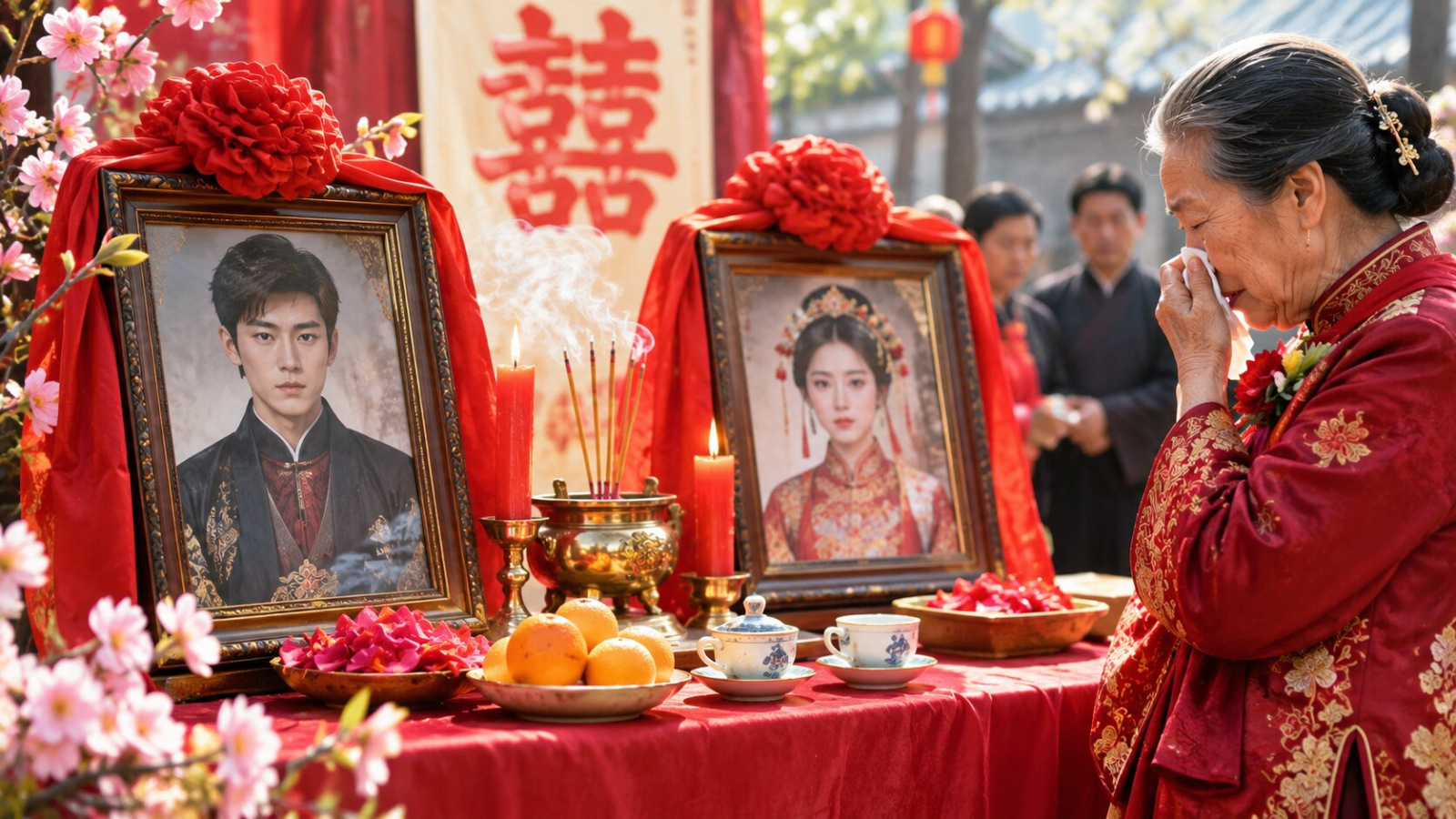
By agreement, wedding rituals are prepared. The deceased are given their place in the ceremony and the families symbolically become relatives. In some forms of the tradition, the remains of both deceased were buried together after the wedding. This situation is not a documented story of a specific couple, but illustrates the procedures described in the academic research of T. Wing Lo. His study also cites a historical description of a marriage in which the deceased woman was dressed as a bride and the ceremony took place in the presence of her family and a mediator.
The Groom Didn't Always Have to Be Dead
Even more interesting is that posthumous marriage didn't have to mean only the union of two deceased people. There were also cases where one of the partners was still alive. Let's imagine, for example, a young woman who was engaged, but her fiancé died before the wedding. The families could insist that the planned union take place despite the tragedy. The woman could thus symbolically become a member of the deceased man's family.
This form of the tradition is also written about by researcher Wang Yu in the article Ghost Marriage in Twentieth-Century Chinese Literature: Between the Past and the Future, published in 2016. The author explains that posthumous marriage had two basic forms in the past. In one, two deceased persons were joined together who may not have known each other at all during their lifetimes. In the second, a deceased person entered into marriage with a living partner. Such a marriage also had significance for the family. The living partner could remain part of the deceased's clan community and preserve the originally agreed-upon family ties. So it wasn't always about romance, but primarily about tradition, social status, and family obligations.
A Tradition Hundreds of Years Old: Not a Modern Invention
Although it may seem like a relatively new and isolated superstition, posthumous marriages have a very long history in China. Historical mentions of them date back to ancient times. They were practiced in various periods and their form gradually changed.
The historical development of this custom was also studied by researchers Chunjun Gu and Keqian Xu in their study Netherworld Marriage in Ancient China: Its Historical Evolution and Ideological Background, published in the Journal for the Study of Religions and Ideologies in 2014. The authors describe how posthumous marriages evolved from ancient religious beliefs through later periods of Chinese history.
Interestingly, such a custom was not limited only to poor rural inhabitants. Research of historical sources documents posthumous marriages also in the environment of higher social classes. Historian Ping Yao in the study Until Death Do Us Unite: Afterlife Marriages in Tang China, 618–906 focuses on the Tang dynasty period. Based on historical inscriptions, biographies, literary works and archaeological findings, he shows that such unions were related to ideas about the afterlife, but also to parents' efforts to provide their children with what they didn't manage to achieve during their lifetime.
Some families could thus perceive the marriage of a deceased child as a last opportunity to grant them a life event they had missed out on.
When tradition became a lucrative trade in the dead
However, the darkest part of the whole story begins at the moment when money became involved in the old custom. If a family believed that their deceased son needed a bride, a demand arose for women who could become his posthumous wives. And where there is demand, people willing to profit at any cost eventually appeared. In some rural areas of China, a black market in the remains of deceased women emerged. This wasn't just about illegally digging up old graves. According to research by T. Wing Lo, criminal cases also involved theft of bodies from morgues, trafficking in human remains, and even kidnappings or murders of women. The academic study Ghost Brides and Crime Networks in Rural China points out that this market operated on the principle of supply and demand. Families who wanted to secure a bride for their deceased son were willing to pay substantial sums. For criminal groups, the pious ceremony thus became a source of income.

Particularly disturbing is that the victims of illegal trafficking were predominantly women. Although according to traditional beliefs, posthumous marriages could involve both men and women, the market in human remains focused primarily on female bodies. The researcher also points to the connection with poverty and economic inequality in certain regions. In other words, behind the belief in peace for the soul, in certain cases, an extremely cruel crime was hidden.
Why did families pay for such a marriage?
We can ask ourselves why anyone would even pay for the marriage of a person who is no longer alive. The answer is related to the importance traditional families attributed to marriage and ancestor worship. In a society where the continuation of the family line was of great significance, marriage was not merely a private matter between two people. It represented the union of families and the integration of a person into the broader family community. If an unmarried son died, his family might fear that he would have no descendants and his family line would be symbolically interrupted. A posthumous marriage was meant to at least partially resolve this problem. In the case of a deceased woman, it was believed that through marriage she could be accepted into her husband's family and receive offerings from his descendants.
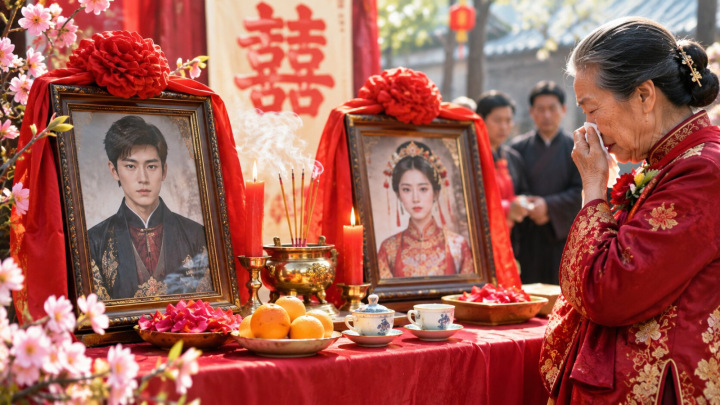
As T. Wing Lo explains, the concerns were also related to the notion of restless spirits. Premature death, especially before reaching important life milestones, was perceived in some folk beliefs as a disruption of the natural order. Posthumous marriage was meant to rectify this state.
Is it still practiced today?
It would be incorrect to claim that every Chinese person knows this tradition or that it is a common part of today's weddings. Posthumous marriage is a historical folk custom that has been preserved in some communities and regions, but it certainly does not represent Chinese society as a whole. However, research shows that it is not merely a long-forgotten chapter of history. T. Wing Lo in his 2022 study documents that in some rural areas there still existed a demand for posthumous brides and the associated criminality.
At the same time, it is necessary to distinguish between the religious or family ceremony itself and illegal trafficking in bodies. One cannot be automatically equated with the other. Theft of remains, trafficking in them, and violence against women are criminal acts, not a necessary part of every posthumous wedding.
Love beyond the grave, or fear of loneliness?
Posthumous weddings are one of the strangest examples of how differently various cultures can perceive life, death, and family obligations. While in our parts a wedding is primarily associated with a new beginning for two people, in traditional Chinese beliefs it could also be a way to rectify something that death prematurely interrupted. Behind this custom, there is also a sad human dimension. Parents who lost a child sometimes could not come to terms with the fact that they would no longer experience everything they had imagined for them. A wedding after death could be their peculiar way of coping with the loss.
And so while some see posthumous marriage as a bizarre ritual, for others it represented a final service to a loved one. The tradition, which was meant to ensure peace for the deceased, also shows how easily old superstitions can turn into a tool of abuse and even a reason for committing serious crimes.
Source: author's text, Ghost Brides and Crime Networks in Rural China – Asian Journal of Criminology, Ghost Marriage in Twentieth-Century Chinese Literature – Frontiers of Literary Studies in China, Netherworld Marriage in Ancient China – Journal for the Study of Religions and Ideologies, Until Death Do Us Unite: Afterlife Marriages in Tang China – Ping Yao.