The World on a Mortgage: My Name is Bára and I'm in a Bad Mood

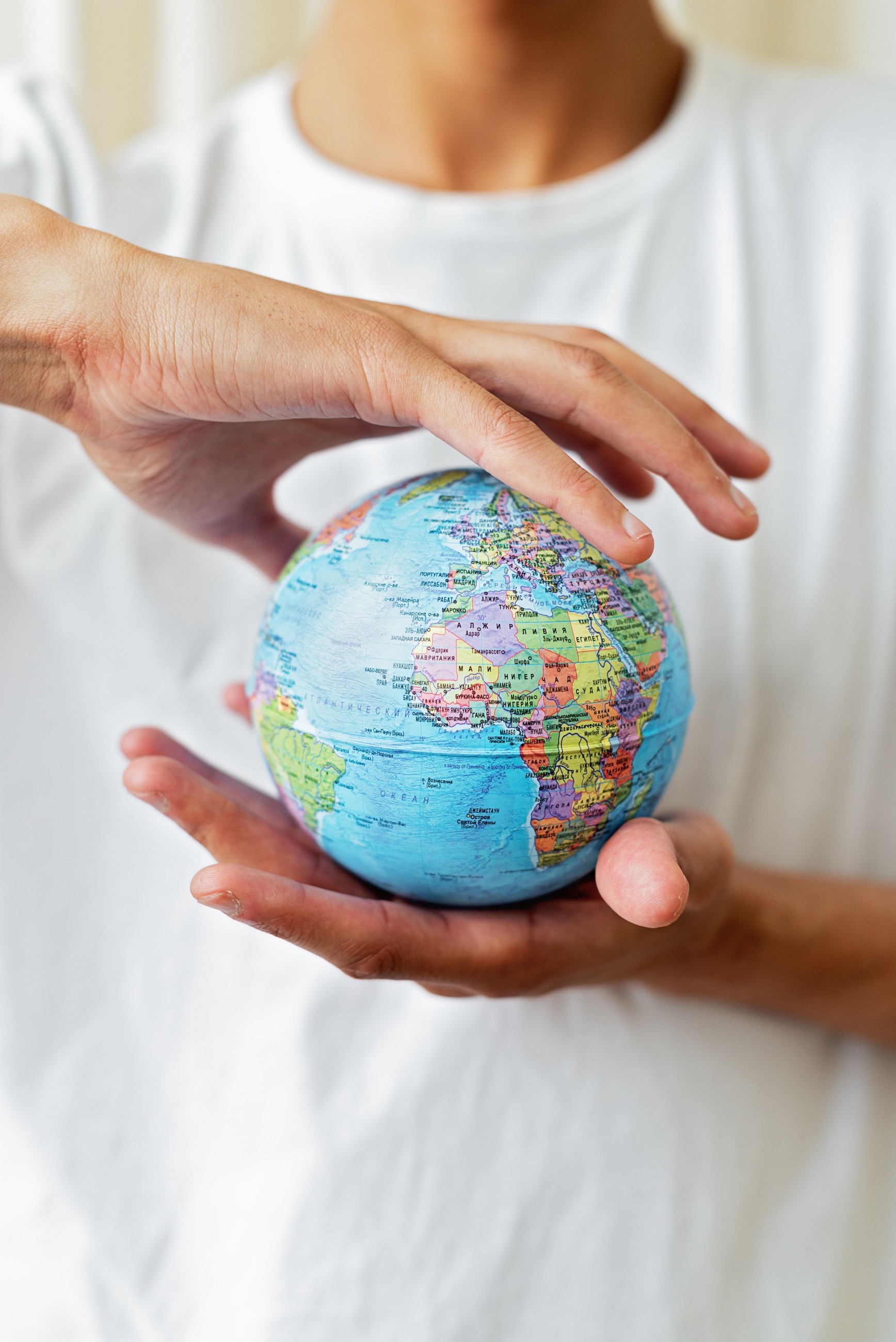
I'm doing well. And that's exactly what's been weighing on me lately. While I'm dealing with mortgage rates, fixed terms, or the price per square meter, up to 3.4 billion people in the world don't have adequate housing. 117.8 million people have been forced to leave their homes, and in some countries, even a functioning bank or an identity document isn't a given. So I started thinking about what it actually means to have the opportunity to take out a mortgage and why it's a much greater luxury than we're willing to admit.
I imagine one of those anonymous support groups. We're sitting in a circle on plastic chairs, about ten of us. In the middle is a small table with water and coffee that nobody's drinking.
I should probably start, I tell myself.
"Hi, my name is Bára and I'm in a bad mood."
"Hi Bára."
"I have it because lately I've been thinking a lot about how I'm doing."
There's silence for a moment.
"And are you doing badly?", someone across from me asks.
"That's just it. And that might be my whole problem."
It's not that I want to be better off. It's that I wish others were too.
And what exactly troubles you about that?
Probably the fact that the more I look around, the less obvious the world I live in seems to me. I have a roof over my head. When my salary comes, it appears in my bank account. When I want to buy property, I can start getting annoyed about the price per square meter. When I need a mortgage, I deal with interest rates, fixation, LTV, and whether a rate of 4.7 or 4.9 percent is better. Someone keeps calling and offering something. They offer me options, of which I have a million.
So mortgages are troubling you?
No. And actually yes.
I deal with mortgages and housing. I write about them, I'm interested in how it works around the world, and I think about them a lot. I'm increasingly realizing what a strange product a mortgage is. A bank lends you money for twenty or thirty years. By doing so, it's saying it believes you will exist. That your income will exist. That the bank will function. That the land registry will function. That the state will respect ownership. That the house can be insured and when something happens one day, that they will pay you for the damage.
And most importantly, the house for which they just lent you several million will still be standing in twenty or thirty years. A mortgage isn't just a loan. It's a long-term bet that the world will continue to function at least somewhat similarly. And it's precisely this thought that's been scaring me a bit lately.
And do you have any specific reason for that fear?
I have about 3.4 billion of them.

According to the latest World Cities Report 2026 from UN-Habitat, some form of inadequate housing may affect up to 3.4 billion people. This doesn't mean that 3.4 billion people are without a roof over their heads. It's a much broader problem. It's about insecure housing, overcrowded households, unsafe buildings, lack of basic services, or housing that is economically unaffordable. Or what about slums and informal dwellings, in which according to the UN around 1.16 billion people live. That's 24.8 percent of the urban population, meaning almost every fourth city dweller. And then the same statistics state that more than 300 million people experience absolute homelessness.
The global housing shortage increased from approximately 201 million to 269 million housing units between 2010 and 2023. So when we talk about a housing crisis here, we're talking about a real problem. It's just that there are several other levels of the same crisis.
We're dealing with whether we can afford an apartment. Elsewhere, they're dealing with whether there's anywhere to go at all. Some people on this planet must first prove that they even exist before anyone will talk to them.
You're Watching Too Much News
Maybe. But at the end of 2025, according to UNHCR, there were approximately 117.8 million forcibly displaced people in the world. Roughly 45 million of them were children, that is 38 %. And that's not one city or one state. It's almost 11 Czech Republics worth of people who had to leave their homes due to war, violence, persecution or human rights violations.
On top of that, I'm reading a report from the World Meteorological Organization, according to which the years 2015 to 2025 were the eleven warmest years in recorded history. The year 2025 was approximately 1.43 degrees Celsius warmer than the average of the 1850-1900 period.
And then I open Instagram. Someone keeps showing me recipes. Someone handbags. Someone a dead city after bombing. Someone five tricks on how to be more productive. The problem might not be that too many things are happening in the world. They always have been, but I don't want to have them all in my head. I don't want to carry all those numbers in my head.
And how much does a mortgage cost in a country at war?
I started with Ukraine and it surprised me.
In Czech banks, the average actually agreed rate for a new mortgage in July was around 4.9 percent. Banks and building societies provided 6,706 new mortgages worth 30.8 billion crowns during the month.
The Ukrainian state-supported program eOselia allows certain groups to obtain a mortgage at 3 percent, others at 7 percent. The maximum repayment period is 20 years.
So purely on paper, for example, a person from one of the privileged groups in Ukraine can have a cheaper mortgage than a person in Prague. This does not mean, of course, that Ukrainians have cheap mortgages. Quite the opposite. More than 96 percent of new Ukrainian mortgages rely on state support. The normal market mortgage system is significantly limited by the war. And as of December 31, 2025, according to a joint assessment by the Ukrainian government, the World Bank, the European Commission and the UN, 14 percent of Ukraine's housing stock was damaged or destroyed. This affected more than three million households.
And a mortgage in Gaza?
That question feels strange, doesn't it? Before the war, there were 56 bank branches operating in Gaza. According to a World Bank assessment, 43 were destroyed and another 12 were damaged. The main issue isn't the price of a mortgage. The problem is whether you have a functioning bank. Whether there is a property that you can mortgage. Whether documents exist. Whether it makes sense to think about what will happen in thirty years when you don't know what will happen tomorrow.
And then I came across South Sudan. According to the World Bank, almost 90 percent of the population there doesn't have a state-recognized identity document. We're dealing with scoring. Someone else first has to prove they even exist.
But those are extreme examples
They are. And I definitely don't want to slip into saying: "Don't complain, because someone has it worse." Information that someone in South Sudan doesn't have an ID card won't help a person with a Prague salary pay their mortgage. And for a family that can't afford their own housing, their problem doesn't disappear just because there are even worse problems. All problems are equally terrible if that's how you feel and it affects your life.
A mortgage can eat up a huge portion of household income. And housing affordability is a legitimate economic and political issue. But I'm interested in something else. In perspective.
So you're actually doing well?
Yes. And that's perhaps part of my problem. I'm doing well and I'm increasingly aware of how many institutions, people and invisible systems have to function every day for me to be able to do well.
Yet there are still approximately 1.3 billion adults in the world without a financial account. Interestingly, about 900 million of them own a mobile phone and around 530 million even have a smartphone. So part of the world is already holding the same device in their hand as me. They just can't open a banking app on it because they don't have an account.
I watch the war, global warming, elections, fires, floods through it, and then I wonder why I'm in a bad mood.
So why don't you just turn off social media?
I will do it. Not because I don't want to know what's happening in the world. And certainly not because I believe that if I don't see something, it will cease to exist. Rather, I'm wondering if a person loses sensitivity because they see too much.
One hundred seventeen million displaced people.
Three hundred million people without a home.
Three point four billion people with problems with adequate housing.
Fourteen percent of damaged or destroyed housing in Ukraine.
Forty-three destroyed bank branches in Gaza.
Ninety percent of people without a recognized identity document in South Sudan.
And then swipe up again. Another video.
Stop
I'll turn it off and think about which numbers are just more numbers on a screen and which should make us put that screen down for a moment.
And by the way, next time I'm discussing with someone that a mortgage at five percent is expensive, I'll still tell them it's expensive. And that sentence, that they should take it immediately, any mortgage anywhere, while they can and it's not forbidden, I'd rather keep to our support group. Because of course one shouldn't take just any mortgage at any cost. But what if it's the right time and we need to take advantage of the period when we can still argue among ourselves about the interest rate level?
Sources: author's text, commentary, UN-Habitat, United Nations Statistics Division, UNHCR, World Meteorological Organization, Czech Banking Association, eOselia, National Bank of Ukraine, World Bank