World on Mortgage: In Singapore, Only Time is Inherited. Mortgage Doesn't Start at the Bank, Saving for Housing is Mandatory

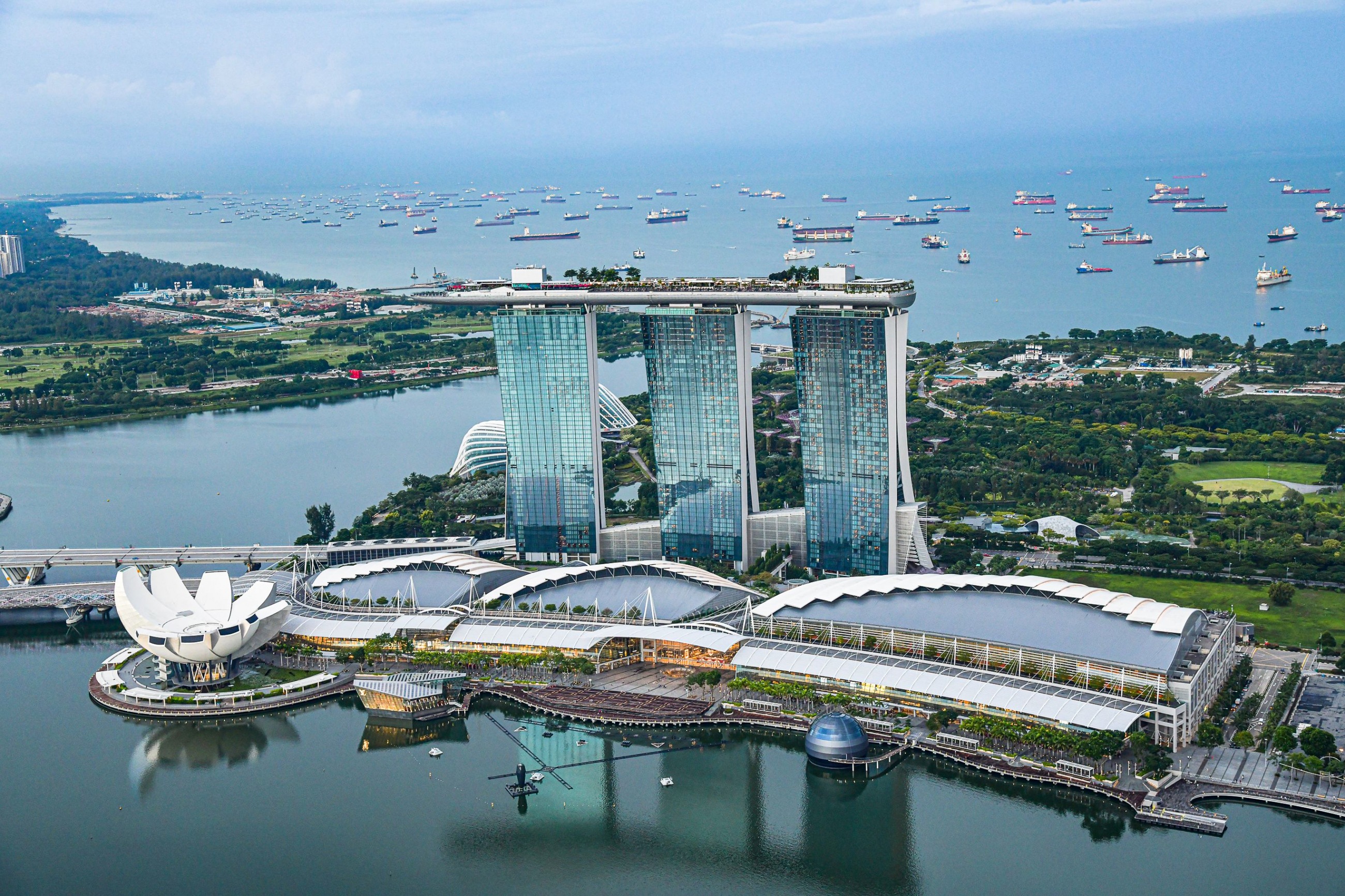
When we talk about mortgages here, we usually end up discussing interest rates. However, Singapore quickly reminded me that a mortgage doesn't begin at the bank at all. It begins much earlier with the economy, land, and the rules that the state has been playing by for decades.
I bought a globe and found Singapore. After a recent debate, it seemed like quite a symbolic start. I also surprisingly knew little about Singapore. When Singapore is mentioned, most people think of the strict rules that prevail there.
The legendary limited sale of chewing gum, the ban on electronic cigarettes, high fines for littering, or the ban on eating and drinking in the subway. An old joke even says, "Singapore is a Fine City." The joke is that "fine" means great and is also a term for a penalty. And this reputation led me to question how the housing market operates in a country known for its emphasis on order and long-term planning.
Isn't This Socialism?
I admit that I expected a heavily regulated system. But what I found made me think, "Isn't this socialism already?" However, I decided to give it a chance. Maybe it's a model that's much more thoughtfully designed than I'm willing to admit, and one that deserves attention from a Czech perspective.
It's important to mention from the start that since 1959, practically continuously, there's been one political party in power (People's Action Party), which allows the state to plan for decades ahead. They are criticized for less space for opposition, media regulation, or limited options for public protests. On the other hand, they have long been among the countries with the lowest level of corruption in the public sector in the world. I'm in awe. But I'm not involved in politics, so let's delve into how things actually function there.
State Builds Apartments Yet Most People Live in Their Own Homes
Approximately 80% of Singapore's residents live in apartments built by the state agency Housing & Development Board (HDB). It might seem, therefore, that this is a state that dominates the housing market. However, that's not the case, and more than 90% of households own their homes. It quickly became clear that a simple explanation wouldn't work here. Gradually, it dawned on me that without understanding Singapore itself, one cannot understand its housing either. The entire state is only about one and a half times larger than Prague, yet it has nearly six million people. On an area similar in size to our capital city, more than four times as many residents live. Every meter is simply precious.
Everything Starts with the Land
And the state owns approximately 90% of the land. In the Czech debate, we often discuss whether the state or private developers should build more. Suddenly, I realized that the housing debate there doesn't start with developers or mortgages at all. It starts with the land. When the state owns the majority of the land, it can decide long-term where new apartments, schools, hospitals, or metro stations will be developed. The model isn't entirely transferable to the Czech Republic, but it shows how significant an impact land ownership can have on the entire housing market.
Perfect Recipe?
When most Singaporeans buy an apartment from HDB, they are not purchasing the land forever. In most cases, they acquire a 99-year leasehold (known as leasehold). It sounds like a minor legal detail, but in reality, it affects everything. From the price of the apartment to inheritance and even whether the bank will grant you a mortgage. Let's try to imagine it with a typical family. At thirty, they buy a new apartment and will probably live there their entire lives, and one day, their children will inherit it.
However, they will not obtain a new 99-year period. They will only acquire the remaining duration of the original right of use. Grandchildren may thus eventually inherit an apartment with only, for example, fifty years left until the end of the right of use. In Singapore, a new term is not inherited. Only what remains of it is inherited. The fact is that the current system has been in operation approximately since 1960 when the HDB was established. Most apartments were sold with a 99-year right of use, which means that for most of them, this period has not yet expired.
So, the real test of the system is yet to come. It's certainly an interesting experiment, but its most important part hasn't been experienced by anyone yet. I'll allow myself a bit of speculation and think that, on the other hand, grandchildren and great-grandchildren know how to calculate their situation and may be forced to work harder.
Of course, all of this is the reason why mortgages operate differently there than here. Czech banks primarily assess the client's income, the value of the property, and the amount of own funds. In Singapore, it is also important how many years of the right to use the property remain. Two apartments can be next to each other, have the same size and the same view, yet their value and financing options can differ significantly just because one has ninety years left and the other only forty-five. Exceptions exist in the system, so theoretically, it could be possible.
The Mortgage Doesn't Start at the Bank
Even bigger surprise awaited me when I discovered where Singaporeans can get the much-needed personal funds. Most Czechs struggle for every personal million, which has strained relationships in many families. In Singapore, the Central Provident Fund (CPF) operates, a compulsory savings system to which both the employee and the employer contribute. For younger employees, their contributions can together amount to up to 37% of their salary.
When I saw the number for the first time, I had to go back and check if I made a mistake. However, this money is not only used as a provision for old age. Upon meeting certain conditions, people can also use it to pay a down payment or to repay a mortgage. In other words, the state forces citizens to save long-term, and then allows them to use part of these savings for their own housing. In Singapore, a mortgage is not just a loan from a bank. It is part of a system that connects housing policy, pension security, public finance, and long-term planning for the country's development.
This does not mean that Singapore has discovered the perfect recipe. Real estate there remains among the most expensive in Asia, and even extensive state construction has not changed the basic economic rule that where land is limited and demand is high, prices rise in the long term. Moreover, Singapore did not become wealthy because of its housing policy. Its economy is built on international trade, one of the world's largest container ports, financial services, technology, and a stable business environment. Only on this basis could a housing model develop that today attracts attention worldwide.
Lessons for Czechia
From the Singapore story, I drew one main thought. When we talk about mortgages in Czechia, we mostly discuss interest rates. However, Singapore reminded me that a mortgage is the last link in a much longer chain. First comes the economy, regulations, land ownership, the savings system, and city planning. Only then does the bank come with a loan.
And that's why I believe that housing is not just a question of the real estate market. Perhaps, in discussions about mortgages, we shouldn't just ask what the next rates will be. We should more often ask where the mortgage really begins. Is it really only at the bank?
Sources: original text, commentary, HDB, Asia New Zealand Foundation, Transparency International, ADB, Singapore Department of Statistics