Electromobility is rapidly expanding in the world and in the Czech Republic. Chargers will be built by the thousands in Prague.

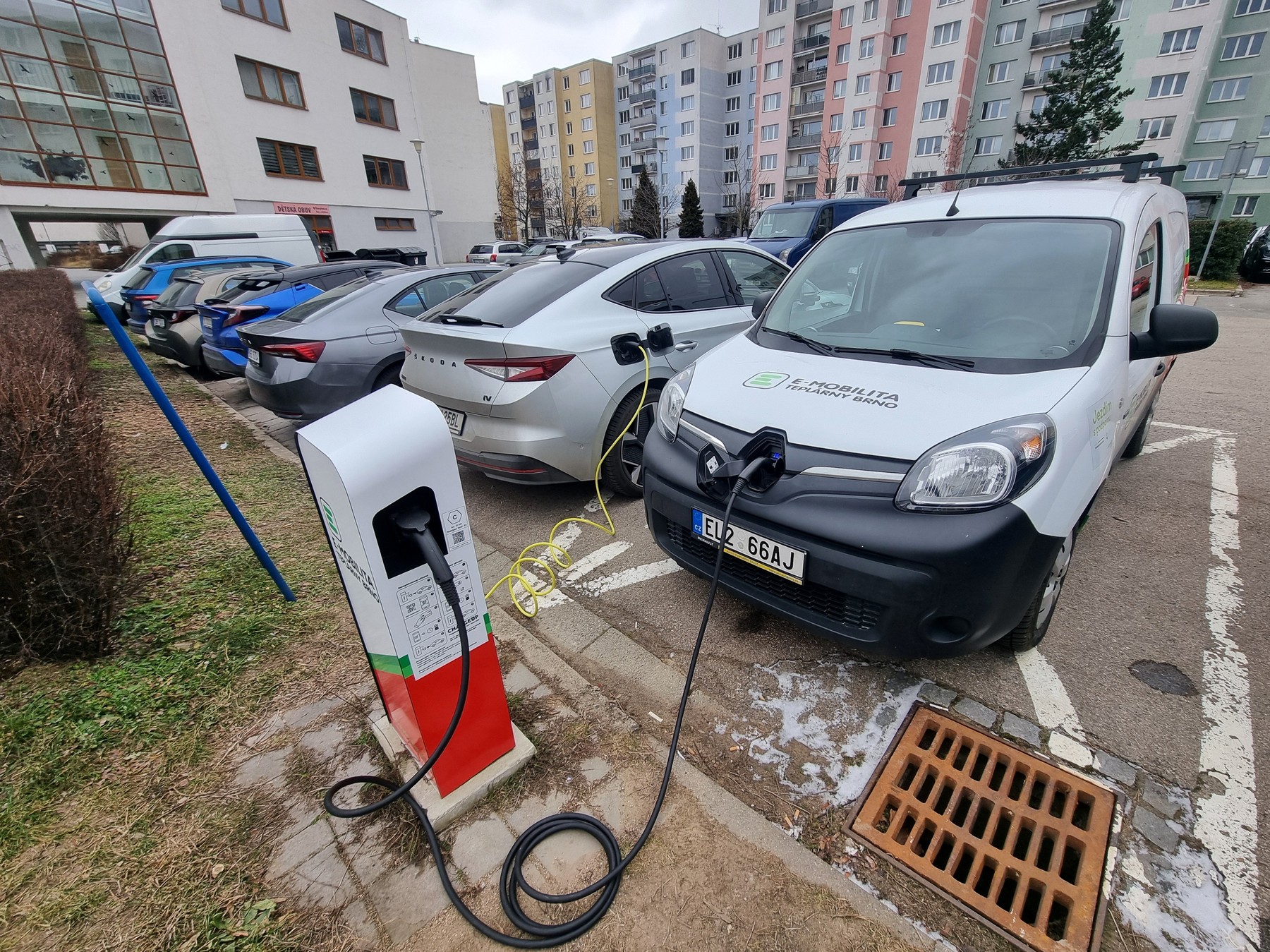
When looking at charging stations in front of supermarkets or elsewhere, we are increasingly seeing customers refueling. Not long ago, they stood alone most of the time. The world is transitioning to electromobility. In the UK, they have already adopted a consumption tax on electricity that goes into battery electric vehicles (BEV), similar to when buying petrol, and in China, electric cars dominate the market for cheap cars. In the Czech Republic, it is not yet a dominant trend, but the electric future is approaching. Prague is planning to build over a thousand charging stations.
Although it is unlikely that the UK will adhere to a ban on the sale of new cars with combustion engines in 2030, since the European Union has already backtracked on a similar ban for 2035, interest in electric vehicles in the country is rapidly growing.
The British even agreed to charging the purchase of electricity for powering electric vehicles. Purely electric cars should pay 3 pence per mile driven and plug-in hybrids 1.5 pence. It is expected to be approximately half the amount that is charged for the sale of gasoline and diesel in the UK. Electric vehicles recorded 473,340 new registrations in the islands last year, which secured them a 23.4% market share.

Increasing number of electric cars in Czech Republic
Even though the United Kingdom has more than 6 times the population of the Czech Republic, there is considerably more interest in electric cars there. However, it is also growing in the Czech Republic. According to the current data, 58 388 BEVs are registered. By the end of 2024, there were only about 30,000 of these vehicles in the Czech Republic.
The Czech Republic is catching up with the world, the number of electric cars will sharply increase and with it the interest in charging. In this regard, the most comfortable and economical way is charging the car in your own garage.
"My own experience shows that an electric car owner with access to a three-phase socket, who spends a lot of time on the road and travels approximately 70 thousand kilometers a year, drives about 70 percent without the need to use public charging stations. Of course, this is also related to the economic view of operation, because domestic "slow night charging" with alternating current (AC) is noticeably, about 50% cheaper," described his experience with intensive use of an electric car Jan Staněk for Ekolist.
The average car spends parked 95% of its life, but not all motorists certainly own a garage. Data on the amount of garage parking spaces in the Czech Republic is not available. In particular, large world cities must deal with the question of parking, which is also associated with charging for electric cars. The Prague management team is trying to rapidly expand the possibilities for charging electric cars. The sharp increase in their number in operation in Prague is inevitable.
Over a thousand new charging points in Prague
"We will gradually build a network of approximately 1,500 public charging points in Prague, which will allow people to conveniently charge electric vehicles directly in the city streets. The total investment is around 493 million crowns, with the majority of the costs being covered by European funds from the Transport Programme. The aim is to remove one of the main barriers to the development of electromobility - namely, the lack of available infrastructure - and to ensure that modern transport is realistically usable for the entire population of Prague,"
The deputy mayor of Prague for transportation, Jaromír Beránek, stated.
The mentioned number is definitely not small considering the current number of charging points. There are currently 5,866 public charging points at 3,335 stations in the Czech Republic. The mentioned number of chargers would substantially change these numbers, concentrating them on the territory of Prague. These would not be rapid chargers, which are necessary for use during long-distance transport, but their slower versions with a power of approximately 22 kWh.
"The development of charging infrastructure is an essential condition for further development of electromobility in Prague. This project will allow the creation of a dense and accessible network of charging stations directly in urban development. We understand slow charging as a public service and part of the city infrastructure. It should also serve vehicles providing services to citizens and should be a kind of availability guarantee, in contrast to fast charging, which is instead the domain of the free market,"
Tomáš Jílek, Chairman of the Board of Directors of THMP, explains the purpose of so-called slow charging on the streets of the metropolis.
The scope of subsidies for electromobility in the EU, which is also behind the aforementioned public chargers in Prague, does not even come close to how China invests in electric cars, where electric drive has become a symbol of cheap transportation. However, as in Britain, driving electromobility on subsidy money can be problematic in the long run.
Sources: author's text, TZ Prague, BBC, cistadoprava.cz, ekolist.cz, auto-mat.cz