I'm taking a Tibetan: Before a man proposes, he checks with an astrologer whether their zodiac signs match


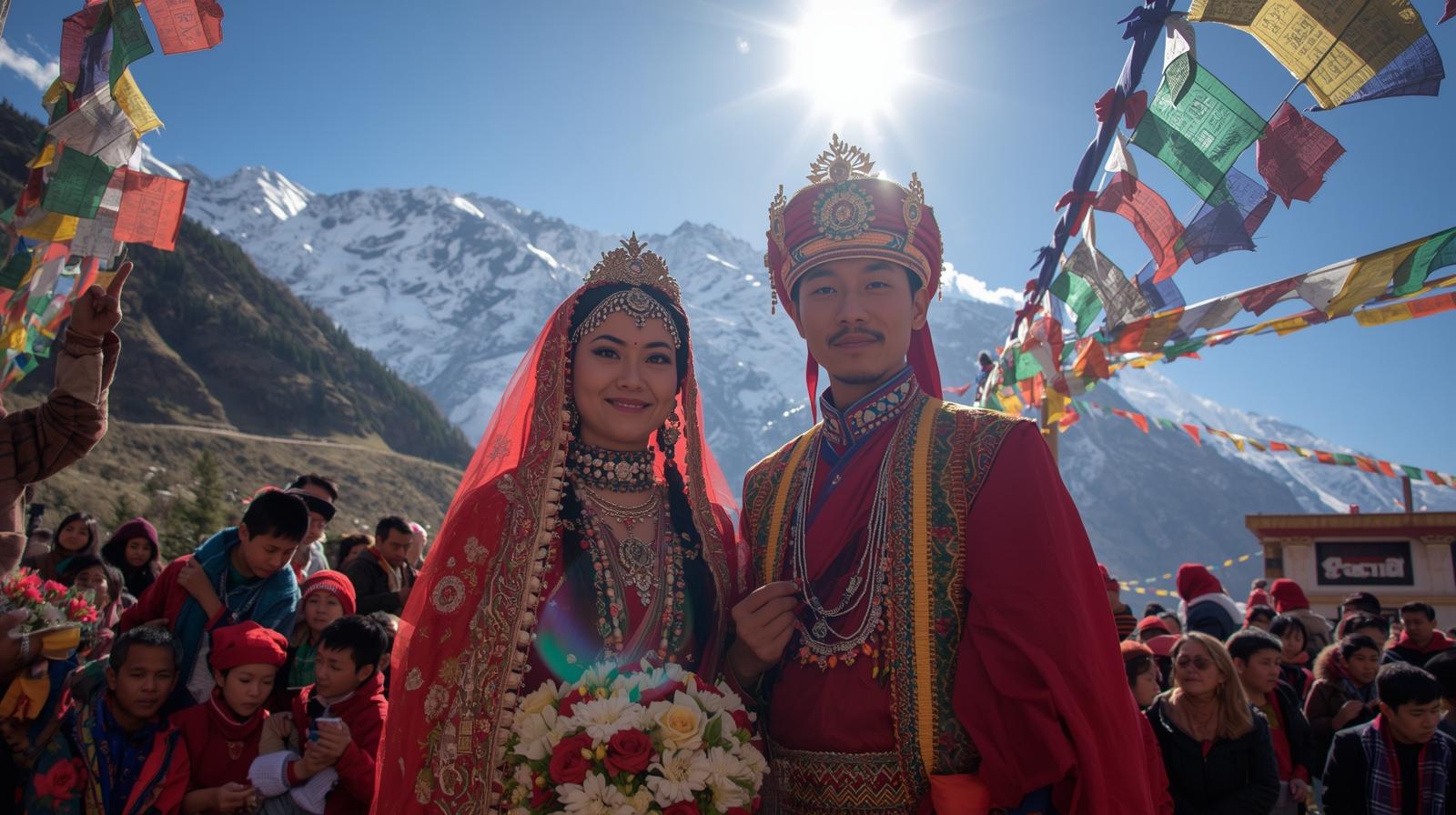
Everyone who knows the legendary film Seven Years in Tibet, knows what magical and mystical place is hidden behind the peaks of the Himalayas. Exactly there, in the land of prayer flags and quiet monasteries, some of the most impressive wedding customs in the world were created.

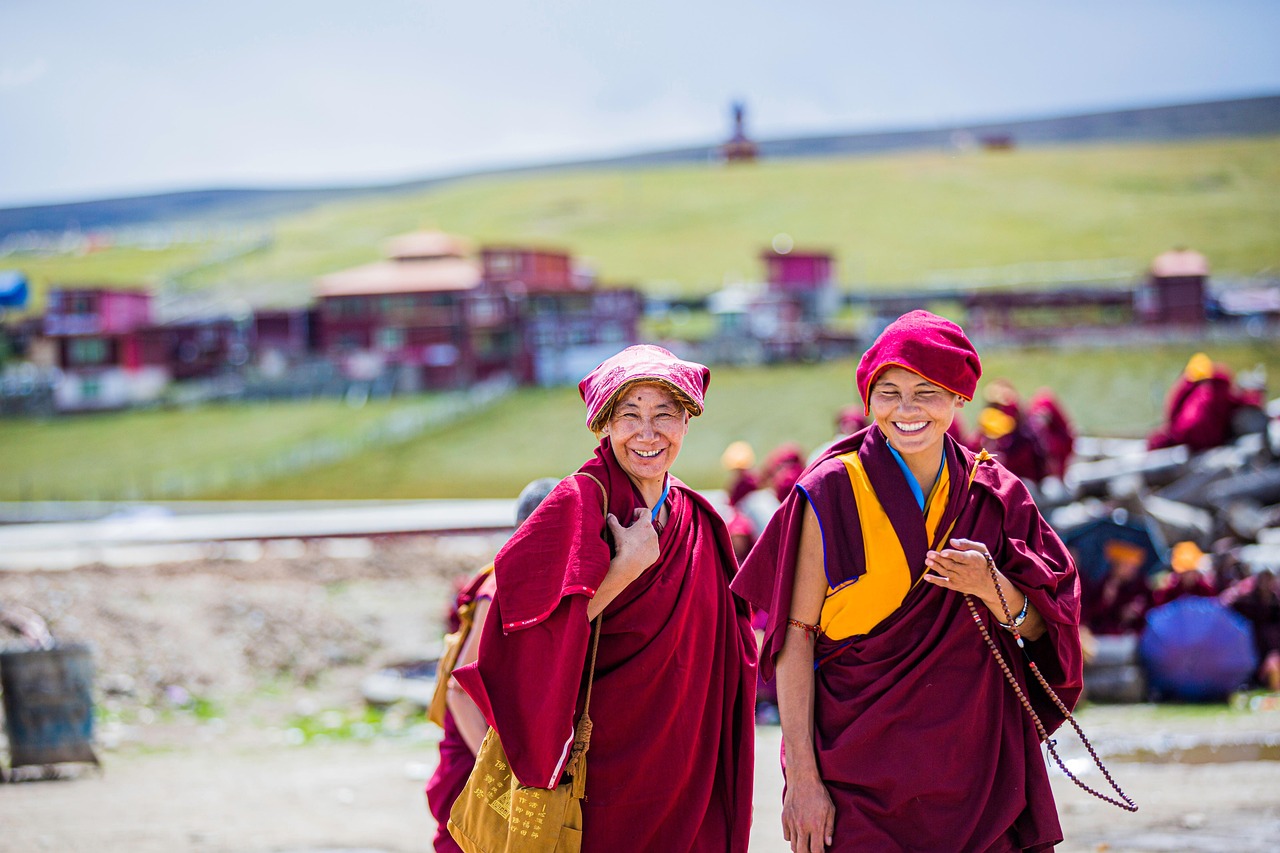

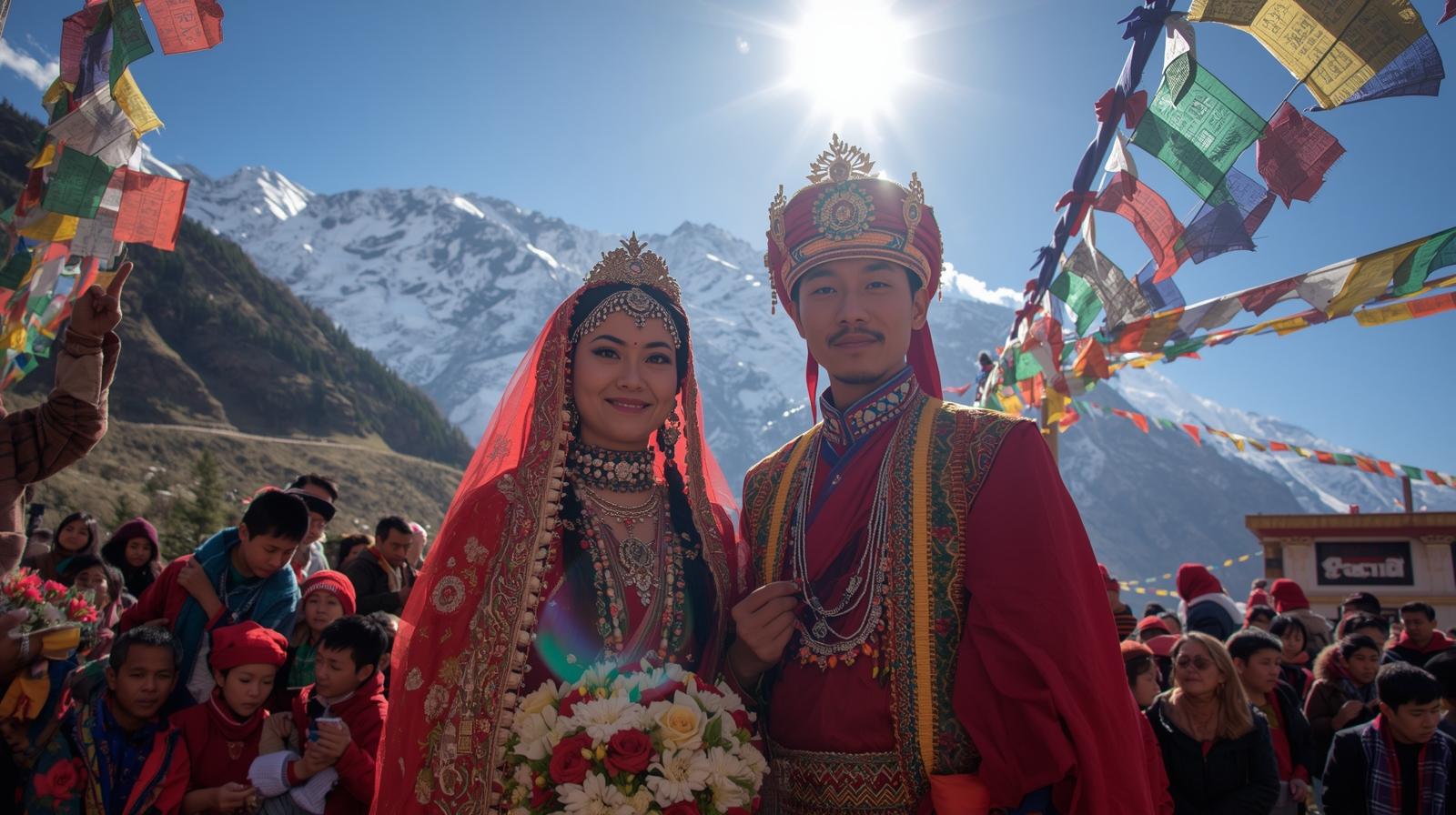
In old Tibet before 1951, various forms of marriage existed, often for practical reasons, which were to preserve family property. Polygamy was typical mainly for the nobility and local chiefs, who increased their influence through marriage. Monks of the yellow sect of Tibetan Buddhism forbade marriage, while other sects allowed it.
Monogamy is the most common type of marriage among Tibetan families, other forms are rather exception.
Polygamy is the second type. For foreigners, this may seem strange. This type of marriage is typical for owners of slaves or wealthy families in slave society, although it sometimes occurs in ordinary families as well. It is often a situation where sisters share one husband, or in other words, one man has several wives.
Polyandry has a millennia-old tradition in Tibet, especially in rural areas, where small agricultural lands and harsh living conditions force families to preserve family property as a whole. It is a situation where one woman has several husbands. This type is much rarer and occurs, for example, in some Himalayan communities where brothers from one family may share one wife in order to preserve assets and land for the family.
In agricultural and pastoral areas, women usually share one room and husbands live in it alternately according to age: the older ones have precedence over the younger ones.
Before intimate contact, the husband leaves a lace protruding from the door so that other husbands know they need to be careful and not to enter the same space. This avoids disputes. In some cases, we encounter situations where a father and son share one woman, for example when the mother died and the younger woman became the wife of both the son and the father. Similarly, there are situations where a mother and daughter share one husband - for example, when a widow remarries her daughter and then, when the daughter reaches adulthood, she lives with her father.
The fourth form of marriage pertains to Tibetan Buddhists. Monks, with the exception of the Glug sect, are not forbidden to marry and can freely choose a wife.
Polygamy and its historical significance
The long-standing practice of polygamy in Tibet can be seen as a remnant of an ancient societal marriage. Economic reasons have allowed this form to survive until the present day. For example, in the Chamdo area some people support polygamy in order to preserve the ancient “pacuo” system – clan ties based on the paternal line. The pacuo clan places great emphasis on the birth of sons, who ensure the expansion of the clan and the maintenance of property. If the first wife did not have sons, the man took another wife until he managed to father sons.
Women in this system often had only the role of child bearers with low social status, while those who gave birth to sons had a higher status. Before 1951, it was also advantageous to have more women in terms of taxes and work. Tibetan weddings are a fascinating combination of spirituality, tradition and deep cultural values. Against the backdrop of the majestic Himalayas, these ceremonies have not only symbolic but also spiritual meaning, which is passed on from generation to generation. Every detail, from preparations to wedding vows, carries a message of faith, respect and blessing.
How a traditional Tibetan wedding ceremony takes place
On the wedding day, the groom's wedding procession arrives, led by a respected man, e.g. an astrologer, on a white horse, carrying pictures. He is accompanied by a group of people with colorful arrows decorated with mirrors, jade, and precious stones.
When the bride enters the groom's house, she walks on a rug of barley and tea leaves – symbolizing the abundance she brings to the family. She then sits with the groom and receives blessings, silk scarves called khatag, and gifts from guests. Meanwhile, lamas recite prayers to bring the newlyweds peace and long shared life. A feast full of singing, dancing, and joy follows.
Parents and relatives of the newlyweds toast with guests. The evening ends with the newlyweds' toast. After the wedding, everyone celebrates. In Tibet, the newlyweds are not allowed to leave their home for three full days - it's a test of the strength of their marriage. If they endure, Tibetans believe that their marriage will last forever.
How the proposal proceeds
In Tibet, love is governed not only by the heart but also by the heavens. When a man longs for a woman, he first determines her date of birth and sign according to the Tibetan zodiac. He then checks with an astrologer whether their signs are compatible. If everything is OK, he sends a mediator to the woman - a person who brings traditional gifts such as khatag (a white silk scarf), butter tea, or barley wine chang. If the woman's family accepts the gifts, it means they agree to the marriage. If the family agrees, they accept the gifts and start preparations for the engagement.
Once the request is accepted, a date for the engagement ceremony is set, which takes place at the bride's house. The groom's family brings gifts for each member of the bride's family and the ceremony is attended by the parents of both sides along with two witnesses. Following the exchange of gifts, one witness reads aloud a copy of the engagement contract and the other checks it. Both witnesses then sign the documents and confirm the consent of both families with a seal. After jointly signing the contract, a feast follows where guests sing, dance and at the end receive a silk scarf as a souvenir.
After the Wedding
Three to six months later, another important moment occurs - the visit to the bride's parents. The couple brings gifts and in return receives barley, tea, and swastikas as symbols of luck. Only after this visit is the wedding cycle considered completed.
In Tibet, swastika symbols as signs of luck (also known as "卐") are used as ancient spiritual and protective symbols, which have nothing to do with the German swastika of the 20th century. In Tibetan culture, they represent luck, eternal life, harmony, prosperity, and protection against evil spirits. These symbols often appear at wedding ceremonies, mandalas, altars, temples, prayer flags, ritual items, and home decorations. In the context of a wedding, for example, they are placed on pillows or pictures to bring luck, fertility and prosperity to the newlyweds.
You may be wondering now, what does the daily life of local Tibetans look like? How do Tibetans spend their days in bustling cities, peaceful villages, vast pastures, or sacred monasteries?
Life in Tibet
Tibetans live with faith as a natural part of everyday life. In the morning, yak butter lamps are lit in many households and the scent of incense rises to the sky, bringing happiness and purification. Many set out on a kora - a pilgrimage to sacred sites, temples, or mountains, where they pray and spin prayer wheels. They perceive this ritual as a way to develop humility, gain merit, and find inner peace.
After prayers, life moves to the tearooms. There, a typical drink is served – sweet or salty Tibetan tea with butter, along with balep bread, momo dumplings, or tsampa roasted barley flour. Teahouses are places of rest and conversation, where older residents meet after morning prayers to rest and share news from their surroundings.
Life in the cities
Cities like Lhasa and Shigatse combine traditional Tibetan values with a modern way of life. In Lhasa, the day starts with a prayer in front of the home altar and lighting butter lamps, followed by a breakfast consisting of tea and tsampa. The locals often walk around the Jokhang temple or the Potala palace on a kora to maintain their spiritual balance. In Shigatse, the rhythm is similar, but the center of spiritual life is the Tashilhunpo Monastery, the seat of the Panchen Lamas. After the morning pilgrimage, residents gather in the old streets of the city, where life pulses between teahouses, markets, and shops with traditional crafts.
In the countryside, life revolves around the seasons. The morning begins with feeding the cattle and preparing for work in the fields. Men plow the land, women sow barley, and during breaks, they sit together at the edge of the field, rest, and sip tea with pieces of dried meat. After sunset, everyone returns home, has dinner together, and prepares for the next day - peaceful, humble, but meaningful.
Shepherds and monks
Nomads from Tibet lead a simple life, but deeply connected to nature. In the morning, a fire of yak wool crackles in their tents, fuelled by dried dung. Women prepare tea and butter, while men leave for the pastures. Everything they need comes from their herds - food, clothing, and warmth. In the evening, the whole family gathers around the fire, tells stories, and gives thanks in prayer for the past day.
Monks are a special case. Their days are filled with prayers, meditation, and study. Every morning they are awakened by the sound of a drum, echoing through the monastic walls. After prayers and a modest breakfast, they devote themselves to reading sacred texts or engaging in logical debates about philosophy, which are an integral part of Tibetan tradition. In the evening, the monastery is immersed in silence, broken only by the chanting of mantras.
Air Funeral
A colorful procession of pilgrims slowly makes its way along the winding mountain road. Men, women, children, and the elderly walk with determination, as if in deep concentration. Their gazes are directed into the distance and their movements resemble meditation in motion. Everyone seems to be in touch with the sacred landscape and allows it to guide them. The ritual for which they have come here has already started - not formally, but within every one of them.

During their journey, Tibetan pilgrims learn to detach themselves from their bodies, thoughts, and egos. A unique ceremony known as sky burial takes place at the cemetery. It is associated with the element of air, which for Tibetans is a symbol of freedom and spiritual transition. For Western people, accustomed to traditional forms of burial, this custom can be shocking, even repulsive. But only until they look at it through the lens of their own culture and understand its spiritual logic.
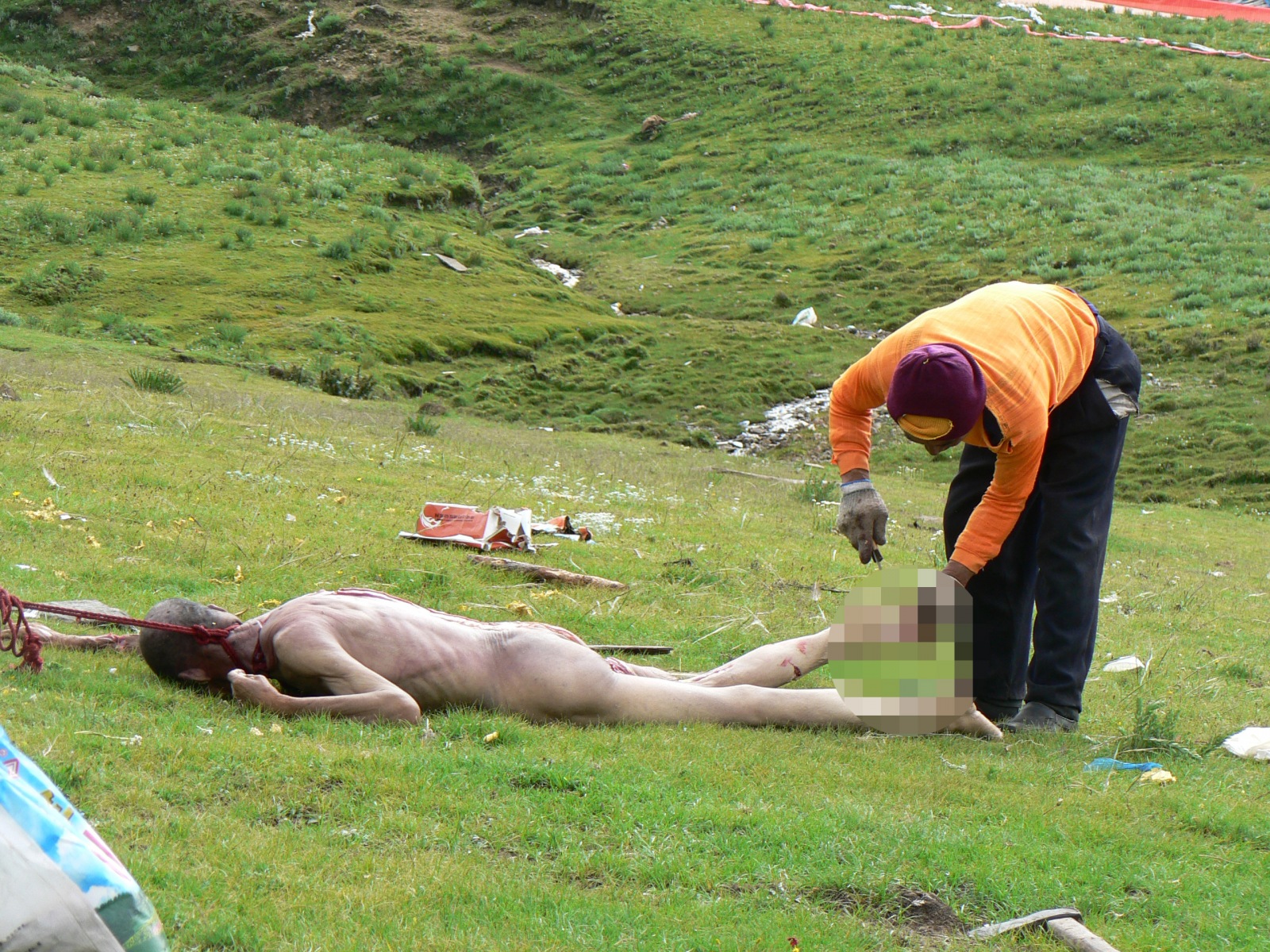
After the ceremony near the monastery, the relatives of the deceased bring them on horses or yaks to a place called durthö - a fenced meadow with stone circles and small shrines. There, lagpoes await them, monks trained to perform the last rite. However, society often looks down on them, just as executioners were once scorned in Europe. Their task is to cut up the body of the deceased and offer it to the vultures circling above the place as silent messengers from the sky. The monks will crush the remaining bones, mix them with barley flour - campa - and feed them again to the birds. For Tibetans, this is not a sign of disrespect, but a deep understanding: after death, the body has no value because life does not belong to the material world.
Buddhism, which prevails in Tibet, teaches about the constant cycle of birth and death. After death, the soul moves into a new form. It can be born into a better or worse life, even as an animal. Therefore, Tibetans feel compassion for all living beings. When the body becomes food for birds, they consider it a gift of life to other beings, a final act of kindness.
Sky burial is therefore not only spiritual, but also a practical choice due to the hard soil of the highland plateau, where burial in the ground is not possible. However, this method is not used for children under eighteen years, pregnant women or victims of accidents or infectious diseases.
Many rituals of various nations may seem strange, even repulsive, until we understand their meaning. The Tibetan sky burial is proof that death can be understood as a natural part of life, as a surrender to the cycle of nature. Tibetans call the vultures who participate in the ceremony, "sky dancers" - creatures that carry the soul of the deceased into heaven, where it awaits its next birth. Drigung Monastery, known as the spiritual center of these burials, attracts pilgrims from all over Tibet. Families are willing to travel for several days just for their deceased to undergo this ritual. In addition to sky burial, other forms of burial - cremation, burial in the ground or in water, where the crushed body becomes food for fish, are practiced in Tibet. Local residents believe that this continues the cycle of life.
And when they dream of the dead, they regard it as a sign that their souls are wandering. They therefore draw a symbolic ladder - a bridge between the worlds - so that the soul can ascend to its next life.
The Art of Respect
Tibetan culture is based on respect - for traditions, nature and people. Every step in a monastery or village requires considerateness. It is not allowed to photograph monks without their consent, nor to enter sacred places with uncovered shoulders. This approach to respect is also a deep message for personal relationships: silence can sometimes be more genuine than words, and humility can be stronger than the desire to have truth.
The traditional Tibetan tea with yak butter or the simple barley porridge tsampa is not a treat for everyone, but it teaches modesty. The simplicity of these dishes hides gratitude - and that's something many people forget to experience after their wedding. Being grateful for little gestures, for ordinary days without conflicts, for peace alongside your partner - this is the spiritual food we don't need to search for in the mountains.
The journey to Tibet is not just a tourist experience, but a reflection of life. It teaches us to accept changes, calm down, and discover the value in simplicity. And when we look at it from the perspective of married life, we might find that sometimes instead of traveling to distant lands, it's enough to discover the mountains and silence right in the heart of another person.
Source: author's text, tibettravel.org, .greattibettour.com, gototibet.com, tibetuniversaltravel.com