"Motorists make fools of themselves with what they say," claims Daniel Kortus.
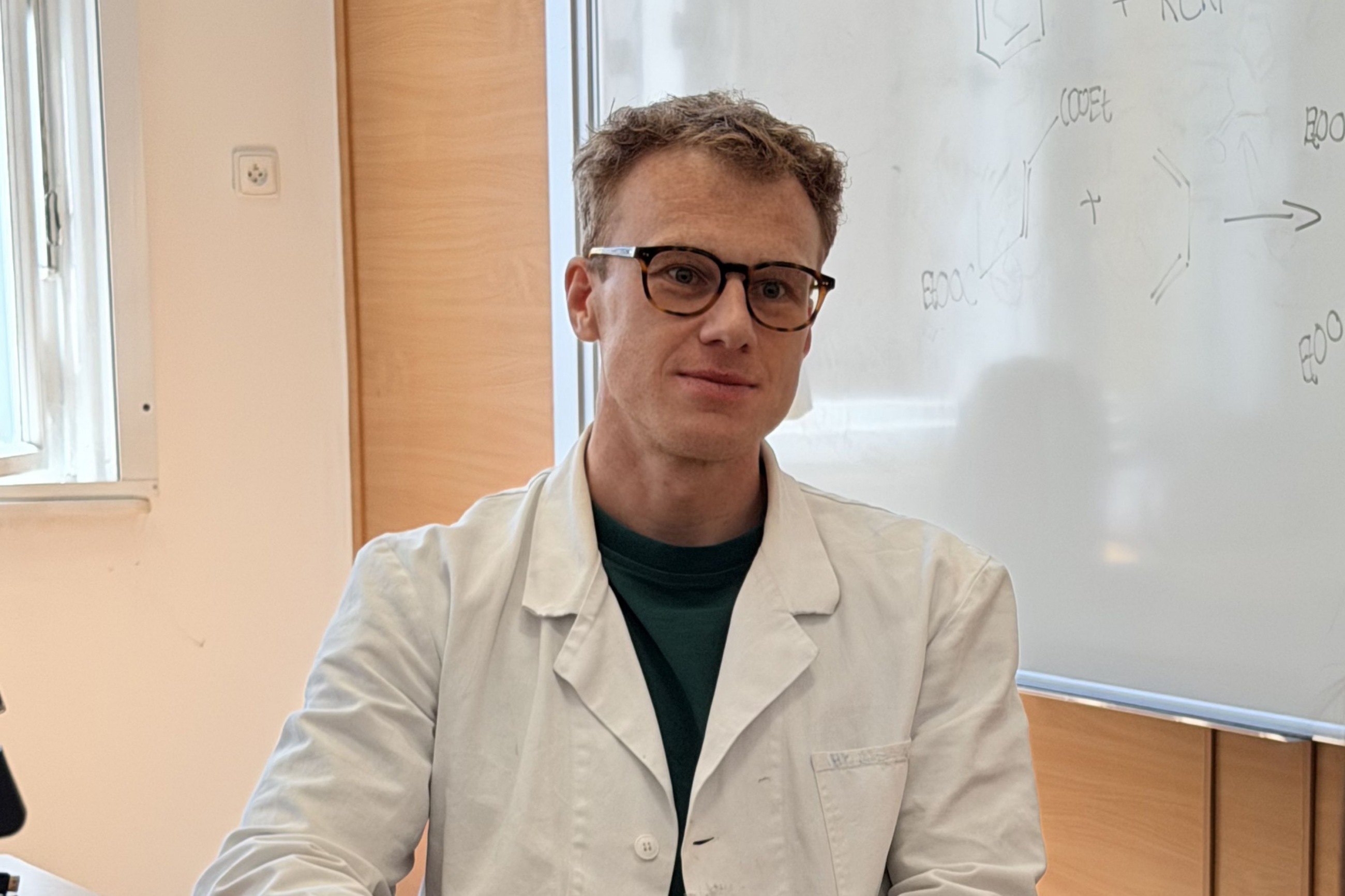
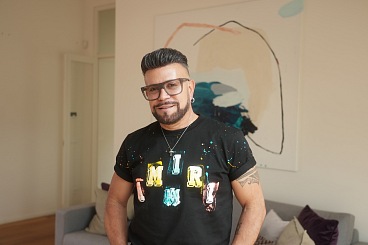
Scientist and influencer Daniel Kortus, who goes by the profile Klimatomluva on social media, describes in an interview why he enjoys explaining science to the public more than working in a lab, and how he uses emotions and entertaining content in the process. He criticizes the political debate on climate, including the motorists' movement and the statements of Filip Turek and Petr Macinka, which he believes often rely on long-debunked claims. He also explains why facts alone are not enough and why today's climate crisis is also a crisis of trust.
You are a scientist, but you also engage on social media. Do you ever feel more like an influencer than a scientist?
Generally, yes. I enjoy science, I do it gladly, but I find that I generally enjoy communicating science more. I obviously have a passion for science, that's why I pursued a PhD in organic chemistry, but teaching and talking about these things is probably more interesting to me than being closed in a lab because I'm quite a communicative type.
So compared to some of my colleagues who spend a lot of time here doing research and it's their main focus, I tend to enjoy communicating science to the outside world and talking about it. Influencer is quite a strong term for me, I still haven't gotten used to it, but I guess that's one way to put it.
What bothers you more, ignorant people or smart people who manipulate?
Definitely smart people who manipulate. There's really no question there. From a practical standpoint—and I don't mean to be insulting—the damage a smart person can do by deliberately manipulating and lying is much greater than what an ignorant person can cause.

Where is the line when a scientist loses their credibility by becoming an activist?
I think that line shouldn't exist at all. When it comes to activism, as it's perceived here in the Czech Republic, especially green activism, it is often viewed as something very negative. An activist is then seen as a person who glues themselves to the road because they want to save the planet or splashes tomato sauce on artworks.
But this isn't activism. This is exactly the foolishness we talked about a moment ago. Of course, it doesn't fix anything and just annoys people. So, from my perspective, because of these people who actually glue themselves to roads and similar actions, there is much more frustration towards activism in society than it deserves.
Activism itself means highlighting a problem, and I could even consider myself an activist. By pointing out climate change and saying that it's a problem, that people are lying to us here.
In the Czech Republic, the narrative around activism is somewhat negative, so I don't publicly call myself an activist. But when I think about it, I could easily call myself one.
When you go into a debate, do you go to explain, or do you want to win it?
Well, do you mean into a debate in general, like in an interview, or when I'm talking to someone?
Even when you're talking to someone.
It depends. But this is a good question. When I'm talking about climate change, for example, in a pub with friends, after three beers we're obviously shouting at each other, but in a good way. So it's clear there that the ego wants me to win. However, if it's a debate where I see that I'm really talking to someone who perhaps doesn't believe me, then I'm not aiming to win, because I know that I wouldn't convince them that way at all.
Most of the time, when it's debates with people who confront me in some way – saying it's not happening or that the climate has always changed – I try to ask them questions. How do you know it's always happened? Who told you? What evidence do you have that this climate change is the same as those in the past?
Then people often start running out of arguments, and I tend to plant a seed of doubt rather than trying to convince them of my opinion. So, I enjoy arguing with friends, somewhat egotistically, but with people I don't know, I tend not to discuss this topic.
Is there anything about the climate that you don't tell people because you'd be "canceled" for it? Maybe on social media?
No, not exactly like that. Considering what people can say on social media, I don't think such a thing exists in the climate discussion. However, there are things I might not say because they could be too scary for people. So I definitely have some filter.
It actually helps—not to spread too much of the... how to say it... I try not to make it a bigger problem than it is. On the contrary, I try to play it down a little. Even the content I create is meant to be more humorous, and I try to give it a lighthearted character.

It could, however, be discussed much more seriously and rigorously, because the topic is really not easy. It affects all of us and we should take it very seriously. In the future, it could backfire on us if we don't.
Will Generation Z have it worse than their parents' generation?
Well, this is more like... From the perspective of climate change, I think not – it's still too short a period for us to notice something like that. But at the same time, I want to believe that the more we see the consequences of climate change, the more seriously we'll start to take it and begin addressing it.
And that even people who come after us in a hundred years will have it better than we do. That's what I'd like to believe.
You say that facts are starting to lose their effect. So what does work?
Well... I try, when I take it from my own perspective, to speak factually, but those facts are more like the background of what I'm creating. I try primarily to target people's emotions in some way.
That's why I include, for example, the faces of politicians who say nonsense, and only then do I pedagogically show what's wrong with what they are saying. So, in my opinion, facts are very important, but on their own, they don't immediately capture attention.
If I started talking about climate change and it was just me without any context, no one would be interested. But when there's a politician involved who at least stirs controversy among the public, people are more likely to look at it, and half of them will like it—or maybe even more, as it slightly ridicules him.
Even though I don't take it as ridiculing him. In my opinion, he ridicules himself with what he says. However, if I present it well and factually justify everything, in the end, people will accept those facts and be entertained at the same time.
So, I think the primary thing is to catch attention with something entertaining. That's how I do it. Of course, it can be done through negative emotions too. I could berate someone a lot—and some people might enjoy it—but that's not for me. So, I try to capture attention more with entertainment.
What do you fear more—climate change or people?
Wow... I guess I generally don't fear people. So, more like climate change.
Is there a point beyond which the climate crisis will be unmanageable, and people will only have to survive?
This is a very catastrophic scenario, but there are indeed several such points, known as tipping points. These are mostly boundaries beyond which we know that a given ecosystem will begin to collapse, and we won't be able to do anything significant about it.
This is now starting to happen, for example, with coral reefs, which have a so-called tipping point somewhere between 1.5 to 2 degrees. If the average temperature on Earth is higher, we will not be able to save most of them. We would have to remove carbon dioxide from the atmosphere to reduce its concentration and cool the planet again.
However, we are currently not even able to stabilize emissions, which continue to grow and increase. So those are exactly the tipping points. If coral reefs as an ecosystem were to collapse, we actually don't even know all the consequences it would cause.
In any case, it's not just about divers not visiting places like Egypt. There are much more fundamental issues involved—fish breed there, they provide shelter to many animals, and so on. It would affect a vast part of the marine ecosystem.
And there are more such tipping points. But most of them are at higher levels of warming, and I hope we never reach them. If we managed to keep global warming below three degrees, that would be really good.
Even three degrees is a lot, but above three degrees, we really don't know what would happen to the climate.
So do you think we, as a society, are closer to adaptation or collapse?
I think it's quite on the edge. We are really balancing. A few years, like four, when Donald Trump is in America, denying climate change, or even some politicians here in Europe, may not yet be a critical problem, in my opinion. But if it were to happen a second or third time, I think it could be a problem.
Do we as individuals still have any real responsibility, or is it just an illusion?
We all have responsibility, definitely. Actually, I'm not sure if you've heard about the concept of a carbon footprint, where everyone is supposed to calculate their impact—like when you take a bus or fly on a plane.
This concept is real, but it was devised by fossil fuel companies to spread the blame for what's happening among individuals rather than just them.
The greatest responsibility for climate change lies with the biggest emitters, that's clear. But each of us, through how we behave towards our environment, either contributes to the overall issue or tries to do something about it. Whether it's about the diet one chooses or whether one flies on a plane or not.
Often, however, these individual choices have a much smaller effect than we think.
For instance, recycling plastics won't solve climate change – it makes sense ecologically, but it doesn't have a significant impact on the climate. Similarly, an individual stopping eating meat won't solve the problem; it would need to change on a societal level.
On the other hand, emissions from personal transportation can be influenced quite a lot. If a person lives in a city and decides to walk or cycle instead of driving a car, these are the actions where individuals can truly affect their overall emissions.
Is it morally justifiable to have children from this perspective today?
I think so. It's a big topic, and for me, it's actually sad and a bit frightening that someone might think it would be immoral to have children.
I see it completely the opposite way. The human population is practically at its peak, and if we don't have children, it will only age, and we will lack young people.
And who actually makes the changes? Who makes discoveries in society and moves it forward? Young people, of course. If in 50 years we have a country full of fifty and seventy-year-olds, I doubt we'll be able to achieve any significant change.
I don't have children myself, so it's easy for me to say, but I definitely plan to have them. And I feel sorry when someone thinks about their life as if it's a virus or some burden on this planet and doesn't want to have children because of it, because that's definitely not the case.
Why does climate policy so easily play into the hands of populists?
Because it's easier to close your eyes and reassure people that nothing is happening than to go out and say we have a problem that we caused ourselves. This actually creates a certain image of collective guilt.
In the last two hundred years, humanity has reached enormous wealth, largely thanks to the use of fossil fuels. If we hadn't started using them, we would probably still be living in something like an advanced medieval era.
But at the same time, it is good that we discovered and utilized fossil fuels. They have provided us with prosperity – thanks to them, we have everything we have today. However, it also demands a price. We are changing the composition of the atmosphere and the oceans, and essentially the entire climate, faster than the planet could naturally handle.
It is happening at an unprecedented speed. However, telling people this is not something that wins elections. And that's why it plays into the hands of populists, who will claim that people pointing out climate change are crazy, alarmists, or leftists who just want to restrict and regulate us.
And isn't this whole crisis starting to become more of a crisis of trust than a climate crisis?
In my opinion, the crisis of trust extends to more areas than just climate change, but it is a part of it. Distrust in science is something I hear very often – on social media and in general. People say that scientists scared people with cooling in the 70s, now they scare with warming, they used to scare with the ozone hole and today they don't, or that they warned about acid rain and nothing happened.
People often don't realize that the reason we no longer talk about the ozone hole or acid rain today is precisely because scientists figured out what was causing these problems, and globally efforts were made to prevent them from worsening.
The fact that we don't talk as much about the ozone hole or acid rain anymore is a consequence of science uncovering their causes and proposing solutions. And the world was able to agree - for example, in the case of the ozone hole, to stop using CFCs that caused it.
And that should, on the contrary, be highlighted as a huge success – that we are capable of changing something globally when we want to. Instead, it is often used as an argument against science.
So the distrust is significant, even though it is not entirely surprising. The amount of information coming at us from social networks and other sources is enormous, and it's very difficult to navigate through it.
However, one must believe in something. And I would be pleased if we believed in science and facts rather than some ideologues.
Do you think politicians like Filip Turek deliberately manipulate, or do they believe what they say?
At first, I thought they believed it. I know he follows me, or that he knows my work. But over time, I learned more things, so today I am personally convinced that he does it intentionally.
When Petr Macinka questions the climate crisis but still manages the department, is it a system failure?
I don't think he's there now, I believe it's Igor Červený now, but Petr Macinka was there for a while. I wouldn't say it's a system failure.
I would say that if we were to point fingers, it's more that they fed into a narrative that didn't have many supporters here. That is, the idea that the "evil European Union" is trying to regulate us and destroy European industry because of green politics. They directly addressed the segment of society that is receptive to this.
So I don't think it's a failure of the system, but rather the way in which climate change issues were communicated. Because no one really explained it here, and I don't blame people for being influenced by what was said about the Green Deal, like banning combustion engines and so on.
For some people, it just works, and "motorists" have simply found their target audience very well.
Have you received any hate or personal attacks from supporters of motorists?
I'm not sure if they are directly supporters of motorists, but I do receive personal attacks, yes. On social media, it doesn't bother me as much. It's mostly vulgar insults.
It's often labels like calling me an eco-terrorist, communist, leftist, dogmatic, or demagogue. It actually shows me quite well how part of society views someone who talks about climate change from a scientific perspective.
I don't discuss politics at all, or I minimally discuss their politics, I just point out that they are talking nonsense and automatically get labeled as a leftist for it.
But most of these attacks are of this nature – they head in this direction.
When it comes to threats, it's obviously not pleasant for me. Unfortunately, it happens, and I guess it happens to anyone who is more visible in some way.
Is there any statement by motorists regarding the climate crisis that really amused you because it's not true?
Well, practically everything they say.
For example, when Petr Macinka confidently says in some pre-election debate that solar activity has a much greater effect than we humans do, I think: really, Petr? Do you really think that it never occurred to climatologists to look at the sky? That they saw that huge thermonuclear reactor and just waved it off, deciding not to study it?
I actually enjoy the confidence with which they say these things, as if they just came up with them off the top of their heads. Yet these are things that were debunked back in the '80s, and the disinformation scene just keeps repeating and spreading them.
So when these people talk about physics or chemistry, I'm more amused.
When Petr Macinka explained how a logarithmic curve works and that the effect of carbon dioxide is logarithmic, so it can't cause anything anymore, those are the moments when I'm actually glad I've found something entertaining.
Does climate policy have the right to limit freedom associated with cars?
I think it doesn't actually limit any freedom. Technology simply continues to develop. I believe that in 20, 30, or 40 years, we will look at this similarly to if you were asking me back when cars with internal combustion engines were emerging if it limited people's freedom to ride horses.
Cars with internal combustion engines have been with us for a long time, the technology is very refined, and companies have invested enormous amounts of money into it. It is clear that we cannot just end it overnight. Moreover, we currently do not have a perfect substitute, even though electric vehicles are constantly improving.
I think that in 10 to 15 years, they will be completely commonplace.
And no one will view it as a restriction of freedom. It is often associated with the plan to ban the sale of new cars with internal combustion engines in 2035. I believe it has been adjusted in some way and is now a bit different, but that doesn't mean no one will be able to buy a car with an internal combustion engine after 2035 or that they won't be able to drive them.
It just means that the sale of new cars will end, so the existing ones will still be around for 15 to 20 years. They may very well appear even around the year 2050.
And if in 25 years we don't have electric cars that are better and cheaper than internal combustion engine cars, that will really be a problem. However, I think that when that ending comes, it really won't bother anyone anymore.
A small minority will still want to drive a car with an internal combustion engine. But the majority will drive electric cars as a matter of routine, and one day we'll be wondering how we drove gasoline and diesel cars for so long.
Isn't there a risk that the ban on internal combustion engines within the Green Deal will strengthen opposition to climate policy rather than enforce it?
That is definitely happening. The topic was poorly communicated, and some groups seized it to create a narrative about the "evil European Union" taking away our freedom and banning combustion engines, which really strengthens the opposition.
At the same time, I think the step was historically important because it set us on a path towards the electrification of automotive transport. Huge technological advances have been made, and companies have begun to prepare for it much more quickly.
On the other hand, it's also something that the other group can lean on – people who try to "fight" climate change by claiming that it doesn't exist or that it's not caused by humans. They're certainly grasping at that.
It's incredibly difficult to balance. On one hand, the step is necessary; on the other hand, it provokes a response from populists who then say: "We won't ban it for you." That's why it's crucial to communicate the whole thing much better.
Isn't climate transformation politically almost impossible in times of global tension?
I hope it is happening somewhat in the background. I believe that today we are at a stage where renewable energy sources and cleaner technologies can economically compete with fossil fuels, which is a huge advantage for any transformation to take place at all.
In the past, I think it was largely about political pressure because the technologies weren't as advanced, weren't as cheap, or economically viable.
But now it is starting to happen for real. Today we know that in many cases it is cheaper to use renewable sources than fossil fuels. And this greatly favors making capitalism as such embrace it and begin to economically exploit these renewable sources.
When you look at it practically, a wind or solar power plant is a great concept - you build it once and then it produces electricity for you in the long term, from which you profit. Even without subsidies, it makes sense in many cases today.
That's why I think that getting, for example, a solar power plant is already an economically advantageous step today, because in many parts of the world it simply pays off.
Is the bigger problem the climate crisis or the political system unable to solve it?
I think that's the essence of us humans.
Inefficiency. We see it everywhere. When a company grows into a large corporation, any change is incredibly difficult to implement because there are too many people and too many levels of decision-making. It's similar with the state.
And when you want to address something on a global level, you have to involve both rich and poor countries – the rich ones should help, but not everyone wants to. That inefficiency is simply unavoidable there.
Climate change, however, is also something that happens regardless of what we think. It's a physical problem. It will be as big as we let it become – it's largely up to us.
When I think about it, I would say that the bigger problem is the inefficient policy. Because we know that it's happening – this isn't a matter of opinion.
Carbon dioxide simply causes warming and climate change. And now politics has to deal with it somehow. That's actually what I'm trying to convey in my videos – proper climate policy should be based on scientific findings.
These should form a kind of scaffold on which the policy is built. It must be based on the fact that climate change is really happening.
What "motorists" are doing, in my opinion, is demolishing this scaffold and claiming that nothing is happening, that people are not causing it, and that it's not in our hands. That we can continue to do whatever we want. And that's what's dangerous.
Thank you very much for the interview.
Likewise.
Sources: Editorial team, interview, author's text