I'm marrying the dead. The shocking wedding tradition from South Sudan continues to fascinate anthropologists to this day.


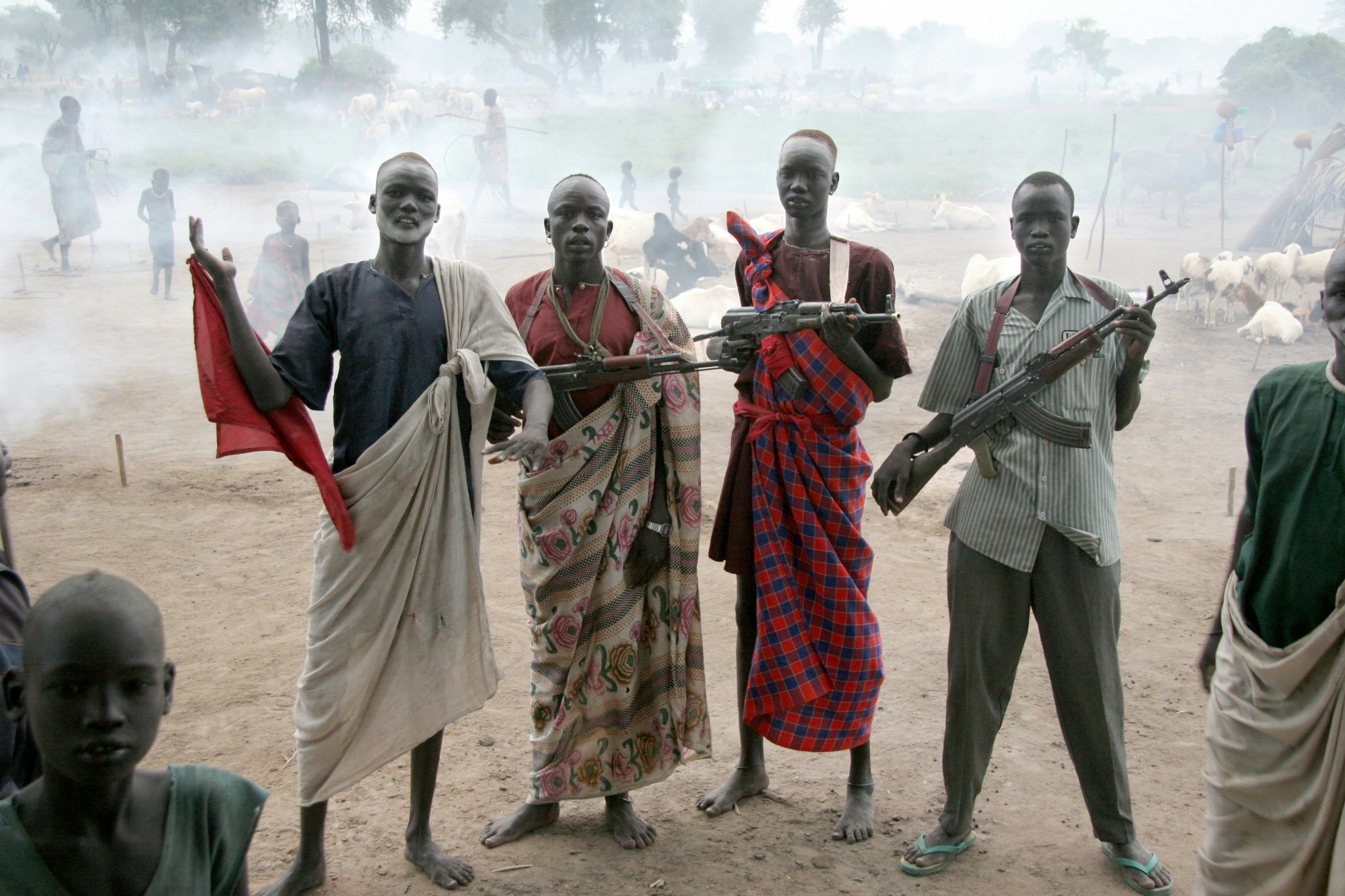
At first glance, this tradition may seem shocking. However, upon closer inspection, it reveals a completely different understanding of family, heritage, and continuation of lineage than what we are accustomed to in Europe. In societies where the family forms the foundation of the entire community and the ancestors' name holds exceptional value, preserving the lineage was more important than biological kinship itself. What is almost unimaginable for Europeans today was a natural part of the social order for the locals.
The Man Died Without Children. The Lineage Must Not Perish
For the Dinka and Nuer communities, it has been exceedingly important for centuries that the family line continues even after a man's death. If he died without descendants, his name, status, and inheritance rights, according to traditional beliefs, could vanish forever. In their culture, a person symbolically lives on through their children and grandchildren. Therefore, a man without descendants was considered someone whose family branch had been tragically severed.
That is why an extraordinary custom arose. The family of the deceased could ensure that a woman formally became his wife even after his death. In reality, however, she did not live alone. In the name of the deceased, her brother or another man chosen by the family fathered children with her. From a biological standpoint, the living man was the father, but from the perspective of tradition and family law, all the children were considered descendants of the deceased. Thus, he became their social and legal father, even though he had long since passed away.
An interesting fact is that the biological father generally did not claim parental rights towards these children. The children belonged to the lineage of the deceased and bore his name. In the eyes of the entire community, they were the heirs of a man they could never meet. This tradition was meant to ensure the continuity of the family and simultaneously protect the property from being divided among foreign families, writes University of Nebraska.

It was neither about ghosts nor magic
Although the term "ghost marriage" sounds mysterious, the tradition itself was not based on the belief that the deceased physically enters a woman's life. It was neither a ritual of summoning spirits nor a mystical ceremony, writes the Encyclopaedia Britannica.
Its significance was primarily social. The goal was to preserve the family name, inheritance rights, and property within one lineage. In the cultures of the Dinka and Nuer, family and the affiliation of children to a specific lineage play an exceptionally important role.
Anthropologists point out that in these societies, biological fatherhood is not always the most important criterion. The decision on to whom the child socially belongs is primarily determined by a formal marriage and the payment of a bridal dowry. This is why a legal father could be someone who was no longer alive.
Interestingly, the locals believed that deceased ancestors remained part of the family and could oversee its fate. Preserving their name was not just a matter of tradition, but also a sign of respect towards the ancestors.
Without cows, a wedding simply wouldn't exist
One of the fundamental pillars of life for the Dinka and Nuer is cattle. Here, cows are not only considered livestock but also symbols of wealth, social status, prestige, and family ties. Some families know their herds better than their own property and even name individual animals.
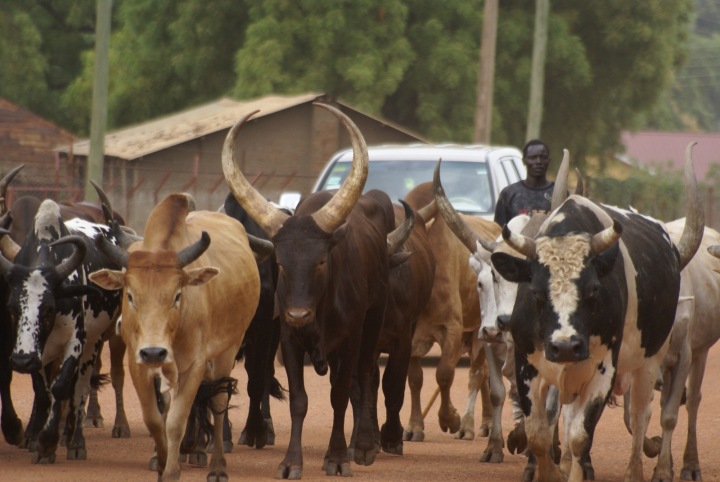
When entering into marriage, the groom's family gives the bride's family dozens of cattle as a dowry, known as bridewealth. Depending on the status of the families, this can be approximately 20 to 60 cows, and in wealthier families, even more than a hundred. Cows are not viewed as the "purchase of a bride" but as a symbol of forming a strong bond between two families.
Even in the marriage of a deceased man, this system was maintained. If the traditional wedding dowry was not paid, the children, according to customary law, might not belong to the lineage of the deceased.
For the Dinka, cows are part of everyday life. Their horns become objects of admiration, young men create hairstyles based on their favorite bull, and many traditional songs praise the most beautiful pieces of cattle. Cows accompany people from birth to death.
The Wedding Itself Lasted Several Days
The wedding ceremony among the Dinka and Nuer was not a single day of celebrations. It was a lengthy process of negotiations between families that could last months, sometimes even years, reports the Smithsonian Magazine.
Initially, discussions focused on the number of cows the groom's family would provide to the bride's family. Once both sides reached an agreement, joint feasts, singing, dancing, and traditional ceremonies followed. Elder family members played a significant role in overseeing the adherence to customs.
After the wedding, the bride often moved to her husband's village, where she gradually integrated into his clan. It was expected that she would bear children who would continue the family line.

Interestingly, during the wedding celebrations, singing contests, dance performances, and showings of decorated livestock are often held. The larger the herd the family owned, the higher the prestige they gained.
Men underwent a painful adulthood ceremony
Before a young man could marry among the Dinka, he had to undergo a traditional initiation ceremony. Elders would carve several deep horizontal scars on his forehead with a sharp knife or razor. These scars became a symbol of adulthood, courage, and readiness to start a family.
During the ceremony, the young man must not show pain or fear. If he cried or moved, he would bring shame upon himself and his family.
Only after successfully completing the initiation was he considered an adult man who could court a bride and own his own cattle.
In some cases, she never met her "groom"
For a person growing up in Western culture, it is perhaps hardest to understand that some women married a man they had never met in person.
This was not about a romantic relationship, but a social agreement between families. The marriage itself was meant to ensure the continuation of the lineage and the preservation of inheritance rights.
In many cases, the interests of the entire family played the main role, not the individual feelings of the people involved. Although love was not excluded, it was not the main reason for entering into marriage. Much more important was the stability of the lineage, economic cooperation, and mutual commitments between families.
Traditions are Gradually Disappearing
Modernization, urbanization, the spread of Christianity, new laws, and decades of civil wars have made such wedding customs much rarer today than before.
The younger generation increasingly marries for love, and in larger cities, traditional rules are followed only occasionally. Nevertheless, anthropologists point out that in remote rural areas, some elements of this tradition can still be found.
At the same time, the significance of the wedding dowry is changing. While cows were once the only acceptable form, today they are in some cases supplemented or replaced by financial compensation.
It's not the only unusual wedding tradition
"Ghost marriage" is among the most well-known unusual marriage systems in the world, but it is certainly not the only one. In South Sudan, there have been other non-traditional forms of marriage, writes Ghost marriage in South Sudan.
If a woman was left without children, she could sometimes act as a social "husband." She would pay the dowry to another woman's family and become her legal husband. The biological children were then fathered by a chosen man, but from the community's perspective, they belonged to the woman who financed the entire marriage. Anthropologists refer to this phenomenon as female marriage and have documented it primarily among the Nuer.
These traditions show that ideas about marriage, parenthood, and family vary significantly around the world. What may seem shocking from a European perspective had precisely defined rules in the local culture and fulfilled an important social function.
Source: original text, Ghost marriage in South Sudan, Smithsonian Magazine, Encyclopaedia Britannica, University of Nebraska