To be fair: Everyone against Babiš. We can't expect anything else where local elections are still being held


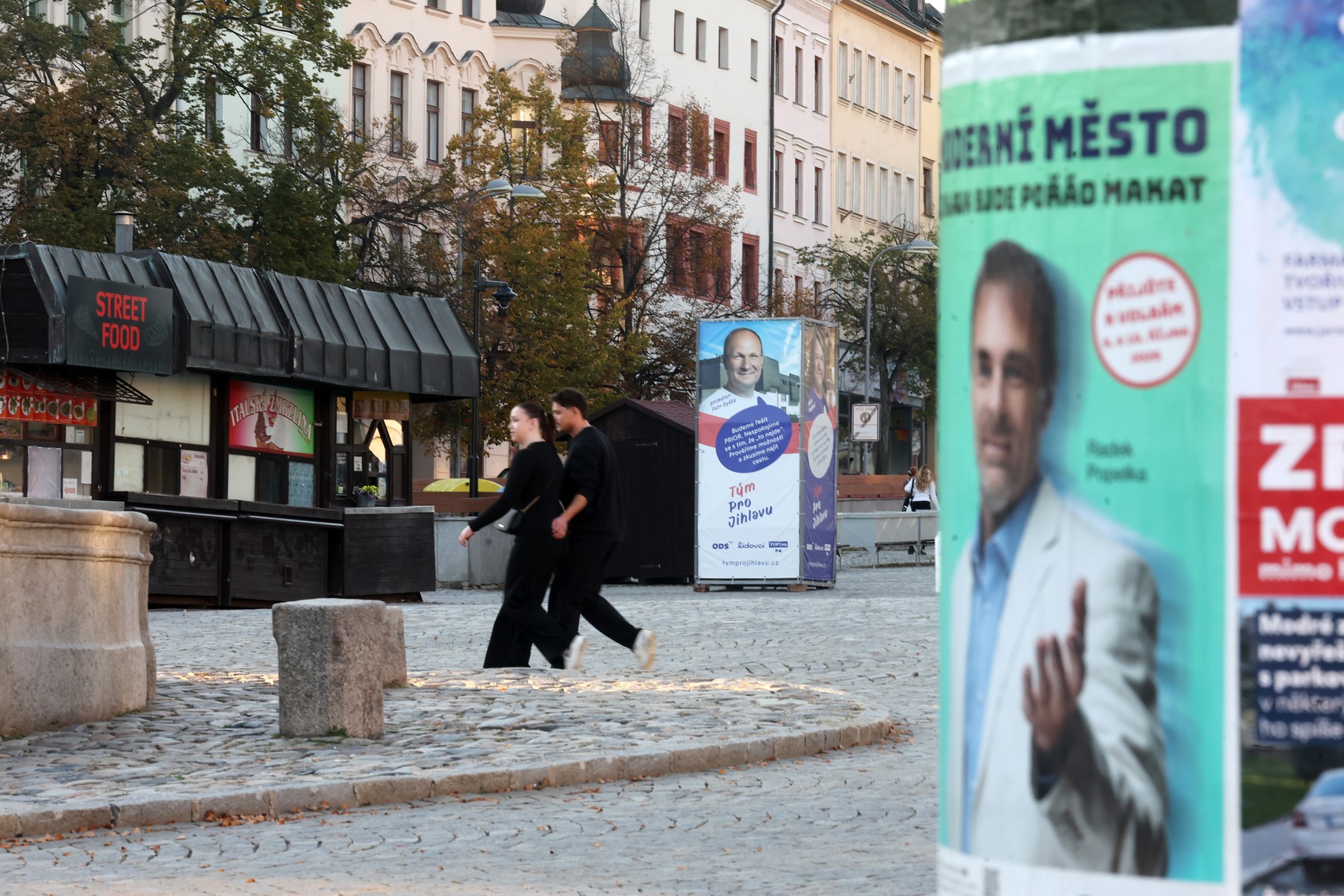
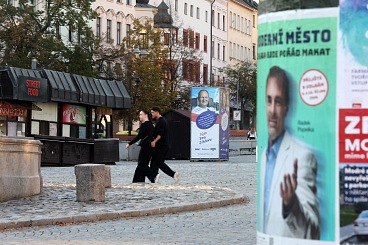
A year has passed and elections are here again. Municipal elections have their specifics not only in terms of the rules for making crosses next to candidates' names, but also regarding the tactics of political entities that would like to bite off a piece of the power pie. Rule number one is to oppose Andrej Babiš, although he himself doesn't care about seats in municipal councils, which on the other hand doesn't apply to Senate benches.
Whoever would be interested in embarking on the supposedly blissful life of a politician has an ideal opportunity in municipal elections. For approximately 190,000 candidates, there are over 61,000 council seats, which means there's roughly a one-third chance of success. Moreover, almost 90% of candidates have no party affiliation, so one doesn't need to bother with joining a political party.
However, these figures have limited significance in the power game over the Czech Republic. The Czech Republic is, as is well known, a record holder in the number of municipalities with their own councils, and in small Czech villages, there isn't really going to be an actual electoral contest. In one-third of municipalities, only one candidate list is running, so for 1,052 municipalities we already know the election results now.

How much money is at stake in municipal elections?
Here, the path to a political career is quite simple, but the lack of interest in political engagement itself indicates that there isn't much at stake. The situation is different in large cities, headed by the Prague City Hall. Here, billion-crown budgets await (municipalities have approximately 625 billion in savings in their accounts alone) and political confrontation with all its aspects.
Since in cities it is primarily about the aforementioned money in the form of local budgets, and not about political ideas, it is easier for politicians to agree on cooperation. Opposition parties, and not only them, are thus flocking together against the hegemon of current politics. The ANO movement is thus the only party that is not entering the political contest anywhere in any electoral coalition.
ANO has by far the largest voter core, for perspective about three times larger than ODS, which is second on the tape in this discipline. About ten times larger than the New People's Party, who will certainly win mandates again in the municipal elections. If ANO were to enter into cooperation with someone, they would only be dividing their own pie, and they want to eat it themselves, as the great party leader repeatedly dreams.
One Andrej Babiš and 13 Political Parties
There are now 13 parties represented in the Chamber of Deputies. The reader may deliberately try to count them, and the author believes they won't succeed. Understandably, it's confusing. ANO, SPD, Moto, Svobodní, Trikolora, PRO, STAN, SLK, ODS, Pirates, KDU-ČSL, TOP 09, Greens: All of these have their MPs. As usual, however, we think about events in Parliament as a clash between government and opposition, thus in terms of a simple binary system, the way computers do it.
The government may have 6 parties and 108 MPs, but what difference there would be compared to a lineup of 108 Andrej Babišes is hard to say. Although there are ideological differences and political disputes between ODS and the Pirates, they certainly didn't prevent them from governing both at Prague City Hall and at one time in the
Straka Academy. Let's face it, anti-Babišism is more than a fierce battle over what color the euro is.Simplifying the electoral contest into two sides of the barricade is against the pluralistic character of our democracy, but greater clarity on the political map is probably inevitable. A map by which you can only get lost doesn't work, after all. Historically, this has been the case in Czechia, where two main parties vied for power, which were "corrected" by the notoriously governing KDU-ČSL (only the third government without the Christian Democrats in more than 30 years was formed last year).
It is no different beyond our borders. Whether it's Donald Tusk's party front in the battle with PiS in Poland or Péter Magyar's Tisza in the clash with Viktor Orbán's Fidesz.
This trend is also revealed by today's municipal and Senate elections. Naturally, only where actual voting takes place. In the case of the Senate, only in a third of districts, and in municipal elections outside tiny villages, where they certainly cannot complain about a surplus of parties engaged in their neck of the woods. They can complain about insignificance on the political map, but no one has been listening to them for quite some time.
Sources: author's text, commentary, ČT, NMS, PAQ, Research, DVS