TRANSLATED TO ENGLISH, CHECK: I am marrying a Himba: A world where a shower is not a given and fidelity has a completely different meaning


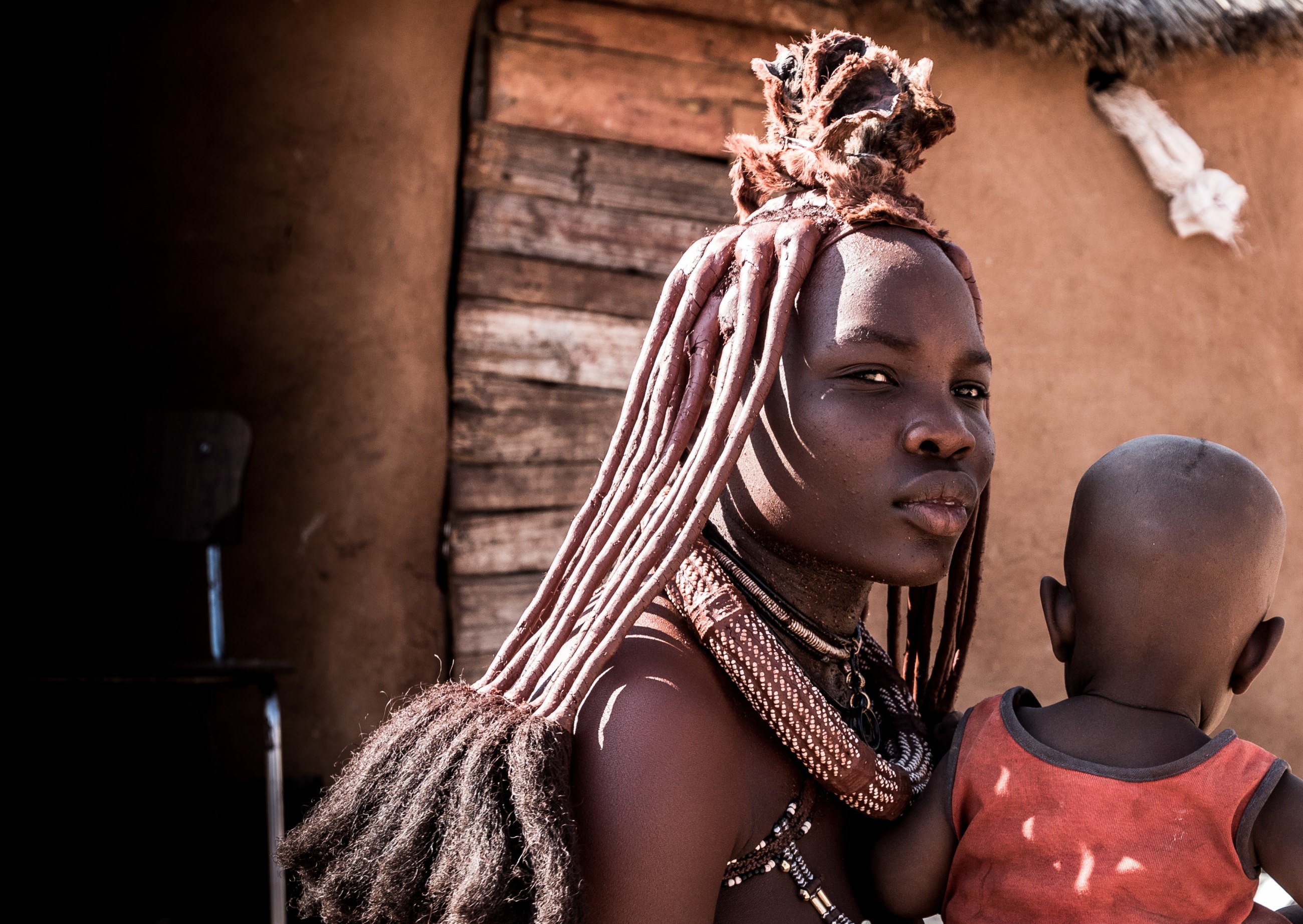
The Himba live in the remote northwestern corner of Namibia, in Kaokoland, on the edge of the Namib Desert, one of the oldest deserts in the world. They lead a traditional nomadic lifestyle, herding cattle, sheep, and goats.
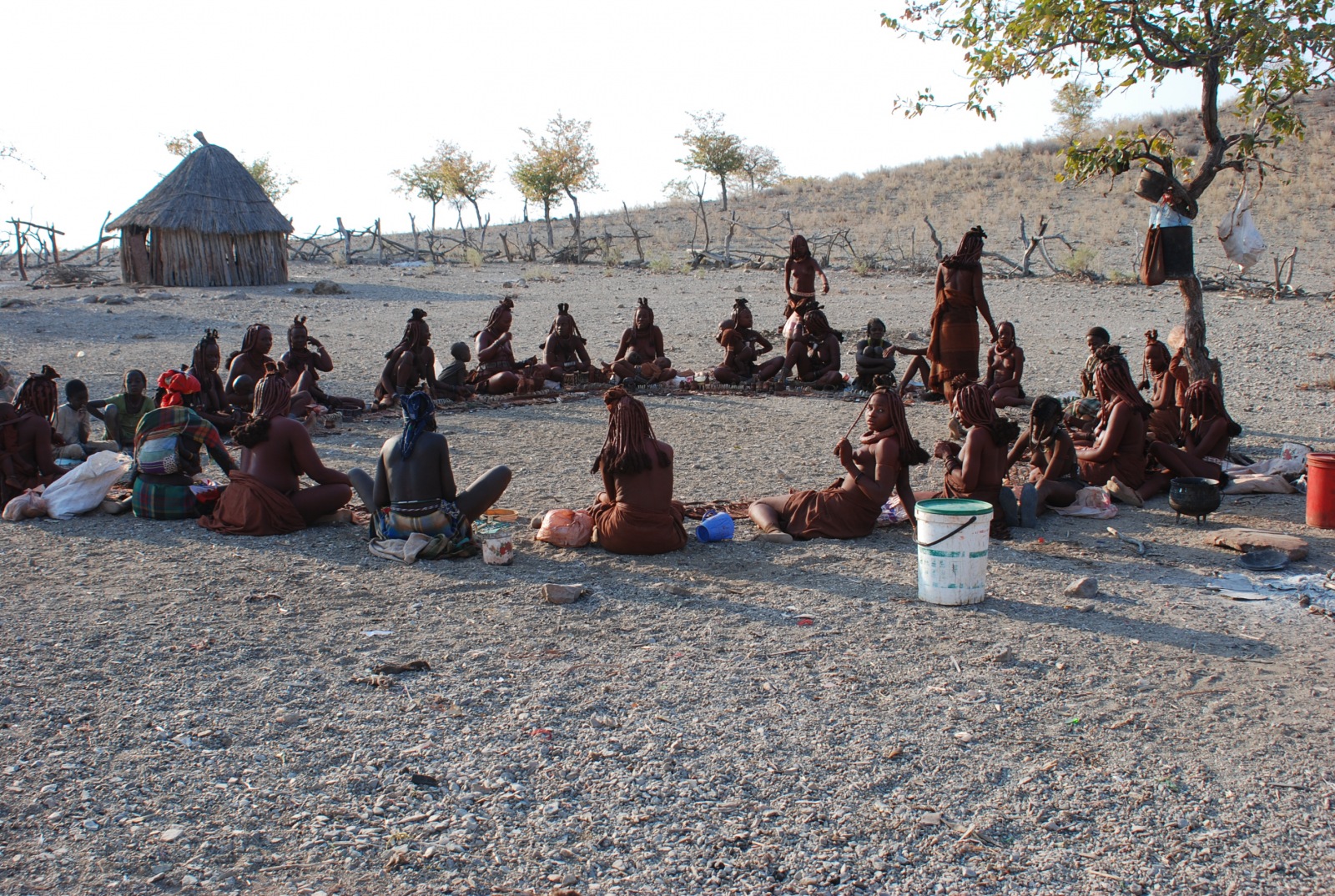
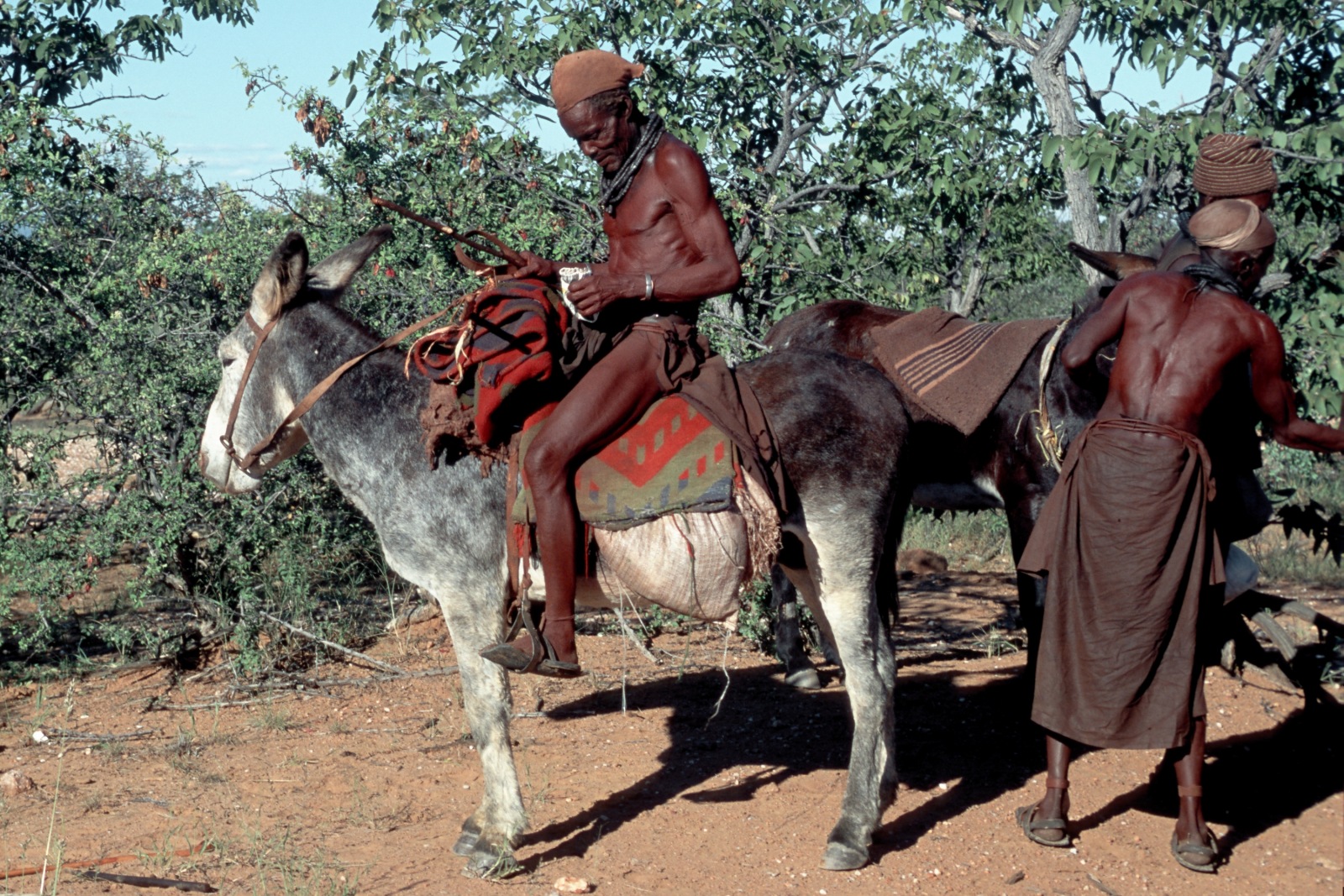
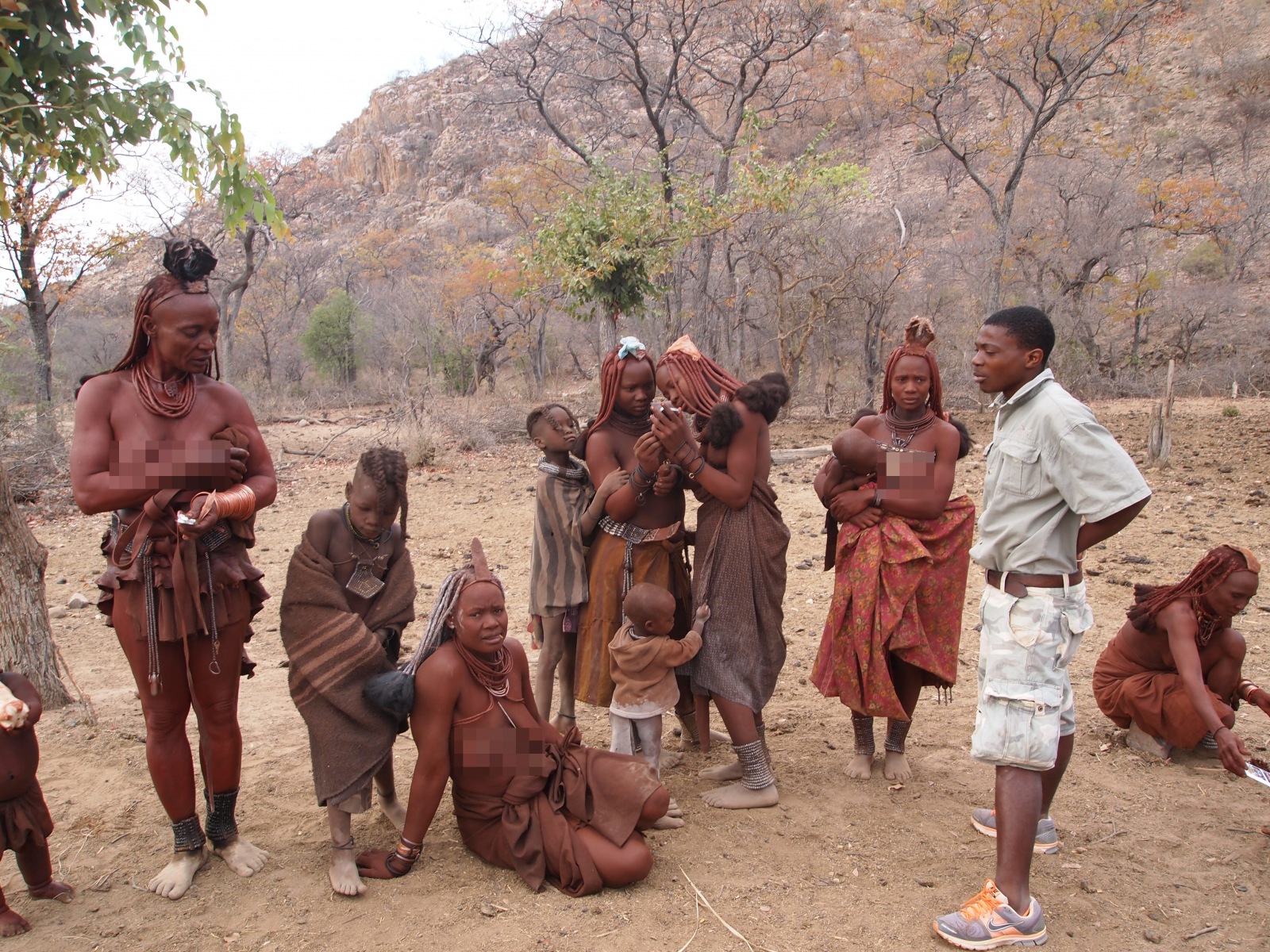
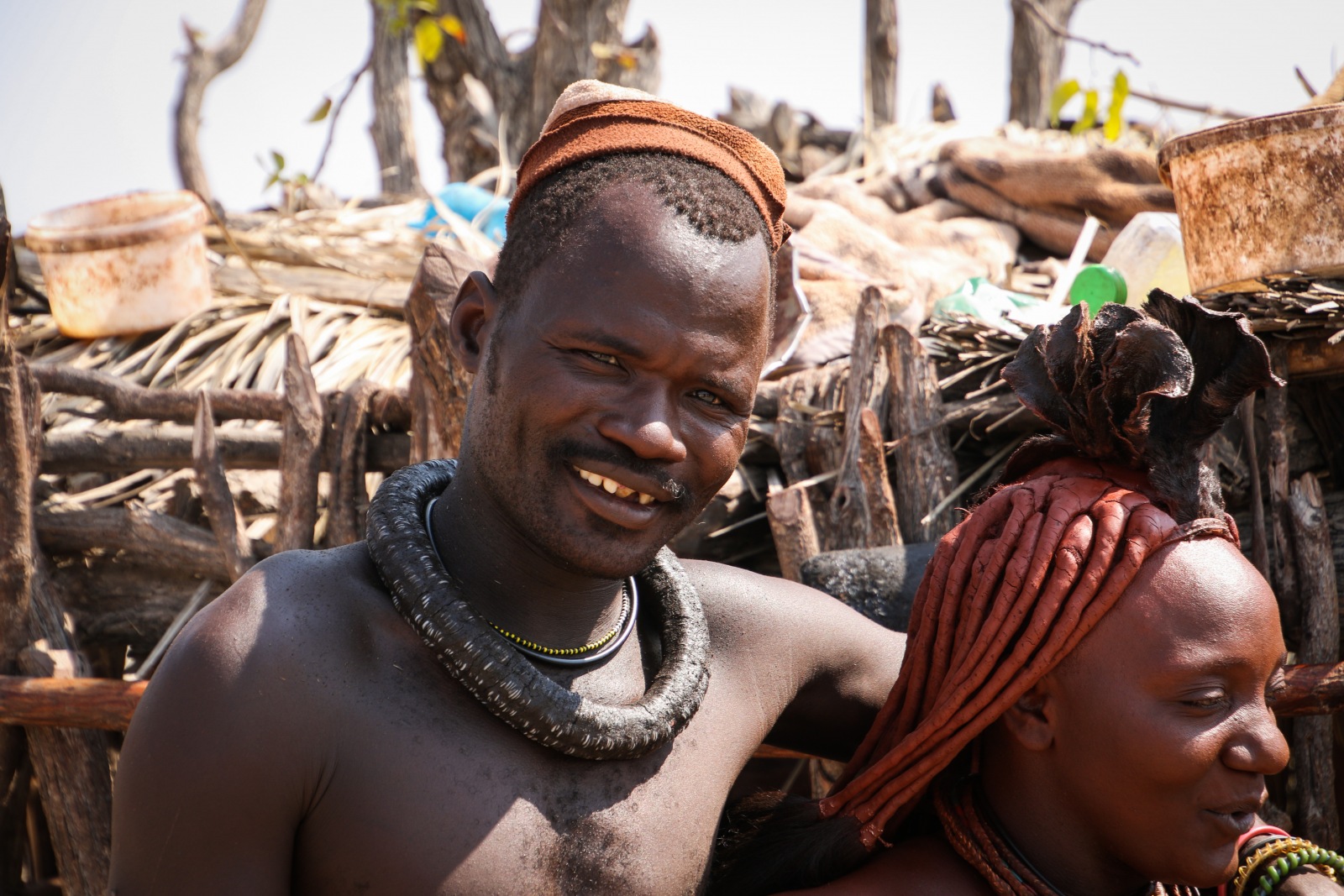
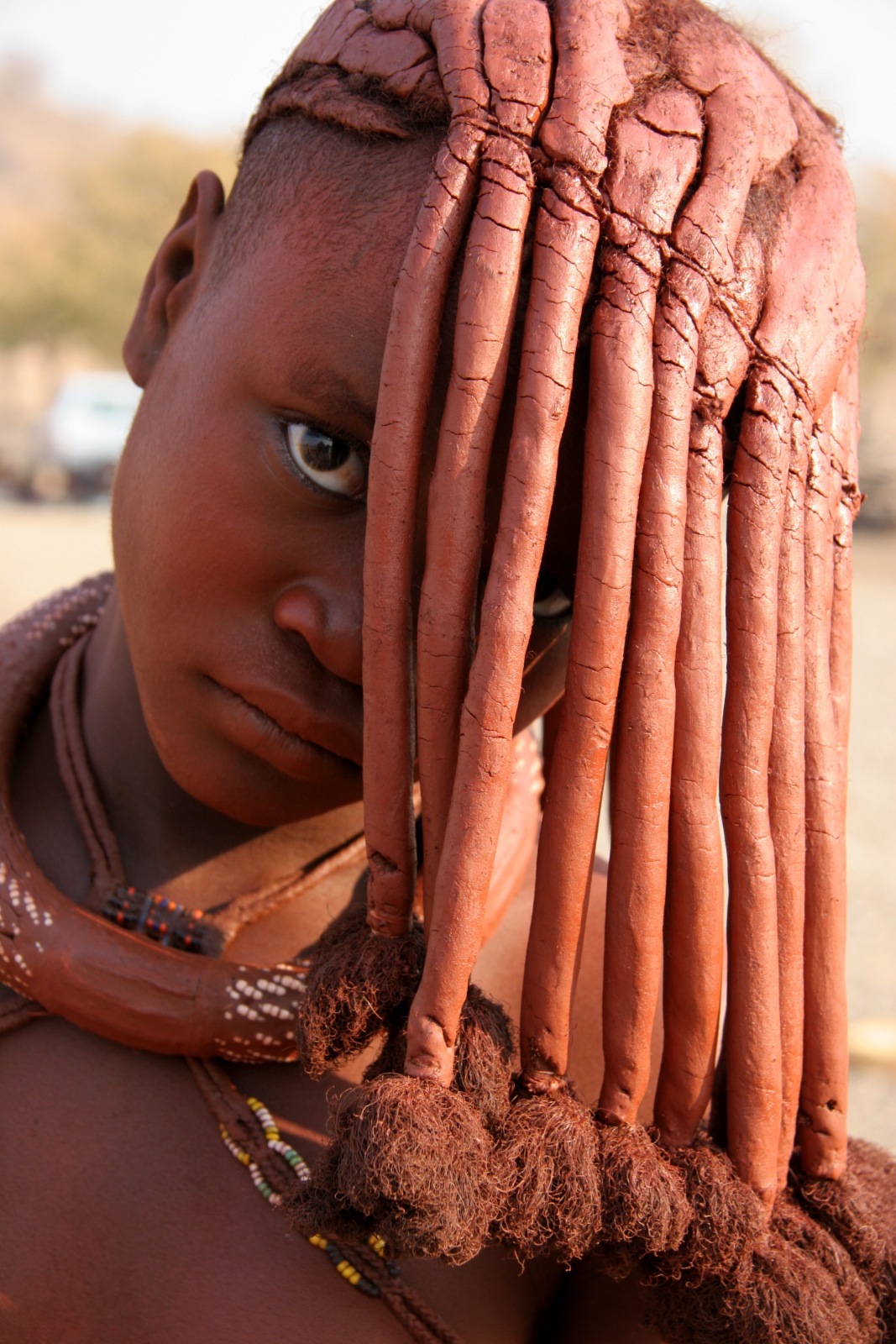
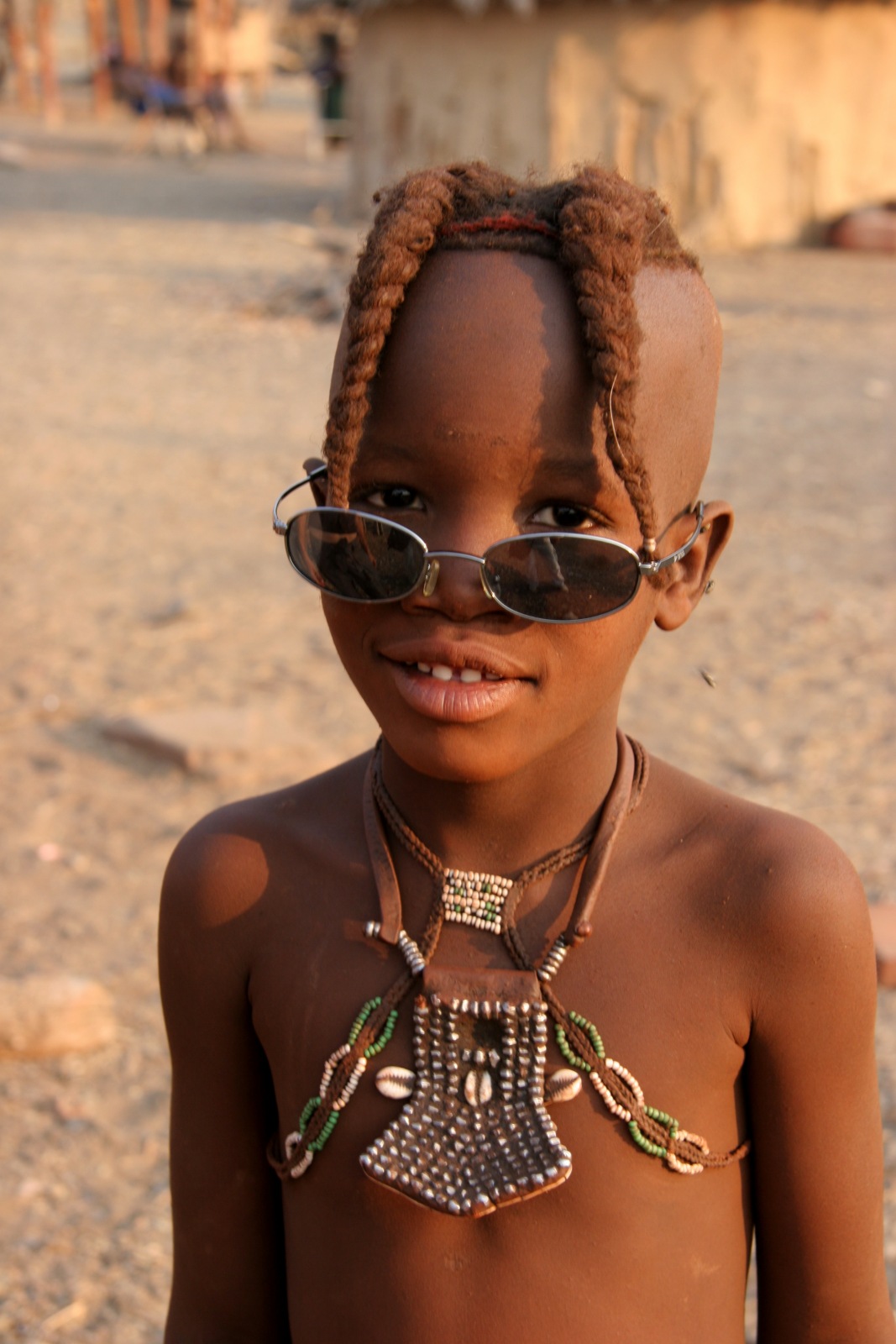
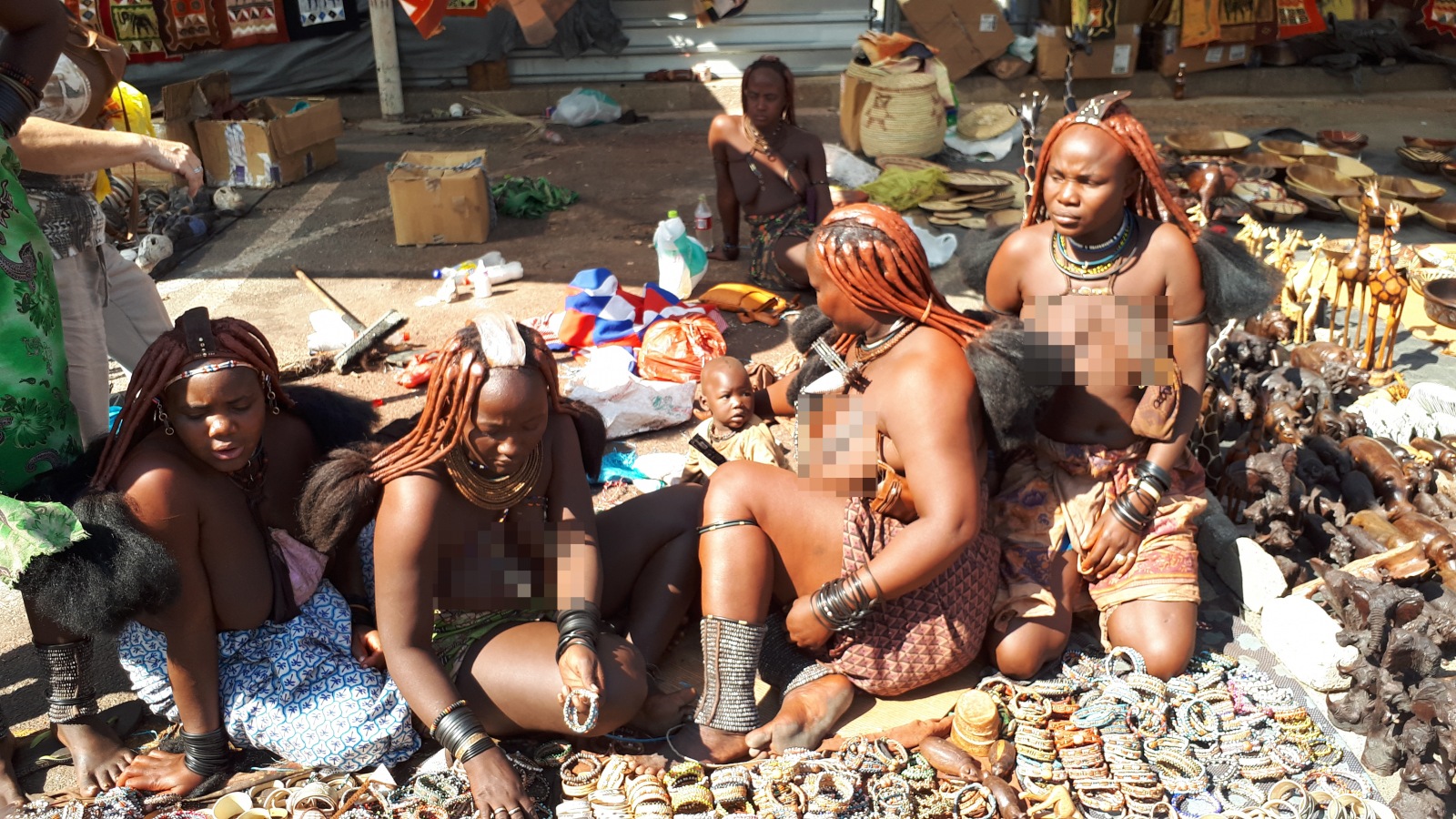
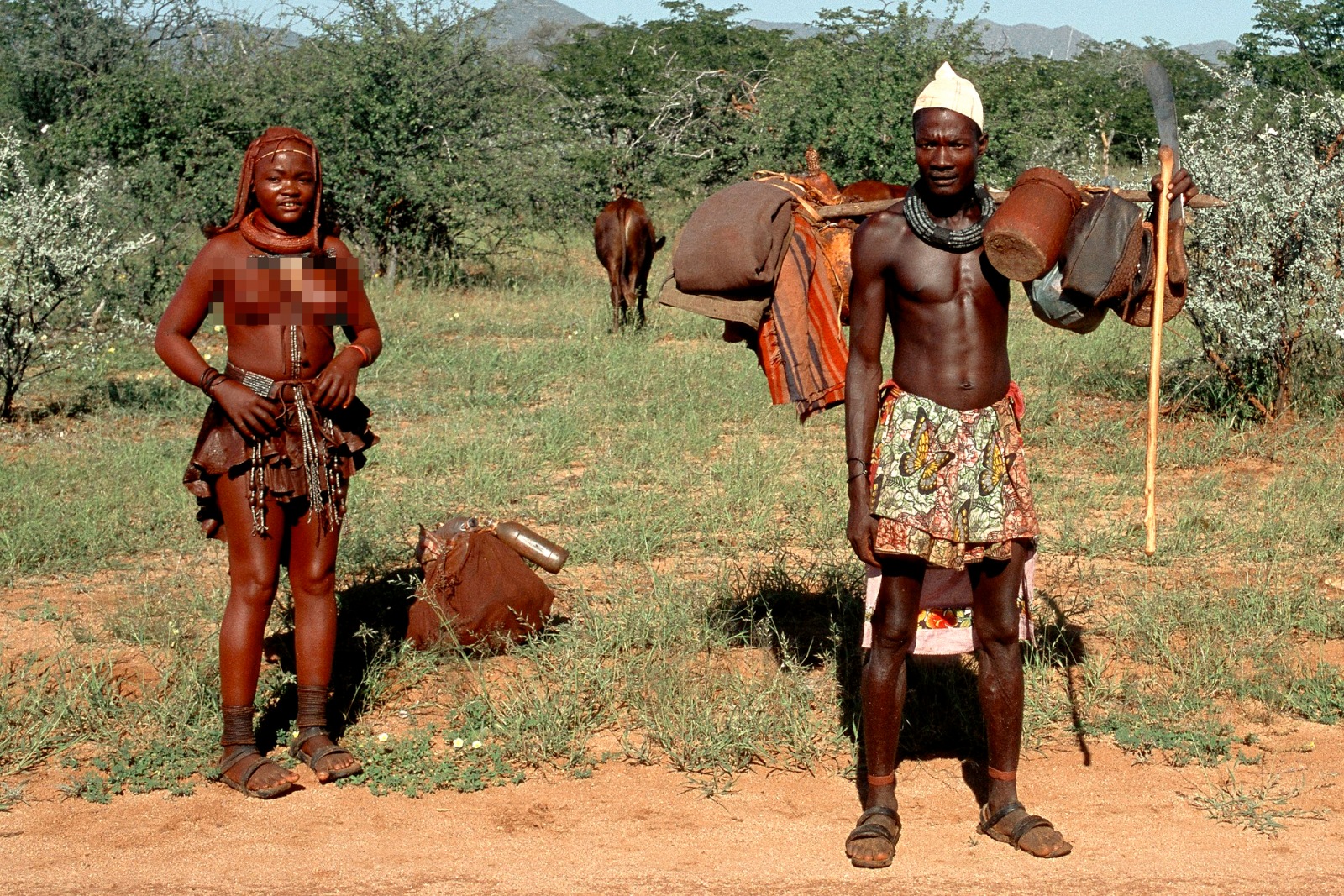
Imagine a morning where you are not awakened by an alarm but by the warmth that has been pressing into the landscape since dawn. Dry wind, dust, minimal water. This is exactly the reality for the Himba tribe in northwest Namibia. Life here is not about comfort—it's about survival. The Himba are semi-nomadic herders. Their world revolves around cattle, goats, and family. Men often leave with the herds for long days or weeks, while women keep the settlement running—cooking, taking care of the children, repairing dwellings, fetching water, and also making jewelry.
And now ask yourself: what is luxury for them? Not a vacation by the sea. But water. Not for bathing – for drinking. This is why many of their customs, which seem strange to us, have a very simple explanation: survival in extreme conditions.
The Himba speak the Herero language or its dialect otjiHimba. Although otjiHimba is the primary communication language within the community, many Himba also speak Afrikaans, English, or other regional languages. This is due to contact with surrounding communities, trade, and formal education. Nevertheless, otjiHimba remains a key element of their identity and is passed down from generation to generation.

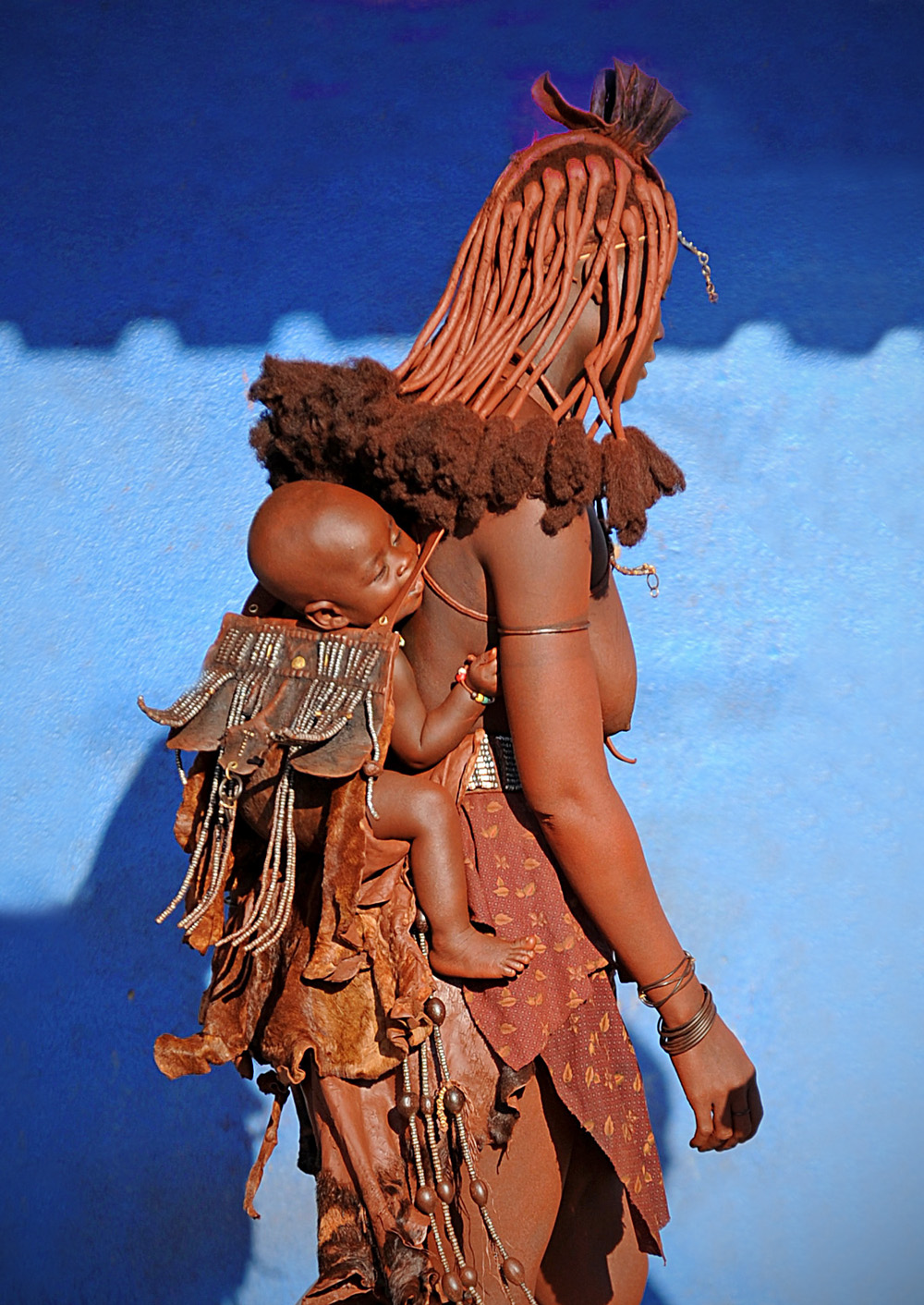
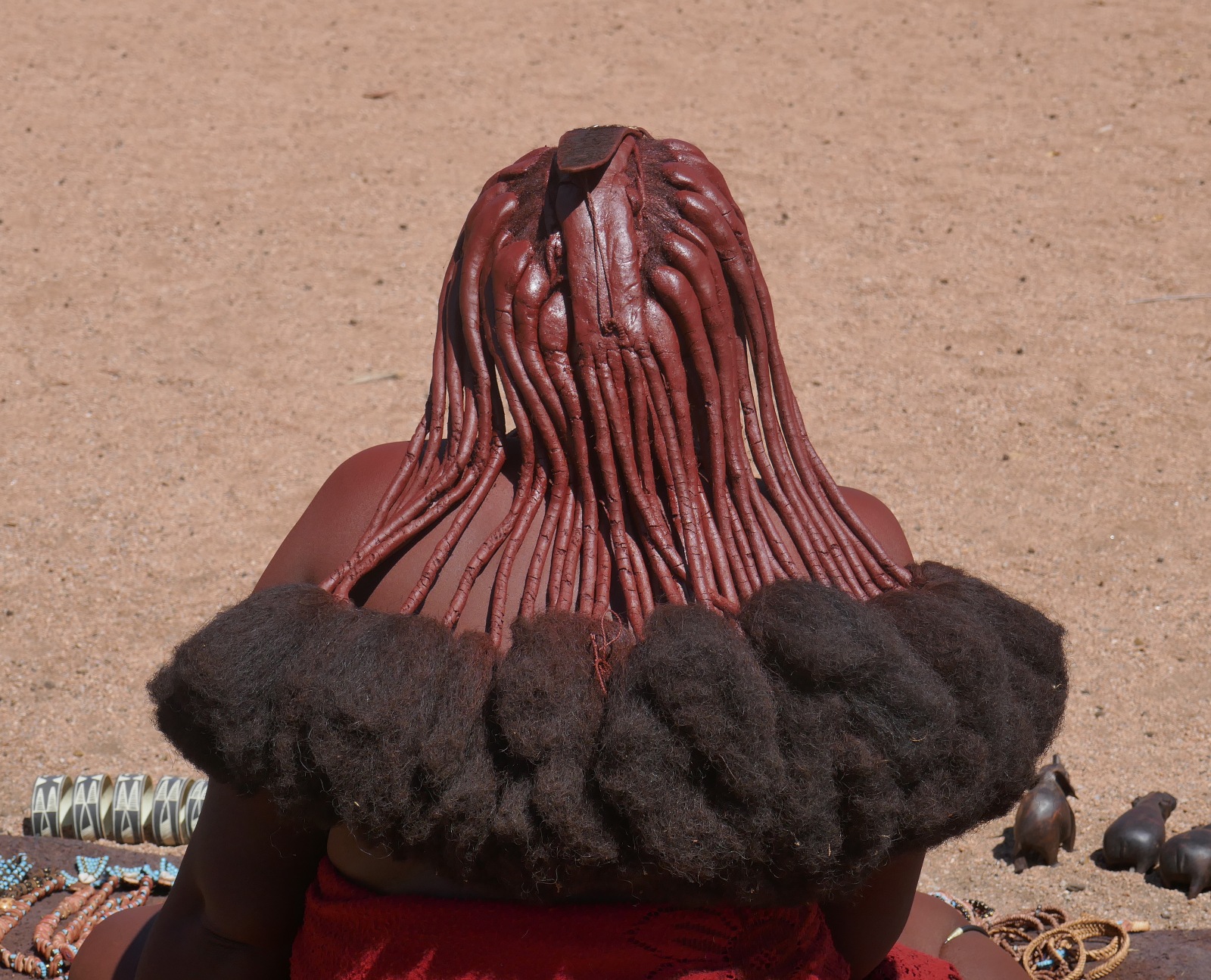
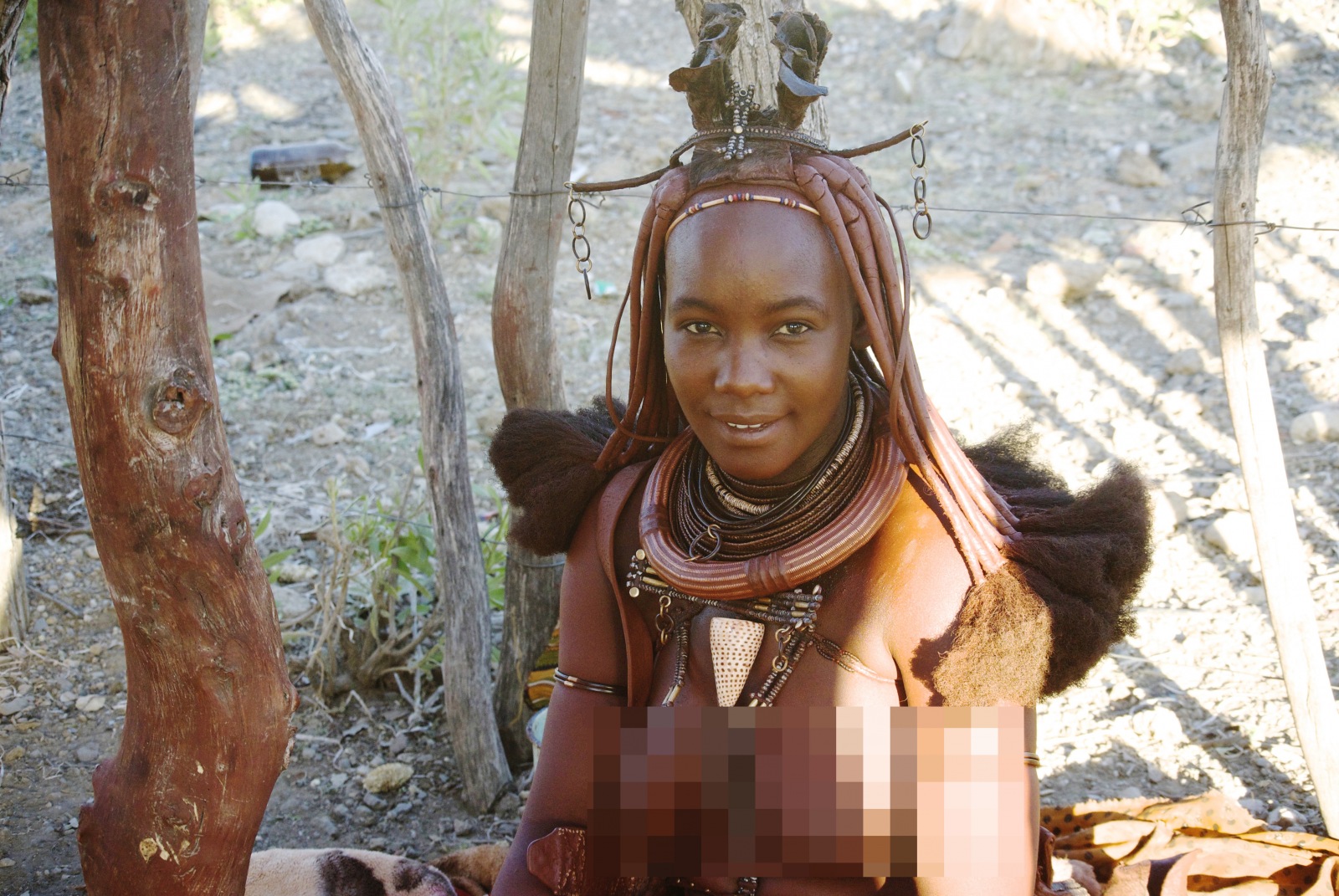
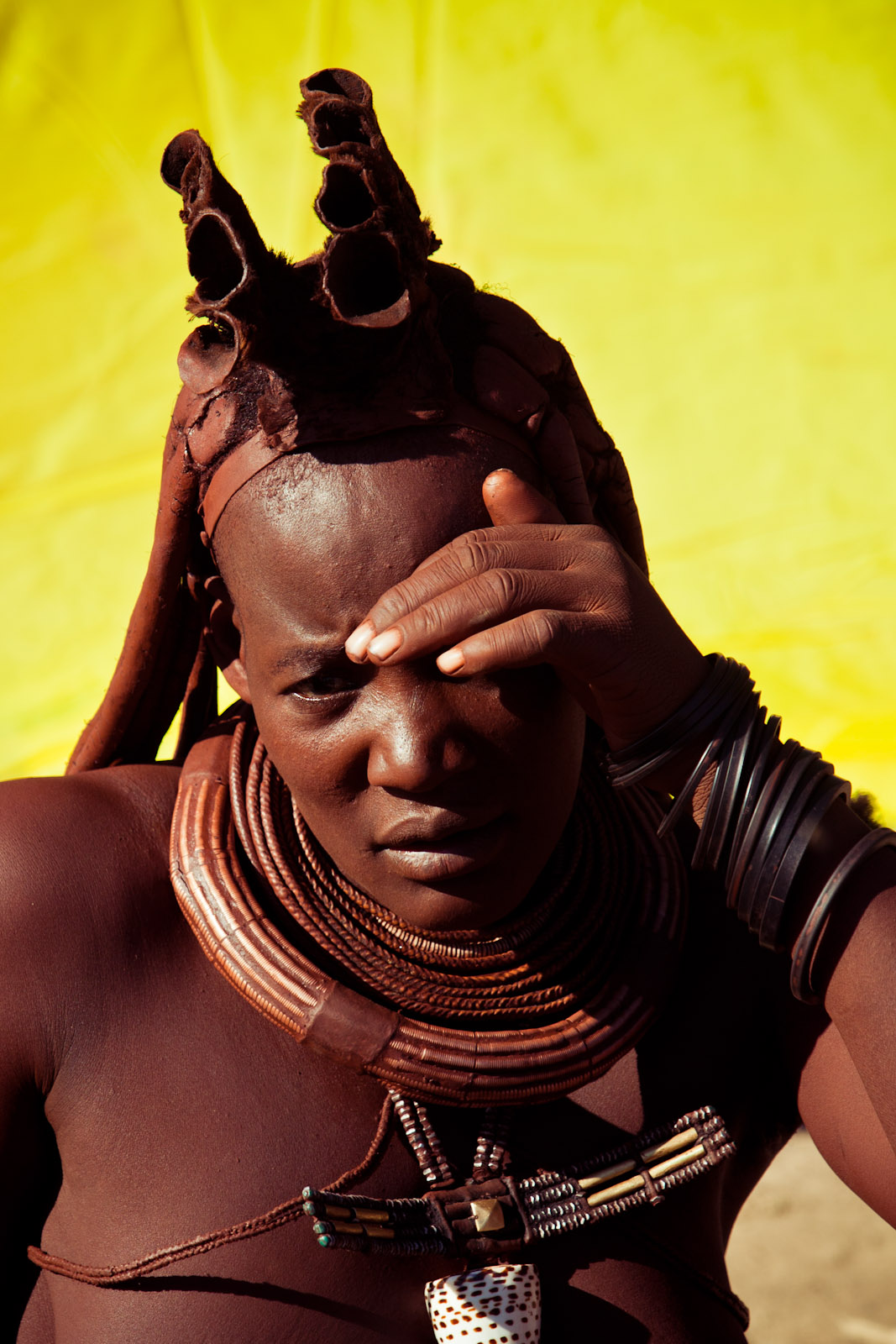
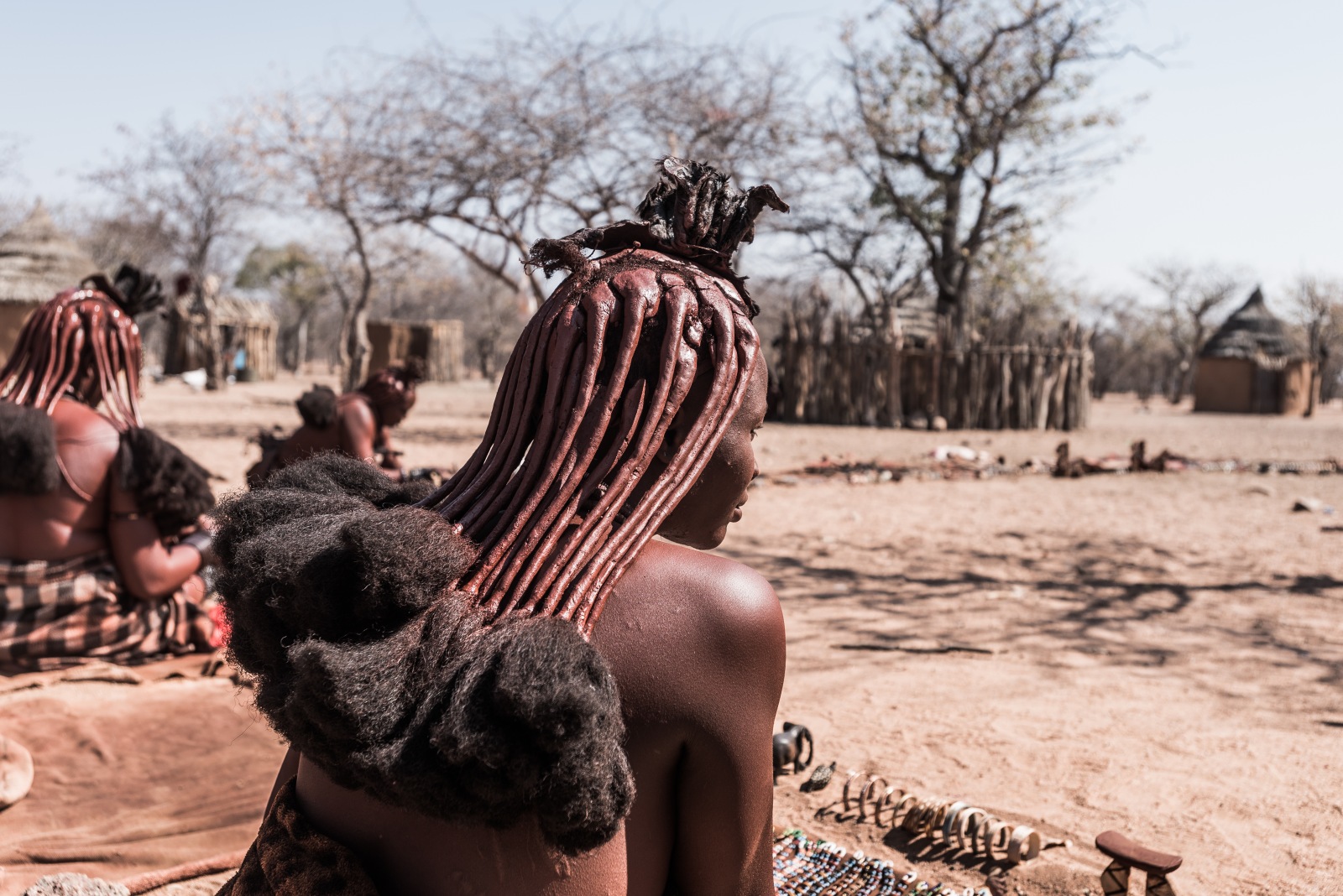
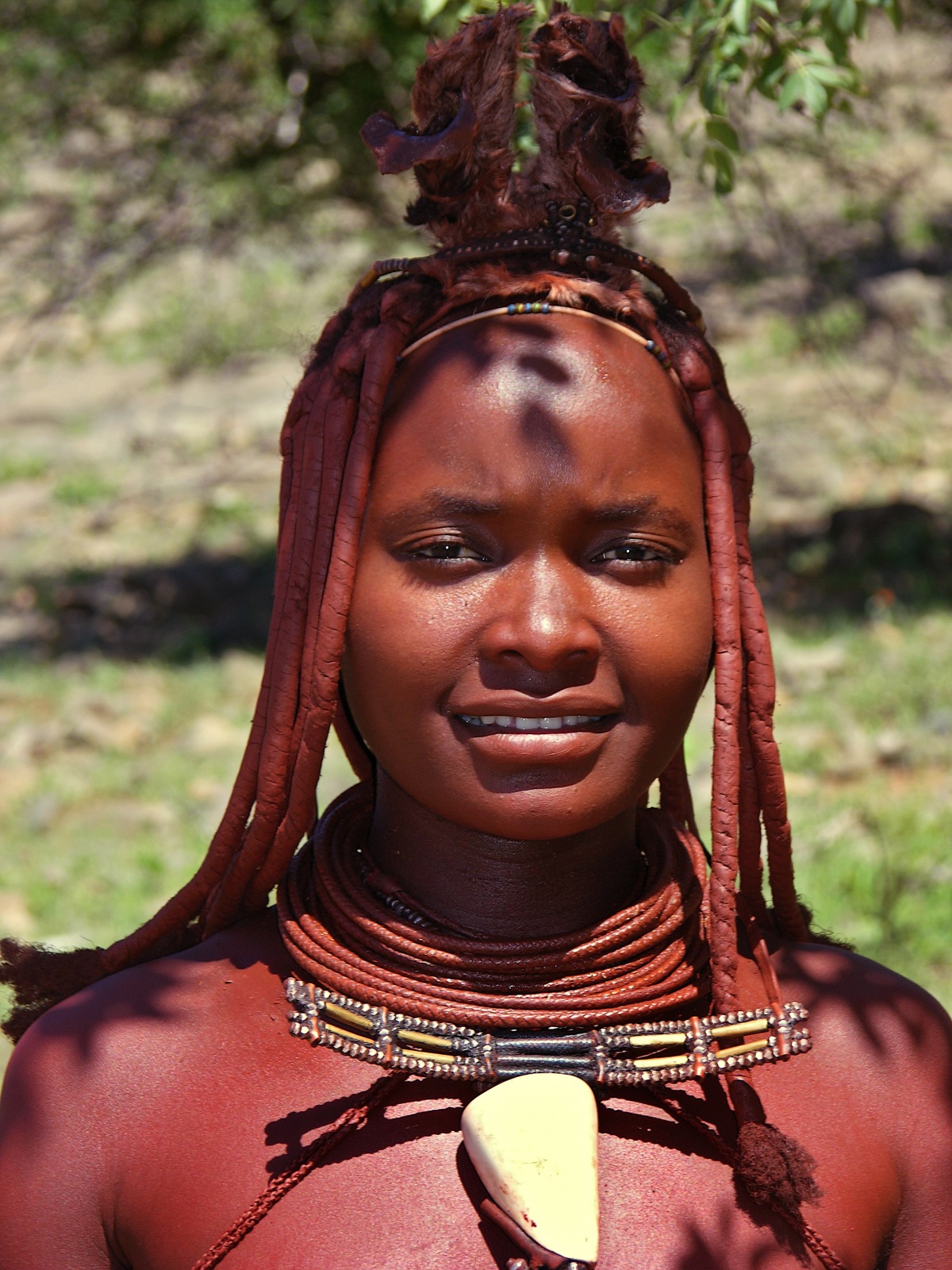
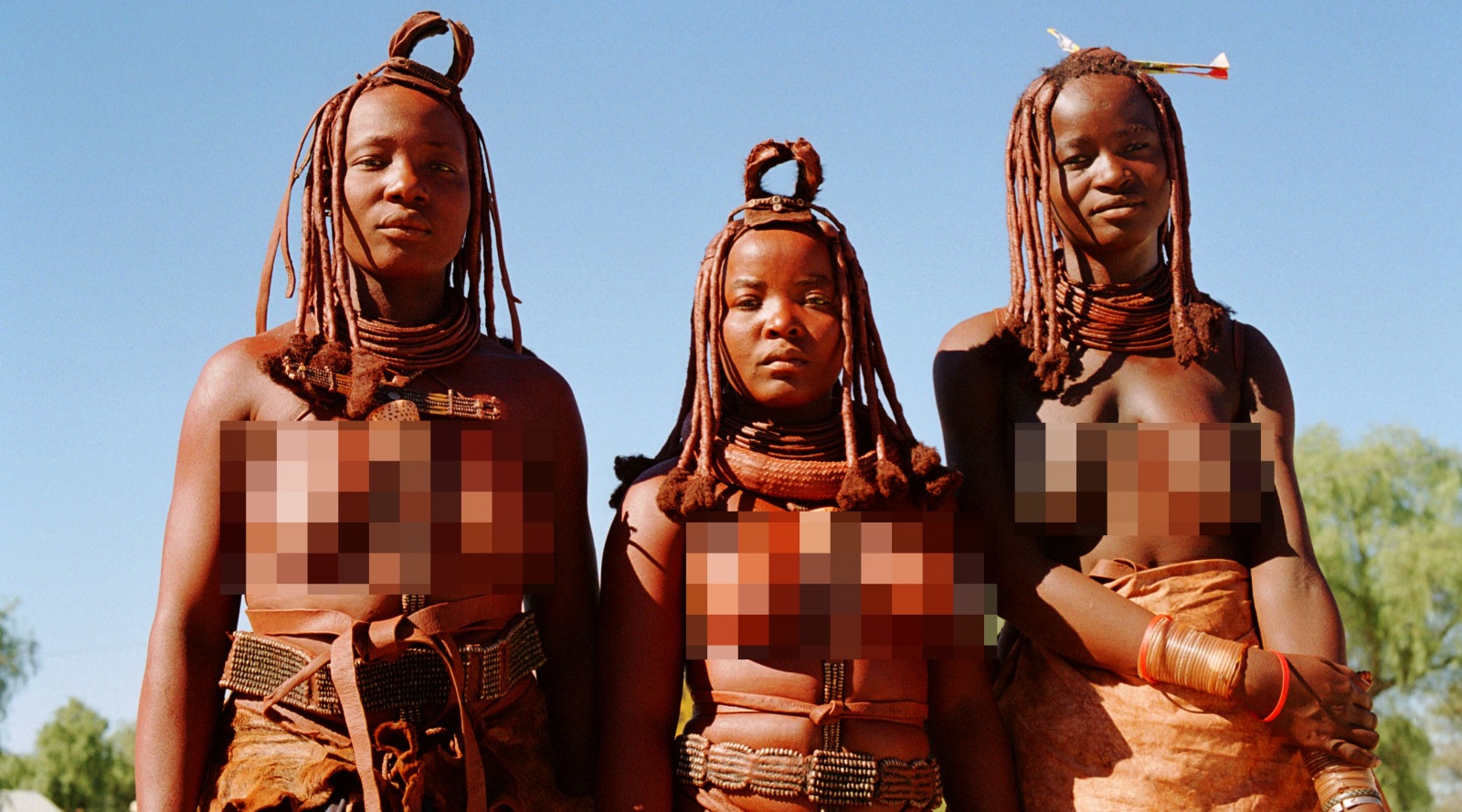
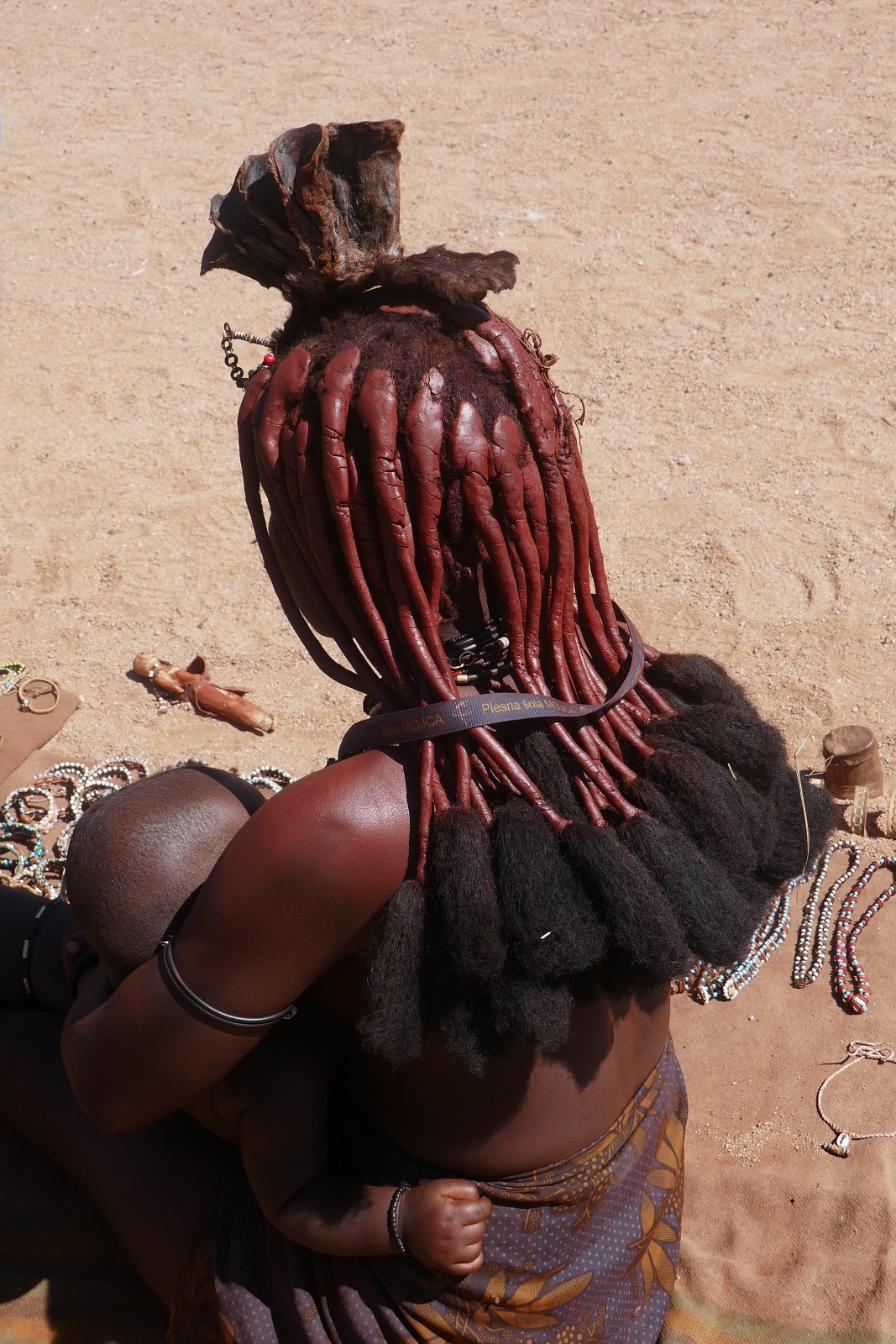
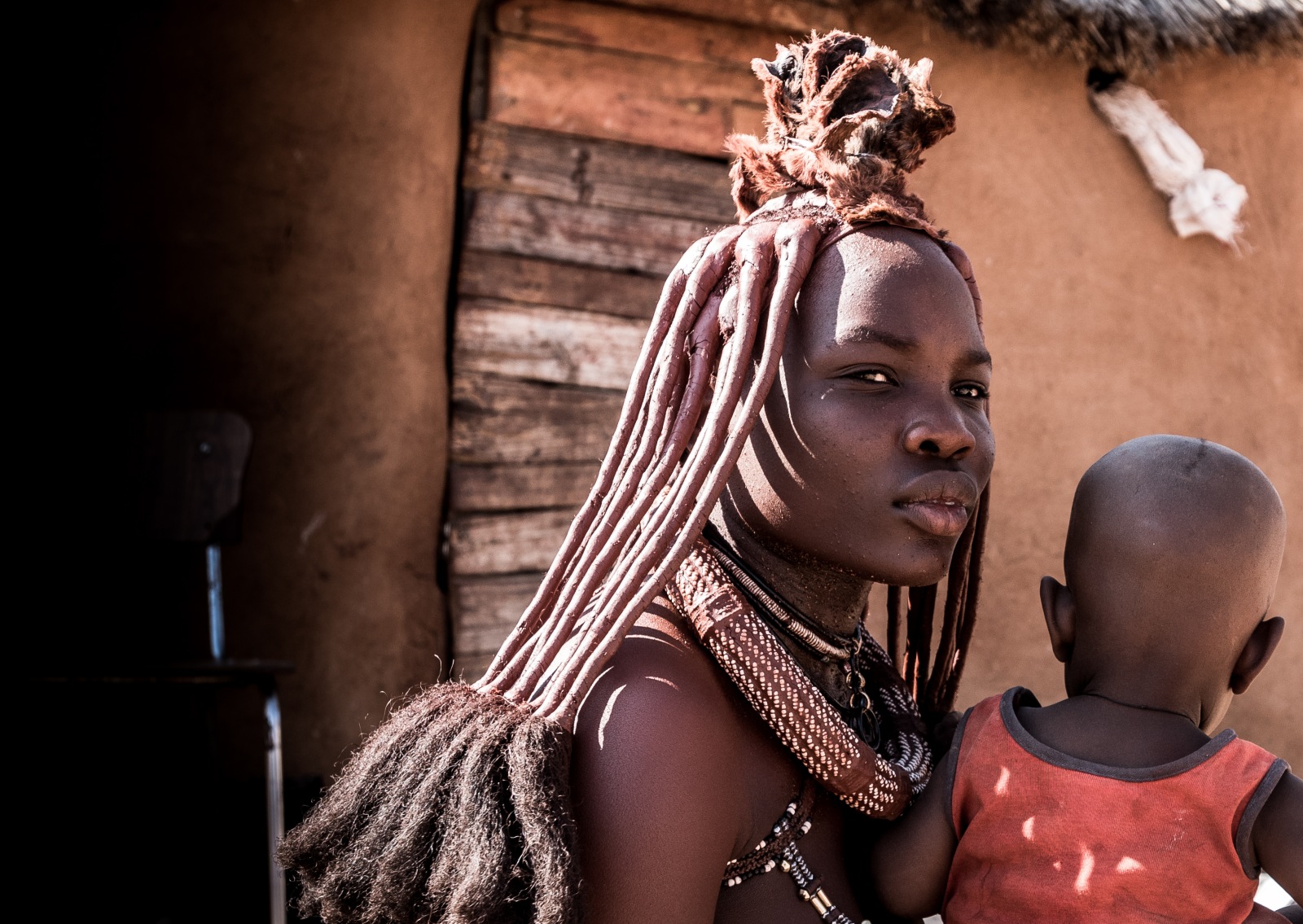
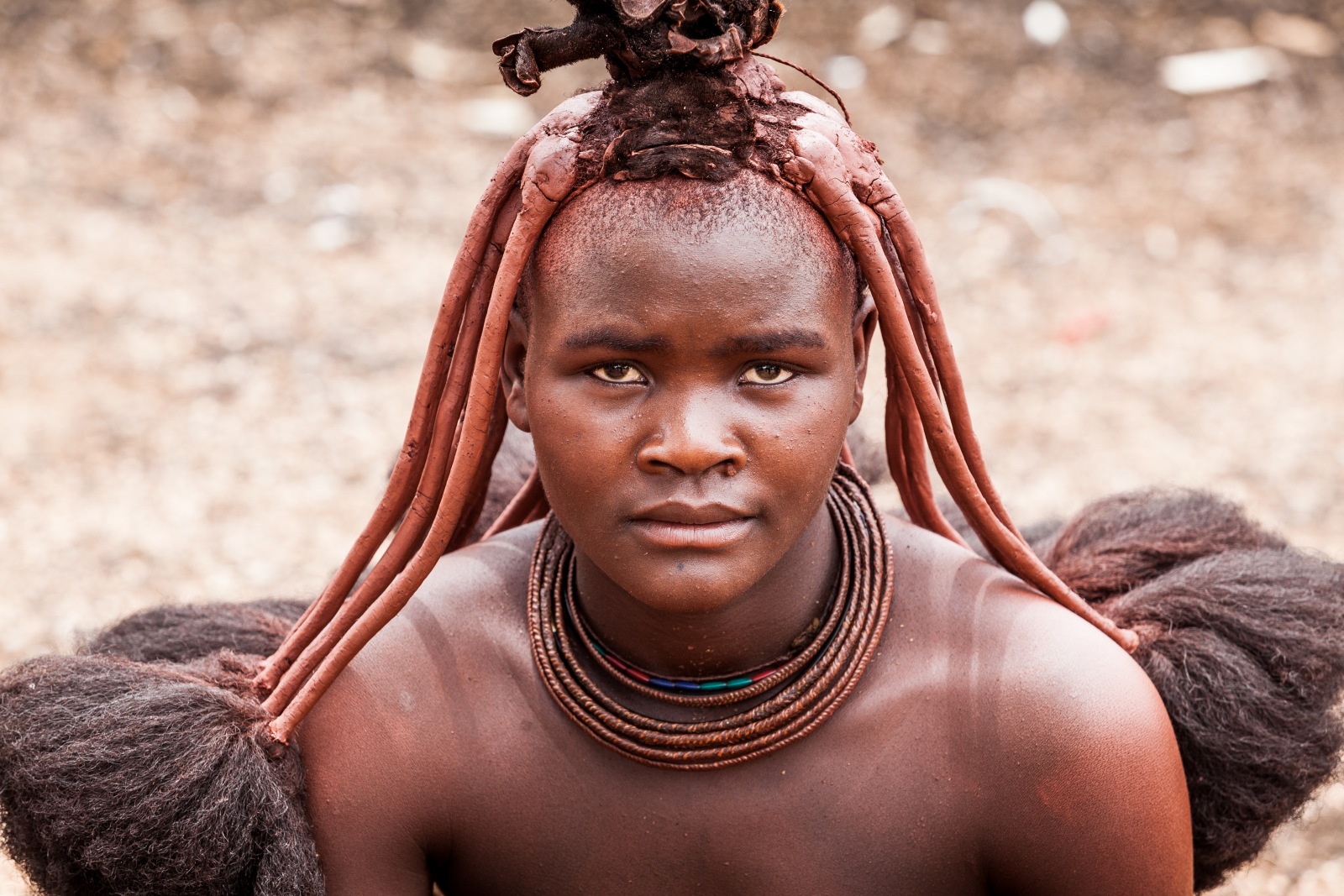
Estimates of their number range approximately between 20,000 to 25,000 inhabitants, but the organization Minority Rights Group International warns that there are no exact numbers. The Himba is a tribe known primarily for their distinctive appearance - their skin has a reddish tint due to an ochre mixture, they wear distinctive hairstyles, and maintain a traditional way of life. They are also known for their typical braided hair, which they style with a mixture of animal fat, ash, and ochre, writes the portal Ecoi.net.
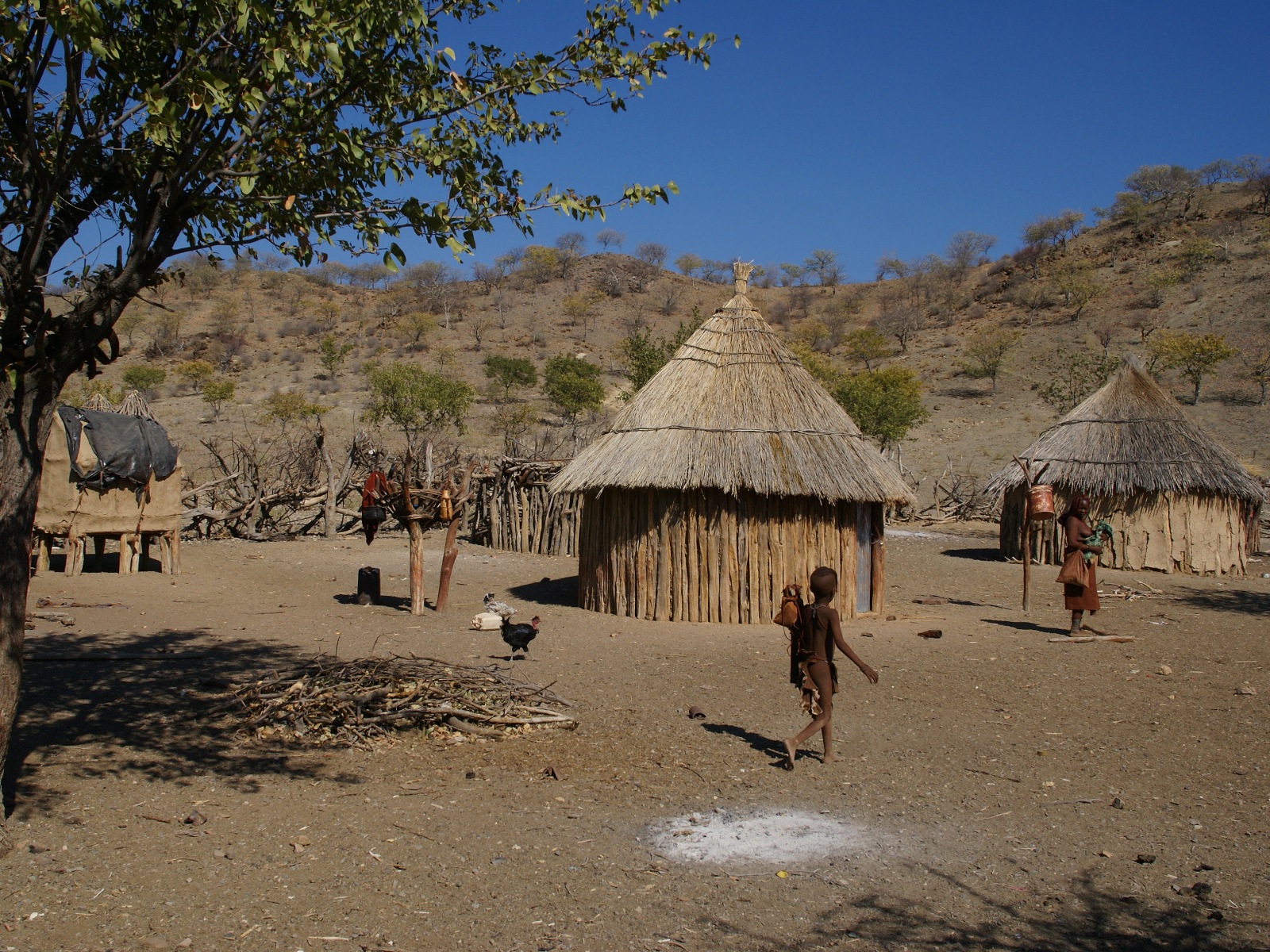
Despite their semi-nomadic way of life, the Himba place great emphasis on community. Extended families live together in traditional settlements called kraals (Onganda). These are made up of circular huts built from clay, grass, and branches.
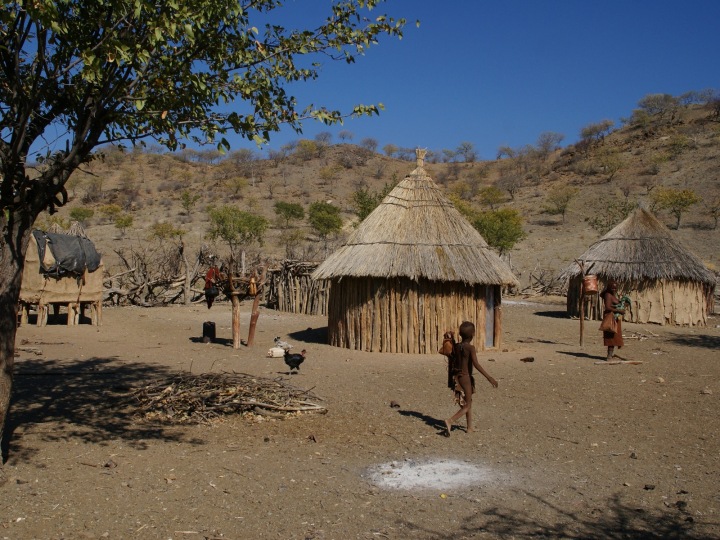
The settlements are usually arranged around a central cattle enclosure and represent the center of social and cultural life. Life in the settlement has a precise rhythm that has not changed for generations. In the middle stands the sacred fire - okoruwo. It is not just a source of heat. It is a connection with the ancestors, a place for prayer, and decision-making. Older men communicate with ancestral spirits there and deal with important community matters. Children do not grow up in school desks. They learn by observation. Girls watch their mothers - how to prepare food, how to take care of the household, how to manage daily life. Boys learn from the men - caring for herds, moving in the landscape, survival.
A Wedding Without Romantic Clichés: An Agreement that Unites Families
If you were expecting white dresses, bouquets, and "yes" from love, you might be disappointed. For the Himba, a wedding is more of an agreement than a romantic story. Marriages are often arranged by parents - it's about family alliances, not two people in love, accompanied by a dowry - most commonly in livestock. Before the actual wedding, the woman awaits an important period. For several days to weeks, she may spend time in seclusion - a sort of transitional ritual between girlhood and womanhood. She learns what to expect: respect for family, duties, and how relationships work within the community. The wedding itself has more layers than it might seem. The bride spends time with her mother in a hut where she is prepared - coated with red paste, adorned with jewelry, and given the headband ekori, often inherited from her mother. It's not just an ornament. It's a clear signal: from now on, you are a married woman. Traditionally made from the highest quality leather, it is passed down from generation to generation, symbolizing her marital status.
Nearby, the groom sits in hiding, sheltered from the eyes of his in-laws in a specially built wedding hut. He is being prepared for marriage with a beautifying pomade made of charcoal and animal fat. Before leaving for her husband's home, the bride pushes the front spiral of her Ekori headpiece forward so that she can see only directly ahead, thus protecting herself from the emotions associated with leaving home. Upon arrival at the new home, another feast is held in her honor, after which the couple retires to the ceremonial hut to consummate the marriage, writes Africa Online Museum.
Then comes the sacrifice of an animal - most commonly a cow or a goat. It's not just a feast. The entrails of the animal are used for symbolic "reading of the future" of the marriage. The community observes whether the union will be strong or problematic. This is followed by dancing, singing, and feasting. The entire community celebrates - not the love of two people, but the union of families.
And now to what interests you: water. It appears very rarely. The bride is cleansed during the preparations - this is one of the few moments in her life when water is used on the body. Not as hygiene, but as a symbol of a new beginning.
After the wedding, the woman moves to her husband's community. And everything changes - without romantic illusions.
Hygiene without water: a shock that makes sense
The biggest cultural shock? Undoubtedly hygiene.
A peculiar custom of this tribe is that they do not bathe in water, writes the portal African Diary. This is mainly due to their harsh climatic conditions. The Himba people live in one of the most extreme environments on Earth, with a harsh desert climate and a lack of access to drinking water.
Instead of water, they use smoke baths - they sit over smoldering herbs, cover themselves with a blanket, and let the smoke act on their bodies, causing them to sweat. The smoke disinfects, neutralizes odors, and also acts as protection.

Add to that the iconic otjize paste - a mixture of butter and red ochre. They apply it to their bodies and hair every day. It's not just about aesthetics.
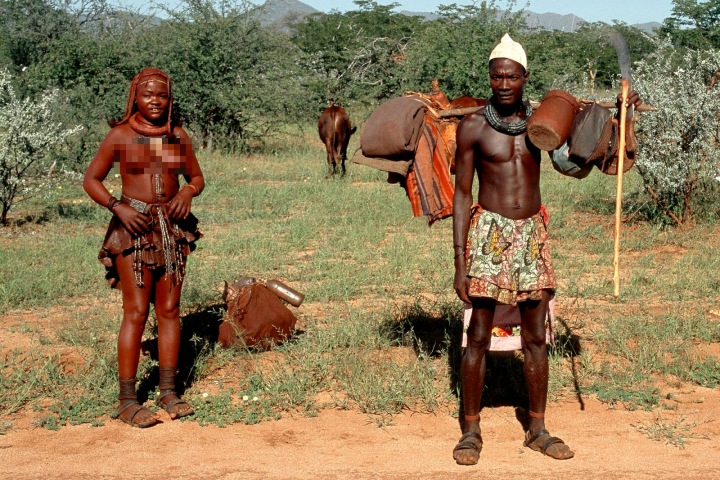
Otjize connects the body with the landscape. Its red hue resembles the soil they live on and the blood of their ancestors. At the same time, it protects the skin from the strong sun. However, it also has a deeper meaning; it symbolizes belonging. Applying otjize is like a declaration: “I belong to this land, and this land knows me.” Girls learn these rituals from their mothers and aunts by observing and imitating, not through formal explanations. This way, knowledge naturally transfers from generation to generation without the need for written records.
Loyalty? A Completely Different Story
What would cause a scandal in our society is the norm among the Himba.
Sources indicate that polygamy, specifically polygyny (a man having multiple wives), is common among the Himba. A well-known example is a village chief with four wives and nineteen children. According to The Guardian, marriages are often arranged by parents, and girls are usually married off right after reaching puberty to a partner chosen by their father. Although arranged marriages are common, love marriages also exist, especially after the first marriage. While polygyny is widespread, divorces are equally frequent, so most adult Himba have more than one partner during their lifetime, either consecutively or simultaneously. Men tend to marry later than women, usually towards the end of their twenties, and their first wife is often still a very young girl.
According to the state publishing company in Namibia, it is very rare for the Himba to marry someone outside the community, and therefore child marriages are quite widespread. The Kunene region also has one of the highest rates of teenage pregnancies in the country. Field testimonies state that some girls are married off before the age of ten and by around 12 years old can become pregnant by much older men. However, research also indicates that such marriages are not immediately consummated - cohabitation and sexual life usually begin only after the girl's first menstruation, and many of these unions are never fully realized.
An interesting and controversial practice is a custom called okujepisa omukazendu. In this practice, a host may offer his wife to a guest for the night, while he sleeps elsewhere, writes the website Ecoi.net.
According to some sources, the woman has limited say in the decision; although she can refuse sexual intercourse, she must stay in the room with the guest. Other sources interpret this custom as part of hospitality, social bonds, and information exchange, with the intimate contact itself being up to the woman's decision.
Human rights activists, however, point out that refusing these practices can have serious consequences - such as social exclusion, violence, or harassment, especially for women living in rural areas without financial independence.
Research further revealed that extramarital affairs are very common - up to 77% of women and 85% of men reported at least one partner outside of marriage. In approximately 70% of marriages, there was a child whose biological father was not the woman's husband. On the other hand, women in some areas have relatively large freedom in making reproductive decisions. Divorces are common, and society places little emphasis on stigmatizing children born out of wedlock - there are mechanisms that determine so-called "social fathers." Nevertheless, these relationships are also associated with risks, such as jealousy or physical conflicts.
When a Child is Born, There's No Applause or Commemorative Photos
Imagine silence. Not the city kind, interrupted by cars or voices. True silence, broken only by the wind and occasional animal sounds. Somewhere in northwestern Namibia, far from hospitals, machines, and white coats, a birth is impending. A Himba woman knows that the moment is approaching. She doesn't rush to the hospital, doesn't pack a bag. Instead, she returns to her mother. Where she herself grew up. Where women await her, who have been through this many times before. There's no panic. Rather, a calm. This is how things have worked here for generations, writes the portal National Library of Medicine.
When the birth starts, there is no doctor with her. Nor modern technology. Just the experienced hands of older women - the mother, aunt, neighbor. Each of them knows exactly what to do. Not from books, but from life. They help her breathe, hold her, advise her. They are there. And that's all she needs.
The conditions are simple. Sometimes even raw. No epidural, no pain relief as we know it. Pain is part of the process. Something to be accepted, not suppressed. Sometimes they help themselves with herbs that generations have known.
The Himba have a unique way of determining the "beginning" of a child's life. They do not start counting from birth or conception but from the moment the mother decides to have a child. When a woman feels the desire to have a child, she goes alone under a tree to listen until she hears the song of the child who wishes to be born. Then she goes back to the man who will become the father and teaches him this song. At conception, they sing it to "invite" the child into the world. During pregnancy, the mother shares this song with midwives and the older women in the village. After birth, everyone gathers and welcomes the child into the community by singing. As the child grows, the song is learned by other people too. When the child falls or gets hurt, someone picks them up and sings their song to comfort them. And when they achieve something remarkable or come of age, the community celebrates them with this singing, writes JT Safaris.
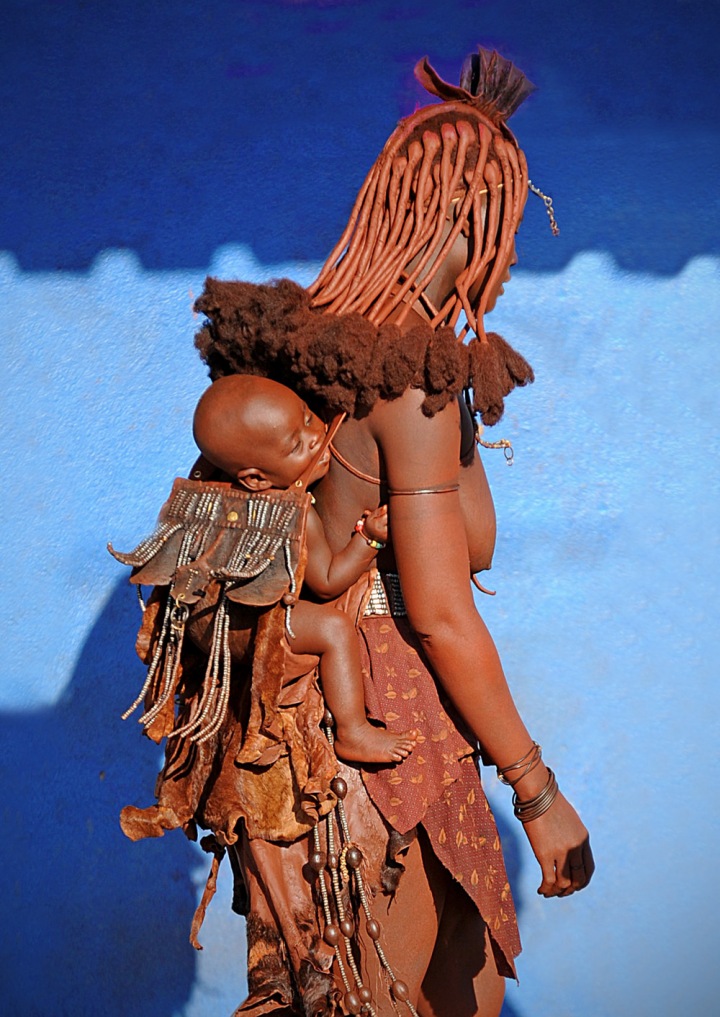
Births usually take place in a special hut designated for this purpose, which is set apart from the main dwelling. It provides privacy and a calm environment. It is often located near the chief's hut, by the sacred fire, under the protection of ancestral spirits. Experienced older women, who have knowledge passed down through generations, assist with the birth. They provide the mother with physical and psychological support and use herbs and traditional remedies to alleviate pain and aid in postnatal recovery. The birth is accompanied by various rituals. About a week later, a ceremony similar to a baptism takes place - the child is brought to the sacred fire and symbolically presented to the ancestors. The father then announces its birth and asks for blessings and protection.
Breastfeeding is strongly supported and mothers usually exclusively breastfeed for the first few months. Besides providing nutrition, it also strengthens the bond between the mother and child. Birth is viewed as a social event - the community gets involved, helping both the mother and the newborn, and celebrates the arrival of a new member. After birth, the naming of the child follows. The name can have cultural significance or relate to the circumstances of birth or family tradition. Overall, childbirth among the Himba is closely connected with their beliefs, traditions, and a strong emphasis on community and connection with nature.
You might be asking yourself now - is it safe? The truth is, not always. That's why various organizations are trying to bring healthcare closer to these communities today. But the reality remains that for many women, the hospital is too far, writes UNICEF.
When a child is born, there is no applause or photos for memory. There is relief. Silence. And then life. The woman is not alone; the community surrounds her. Older women help her with breastfeeding, with the baby, with the first days, which are always the hardest. And then comes a moment that holds something powerful. About a week later, they take the child to the sacred fire, writes the portal JT Safaris.
There, he is symbolically introduced to the ancestors. As if they were presenting him to a world that existed long before him. They ask for protection, for strength, for life. Life goes on. Without long pauses. The child grows up among other children, among animals, among people. He does not belong only to the mother. He belongs to the entire community. Anyone can guide him, teach him, reprimand him.
And you might once again ask yourself the same question: could we do it? Giving birth without a hospital, without certainty, without everything we're used to? Unimaginable for us. For them - a normal beginning of life.
Unusual Customs That Will Surprise You
This is the world of details, and it's exactly these that make the Himba culture so exceptional.
The Sacred Fire (okoruwo)
In the middle of each Himba dwelling burns the okuruwo, the sacred fire, which must never go out. It represents the connection between the living and the ancestors. Prayers are spoken by this fire, answers are sought, and important decisions are made. It is present at the birth of a child, during engagements, and even during conflicts. The fire is maintained by the elder members of the community—not as a display of power, but of responsibility. Because of this, the past remains ever-present, and the present is guided by it. The okuruwo burns continuously—it is a living bridge between the Himba and their ancestors.
Two Family Lines at Once
Every person belongs to both their mother's and father's family. This system influences inheritance, relationships, and obligations.
Hairstyles as a Language
Hair tells a story. Single girls have different hairstyles than married women.
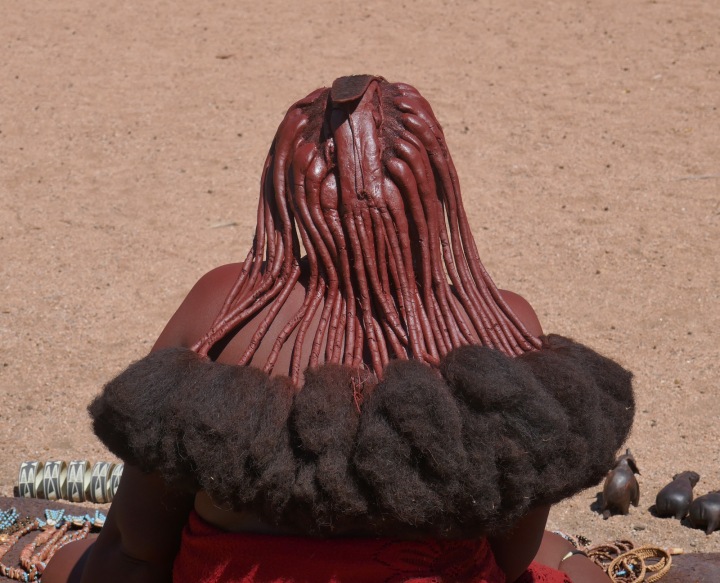
Children have specific braiding according to their age. Just one look and you know who's who.
- young children often have shaved heads or simple braids
- girls before puberty wear two braids directed forward to the face
- as they mature, the hairstyle changes – more braids, often coated with otjize
- married women wear a typical erembe headband made of leather, covering the top of the head
Just one look and the locals know exactly what stage of life a woman is in.
Liberal Child Rearing
Children move freely, but within the community. Every adult is responsible for their upbringing.
Diseases and Curse
The Himba believe that all diseases are caused either by a curse or by ancestors prematurely calling someone to join them in the afterlife. It is said that the curse is transmitted by a black bird similar to a dove, which comes from Angola. In the past, curse expulsion was performed by male healers from Angola, but over the last thirty years, Himba women have become powerful healers and often practice communal healing trances.
Katjambia is recognized as one of the most respected Himba healers. The striking woman, nearly 190 centimeters tall according to available sources, travels the region with a small team of assistants and provides healing where needed. To the sound of drums, shaking a calabash rattle, and waving branched medicinal sticks, she leads her patients into a trance-like state. Once they enter this state, the disturbed spirit can be located by the healer, and she then absorbs it into her own body and returns it to the ancestral world. If the spirit is too strong to be released, she returns to the sacred fire in her camp and calls upon the strength of three generations of healers, believed to be embodied in the flame.
Reality Without Illusions
After marriage, the woman moves into her husband's family - this is a so-called virilocal system. And what awaits her? A harsh reality. No honeymoon, reports the Smithsonian website.
The woman leaves her family, her background, and enters an environment where she has to build a new position. She must gain respect, learn to function in a new group, often among other wives as well.
Every woman, wife, has her own hut, but they all cooperate - they take care of the children, cook, help each other. It is more of a community than competition.
It is interesting that women often create strong bonds among themselves. They help each other, share work, and take care of children together.
Children, upbringing, school, and healthcare
Children are the center of the community. They are raised not only by the mother but by the entire village.
Schools in traditional areas are often missing or are very distant. Therefore, children learn practical skills - how to take care of animals, how to survive in nature.
Healthcare is a combination of traditional healers and limited access to modern medicine. In remote areas, the nearest doctor can be tens of kilometers away.
Can a European woman marry a Himba?
Theoretically yes. Practically very rarely. Marriage among the Himba is not just about two people - it is a decision of the family and community. The differences in culture, life, and values are immense. Even if it happened, the woman would have to adopt the entire way of life. Without compromises.
When you imagine: "I'm marrying a Himba..." It sounds exotic. Maybe even romantic. But the reality?
Life without water, without privacy, without our certainties. On the other hand - a strong community, clear rules, deep connection with nature.
It's not a better or worse world. It's just different. And that's where its charm lies.
Perhaps a simple question crossed your mind while reading: could we live like this? Or have we become more accustomed to our comfort than we want to admit?
Sources: author's text, Ecoi.net, Africa Online Museum, African Diary, The Guardian, National Library of Medicine, JT Safaris, UNICEF, Smithsonian