I'm moving to Braník. The atmosphere is complemented by a curious villa and Jára Cimrman also left his mark here


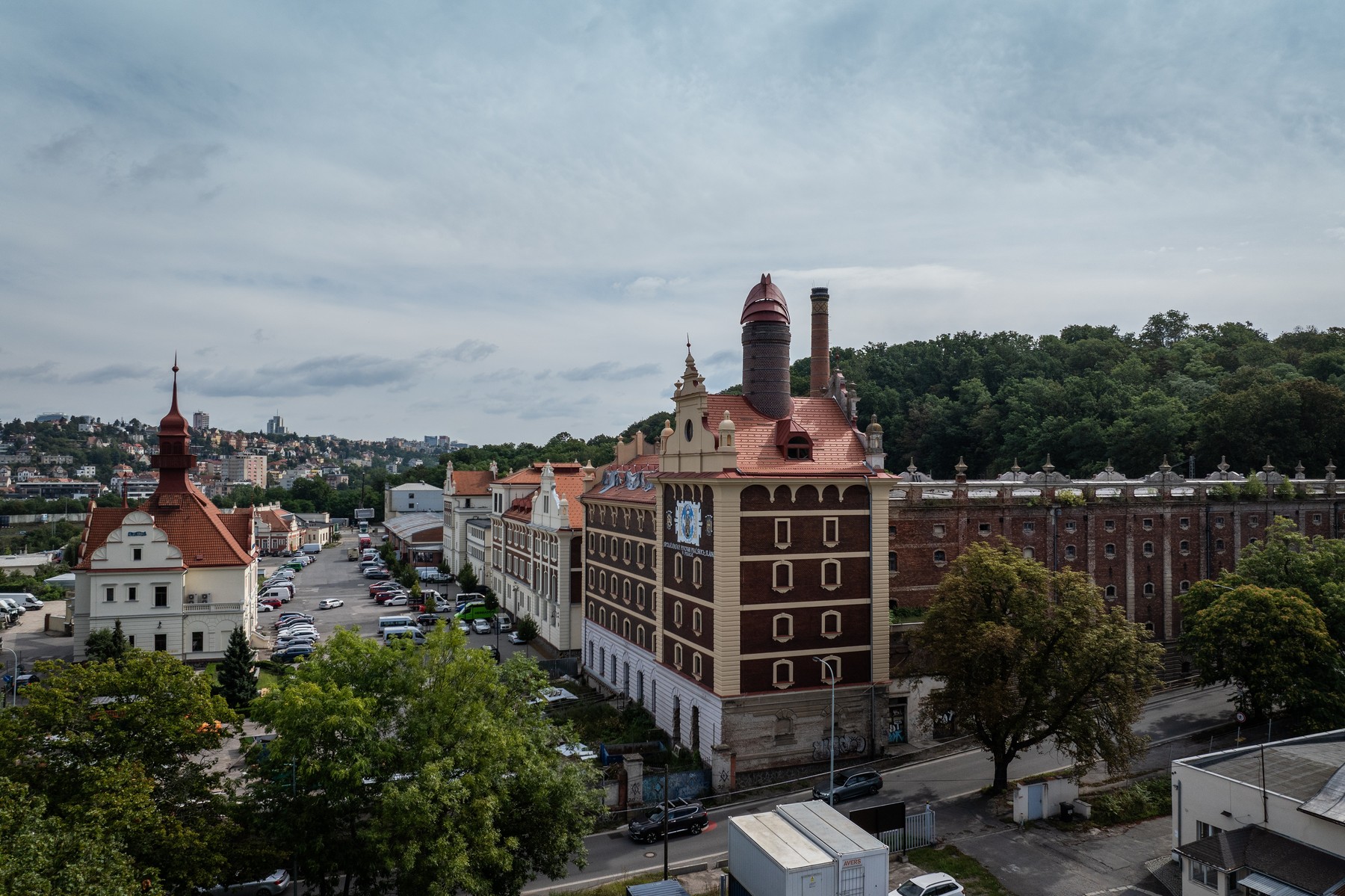
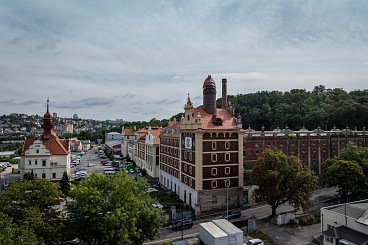
The municipality of Braník is now an inseparable part of Prague 4, however its name is known throughout the country for its association with the beer brand of the same name. The golden brew is no longer made here, but the historic buildings connected to this industry have remained, along with a whole range of historical and architectural gems. At the same time, the local railway station is considered the gateway to the world of tramps in the romantic nature of Central Bohemia.
The first mention of the village dates back to the 11th century. The name is probably derived from the word defend or defensive (in the same meaning), thus it was supposed to be a place suitable for defense. An alternative theory then reaches back to the Celtic word branos meaning raven. The Celts left no written monuments in our territory, so we will probably never learn the truth about the actual origin of the name, about which disputes are still ongoing as to whether it is more correct with a long or short 'a'.
Considerably more tangible is the presence of a whole series of remarkable historical buildings. Of course, it makes sense to first follow the traces of breweries. The oldest monument to beer brewing is the local Dominican brewery, where the golden beverage was brewed by members of the church order of the same name. Today, unfortunately, the building is in poor structural condition and is waiting for its second life.
Braník Brewery Ice and Other Curiosities
However, the famous Braník brewery caught its second wind, where the beer of the same name was brewed until 2007, before its production was moved to Smíchov. The technical monument built in a combination of Art Nouveau and Neo-Renaissance historicism can still not only be visited today, but you can also experience something here.
The whole family can enjoy laser games here, and lovers of movement arts have their center in the dance conservatory. The former malthouse should then be revitalized by a new theater in the future.
Right next to it is another interesting architectural feat - the ice house. Before the era of freezers, ice was not only essential for producing lagers in breweries, but also for other purposes, and was obtained from the frozen river and subsequently stored in special ice houses, where it lasted almost the entire year. The Braník ice house had special masonry with cork insulation and an air pocket to ensure the ice harvested from the Vltava would last a long time.
From Braník, the frozen blocks were also transported to other parts of Prague by railway. The railway naturally operated in both directions. The original industrial use of the local railway was soon taken over by tourists; it was from Braník station that the base for tramp expeditions was established. To this day, trains pass through here on the so-called Posázavský pacifik; the railway route is considered the most beautiful in the Czech Republic.
Historic villas are typical of Braník's atmosphere. Among the most famous is Marold's Villa, named after the famous painter of giant canvases reflecting milestones in Czech history. Among the romantic villas, one of them stands out with its curious architectural solution. Prager's and Loud's Villa bears the name of two architects for a simple reason. It consists of two parts. The first part was built as a cube partially in the spirit of 1960s functionalism, which would not stand out from the other villa development in any way, but it was subsequently supplemented with a superstructure made from a split silage tower, which also features the typical blue color as we know these technical structures from Czech fields.
Braník is Alive Today
Braník has not remained frozen only in its glorious past and today modern infrastructure development is taking place here.
"Our goal is to offer a wide range of leisure activities to residents regardless of age. It is important that children have places to spend their free time while being physically active. I am therefore pleased that we have repaired dozens of playgrounds and outdoor sports facilities," commented Jan Hušbauer, deputy mayor of Prague 4 municipal district, on the efforts of Prague 4 leadership in the magazine Tučňák. In the near future, such a reconstruction of the playground on Žalmanova Street in Braník is expected.
In the nearby surroundings, Braník really has a lot to offer: Braník rocks, a cycling path along the Vltava river, Yellow Spa or a golf course in Hodkovičky, and the list could go on. It's probably no coincidence that the Jára Cimrman Theatre was originally located here as well.
Sources: original text, Tučňák, Wikipedia, Kudyznudy, pamatkovykatalog.cz