Central bankers expect interest rate increases by the end of the year, the reason being concerns about higher inflation

The Bank Board of the Czech National Bank has left the base interest rate unchanged at 3.75 percent. Experts have repeatedly warned about pro-inflationary risks stemming from a strong labor market, wage growth and domestic demand. Prime Minister Andrej Babiš, on the other hand, has been particularly opposed to raising rates.
The decision of the bankers, which occurred on September 17, was already indicated beforehand by CNB Vice-Governor Eva Zamrazilová in an interview with the Reuters agency.
"At this moment, we are registering a fairly strong and persistent growth in service prices, which is however offset by a decline in food prices, which is surprising. The question now is not whether food prices will move in a direction supporting growth and inflation, but rather when that will happen,"
said Zamrazilová, adding that this should happen "within the next few months".

All seven members of the Bank Board voted for the decision
The September decision of the Bank Board, which kept rates at 3.75 percent, was unanimous.
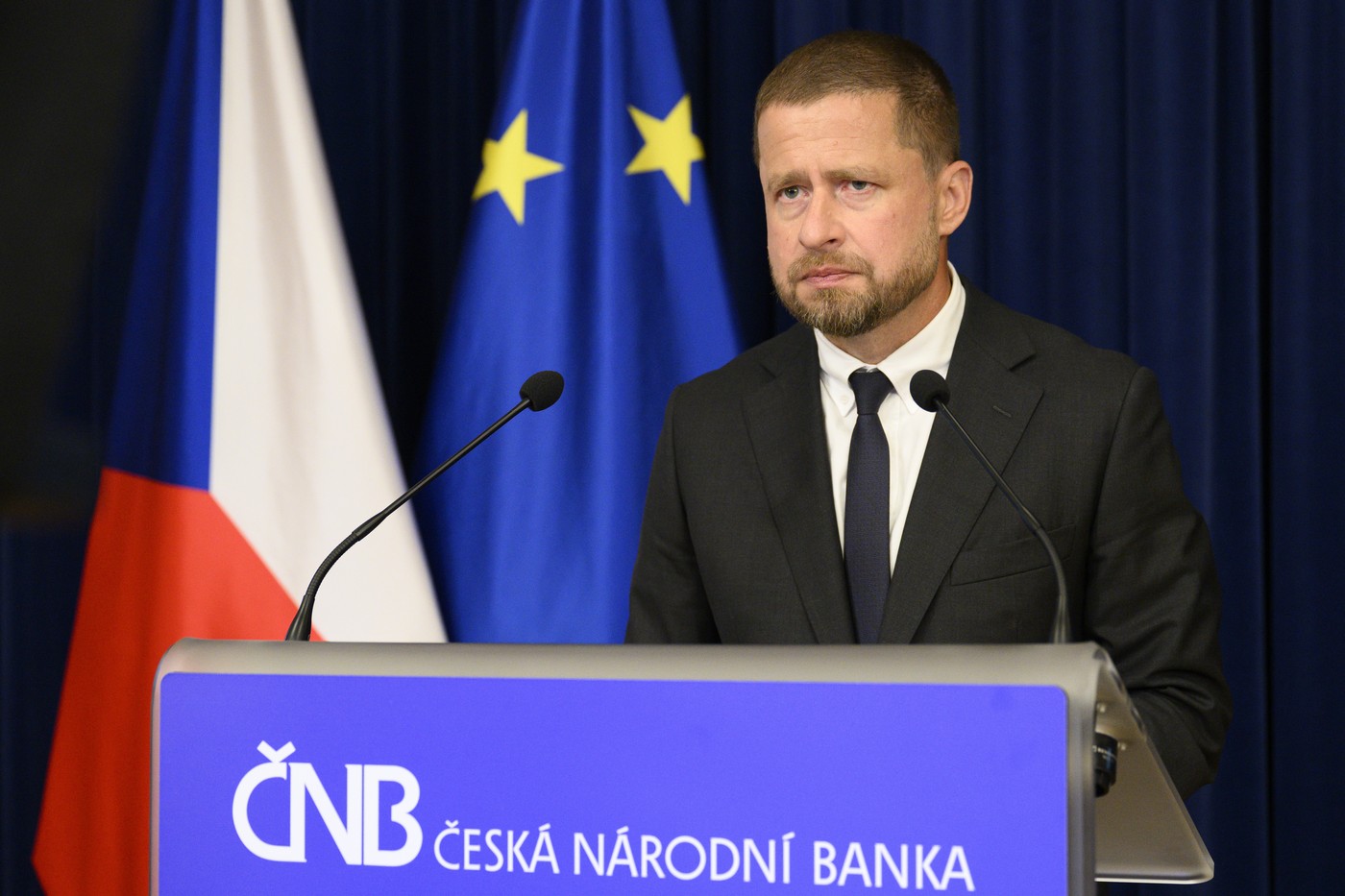
"Relatively tight monetary policy is still needed to keep inflation near the central bank's two percent target in the long term,"
said the governor of the CNB Aleš Michl to journalists after the meeting. According to the updated forecast of the bank's monetary section, core inflation remains elevated.
Currently, the board has the advantage that part of the work is being done for it by the market itself. This happens through higher market rates, which dampen economic activity, some experts are convinced.
"Unlike the European Central Bank, which recently raised its rates, the domestic central bank still has a relatively comfortable wait-and-see space. Even after today's decision, its deposit rate remains 125 basis points higher than the European Central Bank's rate,"
stated analyst Petr Dufek from Creditas Bank.
New price increases threaten
Prime Minister Andrej Babiš meanwhile sent a message to the domestic central bank again in September that interest rates are already too high. Before the elections, he had as one of his movement's slogans "Vote for cheap mortgages".
"Nonsensical policy of the Czech National Bank. They are keeping rates one and a half percent above the level of the European Central Bank,"
complained the Prime Minister, as reported by the server Seznam Zprávy.
The central bank last adjusted the base interest rate in June, when it increased it by a quarter of a percentage point to the current level. It was the first rate increase in four years. Experts do not rule out that the rate could increase at the end of the year. The Bank Board has repeatedly warned of pro-inflationary risks arising from a strong labour market, wage growth and domestic demand. At the same time, the koruna is not exerting significant disinflationary pressure on inflation and the economy is gradually returning to growth. For mortgages, this means that there will rather not be room for significant price reduction in the near future.
Year-on-year inflation is now below the two percent target. However, risks of higher inflation have intensified, which has been evident in recent days, for example, in natural gas prices. These could contribute to higher electricity prices next year, which could be accompanied by higher food prices.
Interest rate hikes from November onwards?
Therefore, if the Czech central bank observes that developments will be associated with significantly higher risk of secondary inflationary impacts, it will decide on a change.

"In our view, the most likely date is the November meeting, when the Bank Board will have a new macroeconomic forecast at its disposal. Core inflation in the Czech Republic remains elevated without signs of more systematic slowdown, developments in the energy market are acting pro-inflationary, and the state budget proposal for 2022 is significantly more expansionary than what the CNB had assumed in its current forecast,"
pointed out to the Czech News Agency the possibility of rate increases, chief economist of UniCredit Bank Martin Komrska.
"The market currently still admits the possibility that the Czech National Bank will raise interest rates once by the end of this year, which would correspond to the expected interest rate increases by the Fed and the European Central Bank. Crucial for the future trajectory of rates will be the development of the conflict in the Middle East and its impacts,"
wrote economist Adam Ruschka from J&T Bank.
Interest rates on bank deposits and loans are derived from central bank rates. For businesses, higher interest rates bring more expensive loans for investments and operations, while for households they mean more expensive loans for housing. However, at the same time, with higher interest rates, the appreciation of deposits in accounts increases.
Sources: original text, own research, CNB, CTK, Reuters