On the level: Péter Magyar looks forward to the return of Austria-Hungary. He would find common ground with Petr Pavel on this.


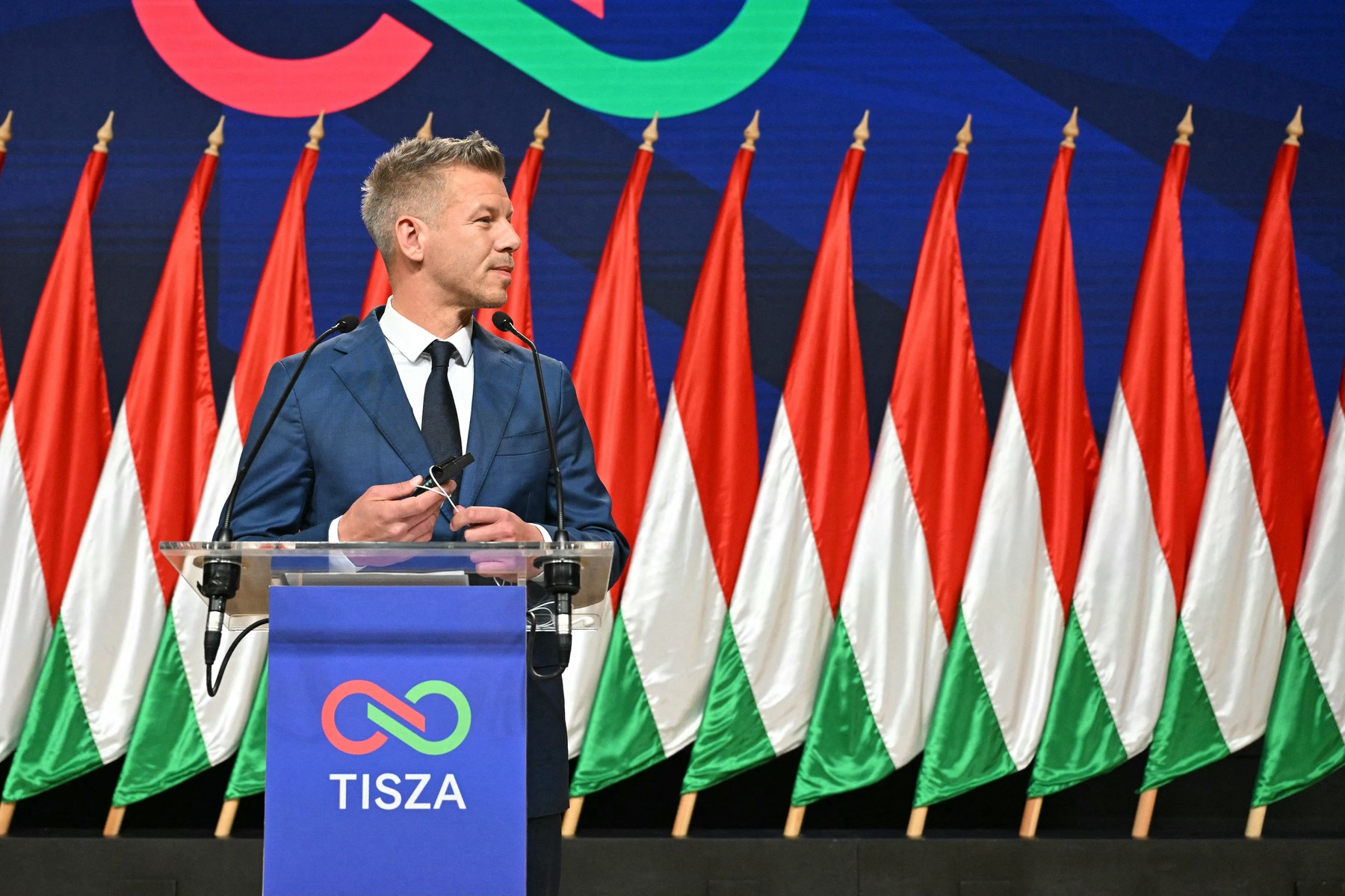
The headline presented by the server Politico in a recent article about the new supernova of European politics from peripheral Hungary was already hanging in the air at the moment when Péter Magyar spoke in front of the parliament by the light of Hungarian electoral torches. He quoted 19th-century Hungarian classics and continually returned to the times of the Austro-Hungarian Empire even at the moment of his electoral triumph. He might have found an echo even with President Petr Pavel.
Our model is the two decades of the First Republic founded by Tomáš G. Masaryk, who is primarily known for having dismantled Austria-Hungary into atoms in the whirlwind of dust from the First World War. The roughly 60-year existence of the Austro-Hungarian dualism, which ended with it, is one of the peaks of Hungarian historical statehood.
But what if Austria-Hungary is a more stimulating inspiration today than Masaryk's Czechoslovakia? Even Masaryk knew that the voice of a small state in the concert of great powers, as global politics of the 19th century was nicknamed, would not have an audience. That’s why he attached whatever he could to the territory of the historical Czech kingdom. Thus, backward Slovakia came in handy, and suddenly it didn't matter that it wasn’t a historical territory as was explained to the Germans in the Czech borderlands, but even the more backward Carpathian Ukraine.
Another coalition was then formed with Romania and Yugoslavia. The Balkan countries thus became not only a favorable market for Czech industry but also a significant ally against one hostile country. That country was Hungary.
From a domestic perspective, it's hard to understand that every second sentence in Magyar's victorious speech referred to the 19th century when Hungary, under Budapest's leadership, enjoyed autonomy within the Habsburg Empire, unlike the Czechs. It was the Hungarians who did not want to allow the creation of Austria-Hungary-Czechia. The Habsburgs, nor the Austrians, would mind trialism, but the Hungarians were worried about being outvoted 2:1.
"I would like to strengthen relations between Hungary and Austria, both for historical, cultural, and economic reasons," noted Magyar, as reported by Politico, adding that Austrian politicians would also very much like to cooperate more closely with Hungary, which was quite difficult under the Orbán regime. Old love never rusts.
And what about old animosities? We will see if the representatives of the ruling parties in the Czech Republic can move past their affinity for an unproductive relationship with Viktor Orbán.
“Now, a lot of people might get mad at me, but I have emphasized the idea of the United States of Europe several times as probably the only solution for Europe if it wants to remain relevant on the world map. It is continually shown that the following period - and it won't be very short - will be a period of global powers. And Europe can be a global power only when it speaks with one voice,” newly stated President Petr Pavel during his visit in Litomyšl, as reminded by Deník.
The Czech Republic, like Hungary, had its great figures of the long 19th century. Today, the stern gaze of František Palacký still looks down at us from the thousand-crown note; he emphasized the existence of Austria-Hungary despite all difficulties, fearing the imperial ambitions of Russia on one side and Germany on the other.
Pavel's observation is actually similar. Reliance on an alliance with the USA is no longer viable, just as reliance on the longstanding alliance with Germany was not viable in Palacký's time, within the Holy Roman Empire of the German Nation destroyed by Napoleon, to which we always belonged. The aggressiveness of Putin's regime is something the Russians demonstrate to us every day.
The Central European alliance has another key benefit that Magyar is currently considering. After spending ten years in Brussels as a diplomat of the Orbán regime, he knows that only strong alliances of smaller states can engage in dialogue with the EU hegemons from Paris and Berlin.
However, as a historical perspective on Austria-Hungary shows, the nations in the middle of Europe did not have a unified view even within one state. This lack of unity is illustrated, for example, by the current divide over the American list of good and bad states in NATO. While Poland can look forward to a reward for being a leader in defense investments, the Czech Republic is being pushed aside by Trump for its attempts to be a free rider in the alliance.