Sirens, explosions, and I'm waiting for a ride to work. A Czech nurse in Israel treats cancer in underground shelters.

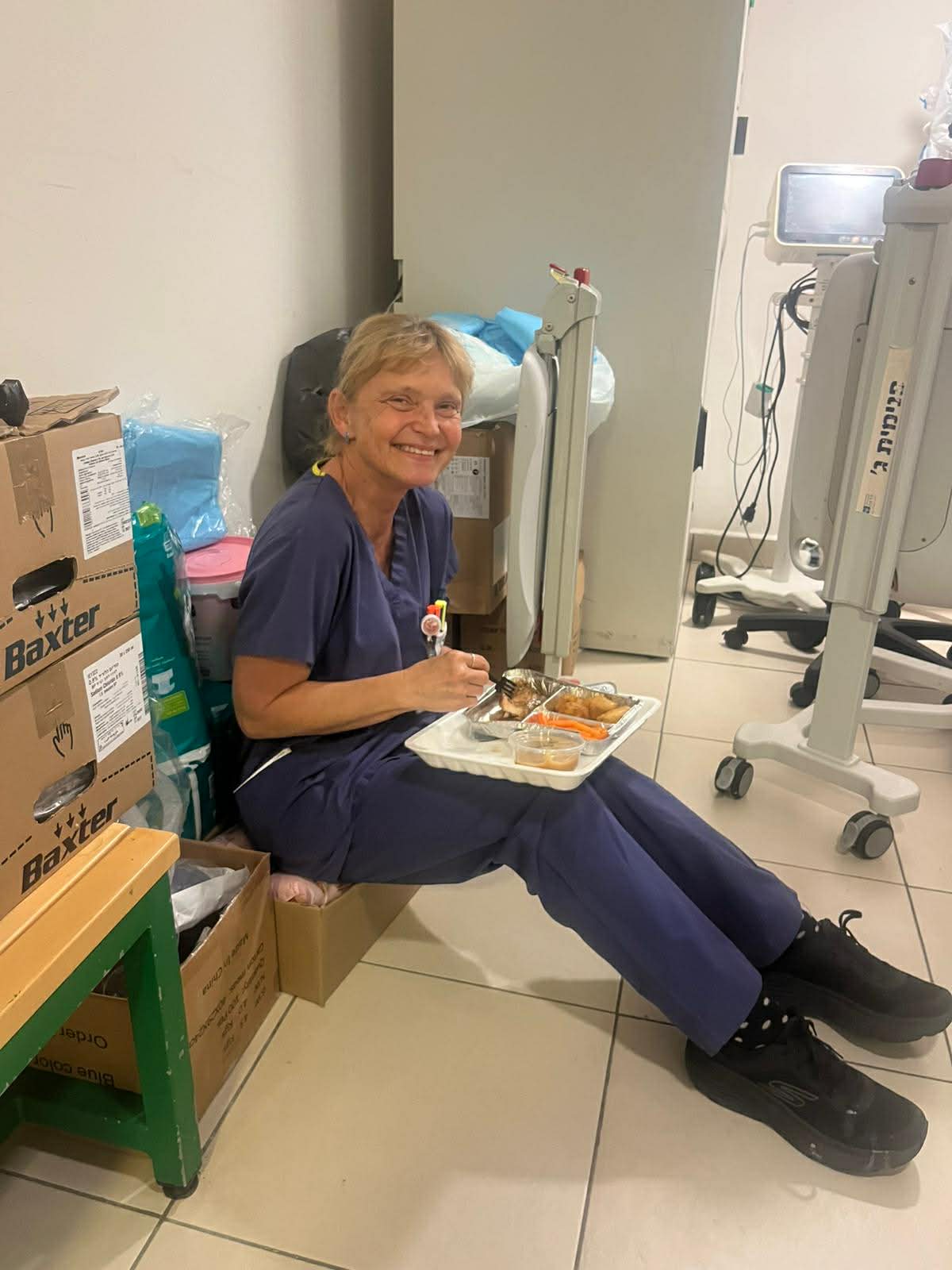
If you have ever wondered what it's like to live multiple lives, Martina can certainly give you an idea. Few people have experienced a more varied life than she has. Throughout her life, she has spent a lot of time in Canada, Cape Town, Ireland, New Zealand, and now she is preparing to go to Antarctica. According to her, healthcare in the Czech Republic is outdated and she feels best where there are nice people.
You currently work in a hospital in Jerusalem, how did you get this job?
After volunteering at a hospice in Jerusalem, I studied for a BA in Nursing at Tel Aviv University. I am a "fresh" nurse, having passed the state exams in 2019.
Could you please describe your current job position for our readers?
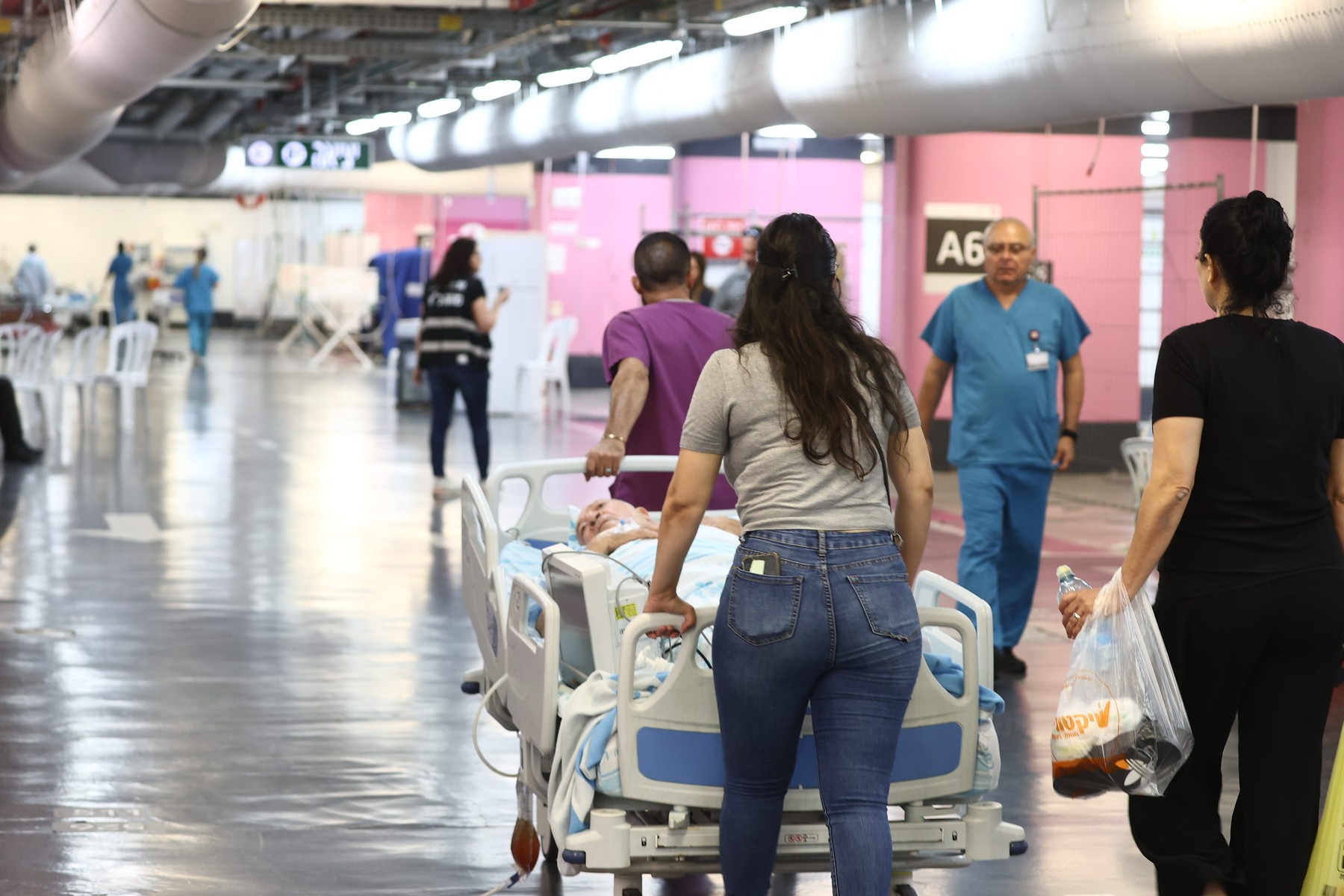
I work in hemato-oncology, which is a department where we care for patients with blood cancer. During peaceful times. The current situation is somewhat different, strongly reminiscent of the COVID era. We have patients divided according to their mobility level; those who cannot reach the shelter are taken to the basement (garages and storerooms converted into makeshift departments), and mobile patients stay in regular departments. There is a shortage of staff (the Czech Republic has 9.5 nurses per 1,000 people compared to 6 nurses per 1,000 people in Israel), and many staff members are on the frontline, including 2 nurses from my department. Doctors and also husbands of colleagues are deployed, which complicates the situation further. Schools in Israel are closed, and the hospital offers "camps" for children, but the situation is hectic. So everything has to be combined and concentrated differently. As a result, I am now taking care of oncology, bone marrow transplantation, hematology, and now even gyneco-oncology patients. I am responsible for 6–8 patients during the day and more at night.
Did you always know you wanted to work in healthcare? If so, what led you to it?
I did something different on each continent... a librarian in an international school in Cape Town, a prison guard in Canada, I studied and volunteered in Ireland, and in New Zealand, I earned extra by working as a daycare teacher while studying...
You were heavily involved during the Covid period, when you vaccinated a large number of people daily in Tel Aviv. How do you perceive this experience in retrospect?
As one of the big mistakes, when I believed what I was told. Hopefully, I have learned from it. Regarding the moral damage of nurses during the COVID era, I wrote a doctoral thesis.
What differences do you perceive compared to Czech healthcare?
Incomparable.
You don't see a doctor typing into a computer in front of the patient. Everything is electronic, the patient receives results immediately in the health insurance app. AI is a necessity. It helps with communication, we have patients from all over the world, it's necessary to communicate. Dad can't hear... and neither the doctor nor the nurses in the ENT department of the Czech hospital use AI to transcribe speech into written words... they simply shout at the patient and then wonder why he can't hear... in the ENT department...
AI condenses medical reports, checks to ensure that resolved issues are not unnecessarily repeated, and alerts if tests contradict each other. It produces great graphs and pictograms that help patients understand their illness.
The culture is completely different as well. First names and the absence of formal address create a totally different atmosphere.
In the emergency department, there are always volunteers handing out sandwiches, coffee, tea, lemonade... clowns in the children's ward, various volunteer groups willing to arrange anything, help where needed, take care... it's chaos. Here, the patient receives medication in the hospital. I need to know exactly when and what they are taking. And if an oncology patient needs something from cardiology, I just call and the medication arrives through the pneumatic post. In underground shelters where the pipes don't work, volunteers, mostly doing civil service, run around.
In general, patients are constantly surrounded by family; we don't have the concept of "two-hour visiting time." Dad has surgery on Monday. Mom is supposed to sit at home and wait for a phone call. With us, the family waits in the hospital. So the doctor speaks face-to-face after the procedure, can respond not only to words but also to body language, the family's facial expressions, whether they understood what he said, and gives time for questions. I mean, how do you deliver bad news over the phone? That's super inhumane...
Working in healthcare can be mentally very challenging. Do you strive for mental hygiene? What helps you?
I have training from prison for my mental resilience. And I'm very active, working out in the gym every day, venting with colleagues after work. And I travel. Whenever possible, I fly around the world, climb mountains, and chat with interesting people.
The situation in Israel is not entirely simple right now. Have you thought about returning to the Czech Republic?
Definitely not, especially not because of the situation in Israel.
I tried to return in December 2021. And since I have an international education (University of South Africa, Tel Aviv University, Dublin University College, Mohawk College Canada, and now Massey University New Zealand), I had to take exams in the Czech Republic. Nursing exams. And I failed. But there were many Russian-speaking nurses with me during the exams, and one thing led to another, and they gave me prepared questions. In Russian. So I crammed and passed the second time. Then I was supposed to attend the practical part, but in the meantime, the war in Ukraine broke out, and my professor from Israel invited me to a humanitarian mission on the Moldova/Ukraine border.
So, I worked there as a nurse/social worker. And after 4 months, New Zealand opened up (it had been in COVID quarantine until then) and I could fly to complete my PhD thesis there, which I started working on after my experience with Pfizer vaccination in Israel… and recently, when I inquired at the Ministry of Health of the Czech Republic about my exams, they told me that I would have to retake them from the beginning. And I lost the questions prepared in Russian somewhere in Ukraine…
Regarding the current situation… During our conversation, you mentioned a shelter directly in the hospital. How familiar do you think people are with the availability of shelters? Do you know where they are located and where to go for safety?
I'm probably the wrong person to answer this question. I have no idea where the shelters around me are located (there is one in my building, but I have never been there. There is also a shelter in the gym, but I don't use it), and I have the app for personal warnings on my phone turned off. I don't have the app for shelters.
The hospital moved non-walking/poorly mobile patients to the underground. Maternity wards are in the basement at all times. So I work some shifts in the bunker, floors minus 3 and minus 6, and other days on the 9th floor. Theoretically, when the sirens sound, we are supposed to move to the designated area. Honestly (and by doing so, I am violating hospital orders), I stay with the patients in the rooms... because they are tired and often sleeping.

The media reports that sirens are sounding quite frequently in Jerusalem. What is it like and can you get used to them?
A person can't get any sleep... and must adapt to the people around them. For example, this Saturday I was sitting at the bus stop waiting for the hospital minibus. Sirens, a sky full of white clouds, explosions... I'm waiting for a ride to work and watching it all. In the case of sirens, the minibus will stop if requested by any of the passenger nurses. In that case, whoever wants to, gets out, lies on the ground, and holds their head. The rest sit in the bus and wait. If no one requests to stop, the bus just keeps going, with booms overhead, phones ringing throughout the minibus warning of danger. It's kind of absurd.
You have traveled to Namibia, Canada, South Africa, New Zealand, Ireland, and Israel. Where did/do you feel the best?
Everywhere is nice when there are great people...
Do you have any plans for future relocations?
I have applied for a six-month work stay in Antarctica because it is the continent I haven't been to yet. And I am waiting in line, which is super long.
Thank you very much for the candid interview.
Sources: original text, interview