In French schools it's cold, hot and there are rats. Students draw attention to the conditions they're supposed to study in
Broken heating, leaking roofs, mould on the walls and toilets that are unusable. French students are drawing attention to problems which, according to them, have long exceeded tolerable limits. In some schools, it's impossible to warm up properly in winter, while in summer classrooms turn into overheated rooms. Young people want the state to stop overlooking the problems.
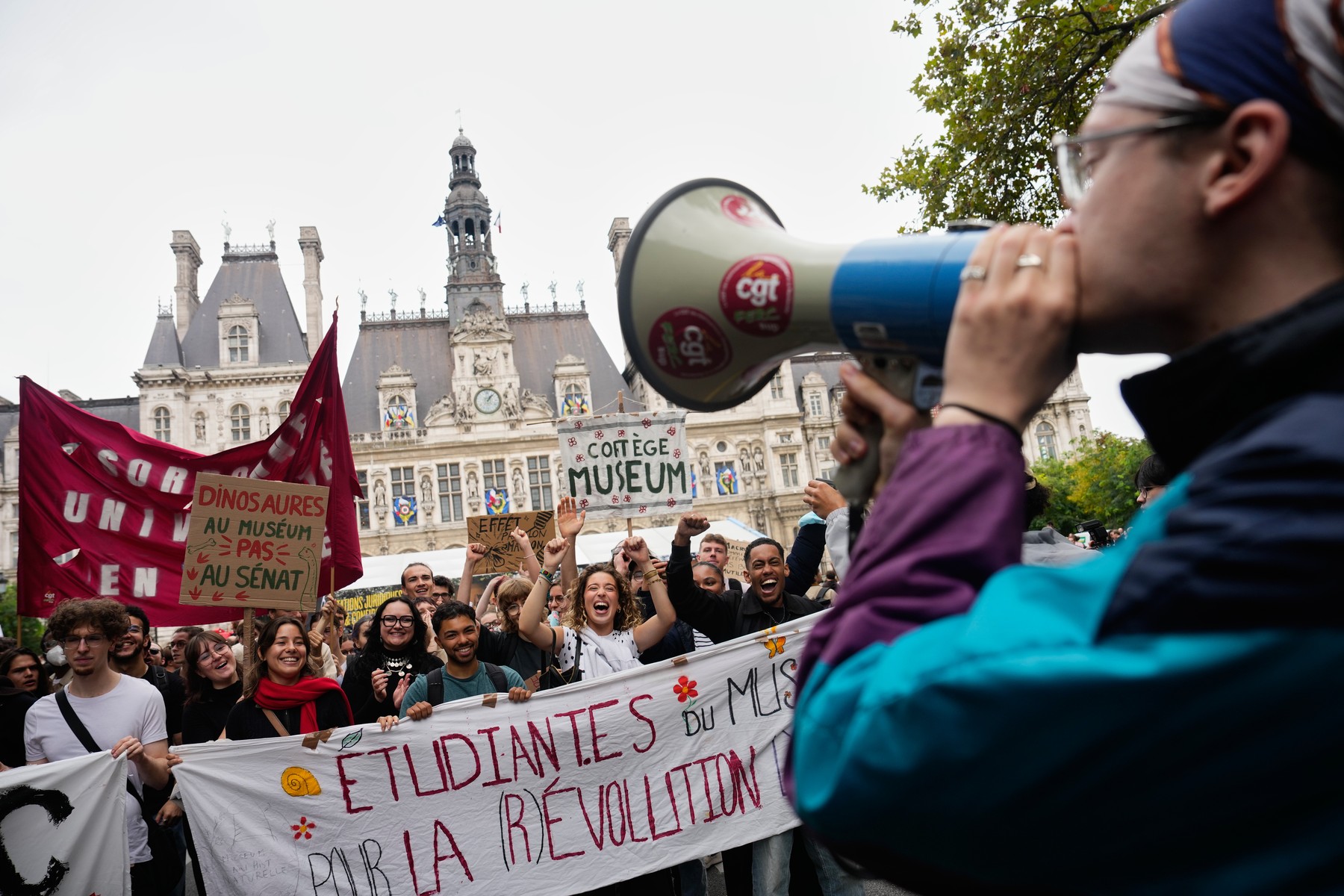
French education came into the center of attention in October 2026 due to high school student protests. They are blocking school entrances and taking to the streets. However, it's not just about grades, exams or university admissions. Students describe the everyday conditions in which they spend a large part of their lives. Some study in buildings where heating doesn't work, classrooms leak and basic equipment is missing.
Protests quickly spread from the Parisian suburbs to other parts of the country at the end of September. Students are drawing attention to the shortage of teachers, overcrowded classrooms and neglected school buildings. Their demands differ in individual cities, but one thing is repeated: they want to study in an environment that allows them to concentrate and function normally.
They freeze in winter, you can't breathe in summer
One of the most significant problems is the condition of school buildings. Some are decades old and need extensive repairs. Others have poor insulation, leaking windows or non-functional heating. The problem fully manifests itself during weather fluctuations. In winter, some classrooms cannot be properly heated. During summer heat waves, unbearable heat persists in them instead.
Footage that students themselves publish on social networks shows leaking roofs, broken heating, rats in toilets and other signs of neglected buildings. According to posts, the problems affect, for example, the Lycée Paul-Éluard secondary school in Saint-Denis near Paris. Students there also describe burst pipes and the presence of pests.
Similar experiences are not the same for all pupils. It depends on the specific school, its age and the possibilities of the local government. Nevertheless, these are not just individual complaints about discomfort. Poor conditions can affect concentration, health and the teaching itself.
A temperature around 40 degrees Celsius in the classroom is not an environment where one can easily work for several hours. Likewise, it is difficult to concentrate on lectures when sitting in a freezing room wearing a winter jacket. Students are therefore demanding building repairs and better adaptation of schools to current climate conditions.
The French daily Le Monde pointed out that the average age of secondary school buildings is around 61 years. For vocational secondary schools, it is approximately 71 years. Only a smaller portion of school buildings have been built or undergone reconstruction since 2015. More than a third of schools also operate at the limit of their capacity or exceed it.
"In winter it's minus five there, in summer forty"
Seventeen-year-old Fadila, a final-year student at Lycée Paul-Éluard school in Saint-Denis, described the conditions in which her classmates are trying to learn.
"There are no windows at the school, there's no running water in the toilets in the temporary buildings, there are cockroaches and rats everywhere. The school cafeteria is too expensive and there's no toilet paper in the toilets. We have to go ask the supervisors for it. The buildings are in terrible condition. In winter it's minus five degrees in the temporary classrooms, in summer forty. We can't work in such conditions,"
Her words show what a school day can look like, which most people associate with normal routine. Instead of concentrating on learning, students deal with whether it will be warm in the classroom, whether water will run, or whether they'll be able to use the toilet.
Particularly problematic are the temporary classrooms. These were often meant to serve only during repairs or as a temporary solution to space shortages. However, in some places, teaching has been taking place in them long-term. If they have poor insulation and non-functioning heating, they become another problem in winter and during summer heat.
Fadila also points out the cost of school meals. Even lunch is not a given for everyone. When a family counts every expense, a more expensive school cafeteria can be another obstacle. Poor technical conditions thus intertwine with social differences between students.
Toilets without doors and paper. A problem students no longer want to overlook
Alongside classroom temperature, the state of school toilets is also coming to the forefront. It may seem like a minor issue compared to teacher shortages or crumbling buildings. But for students, it's an everyday part of school life.
Students described broken doors, missing toilet paper, soap, and menstrual supplies. In some places, there are also too few stalls and it's nearly impossible to access the toilet during break time.

Toilets have become one of the symbols of the protests. Students are not demanding luxury facilities. They want basic hygiene and privacy. They don't want to worry about whether they will have somewhere to go during classes.
Moreover, the problem has a broader dimension. If students are afraid to use the toilet or prefer to avoid it all day, it can affect their well-being and health. For girls, there is the added question of access to menstrual supplies. The school environment should enable everyone to function normally, not just those who are lucky enough to have a well-maintained building.
Missing Teachers and Classes with Too Many Students
The poor condition of buildings is not the only problem in French schools. Students also point out the lack of teachers and the fact that there is often no replacement for missing educators. Some lessons therefore fall through or teaching must be organized differently.
Moreover, it is more difficult to work in overcrowded classes. The teacher has less time to devote to individual students. Those who don't understand the material can easily get lost. If you add noise, lack of space and unsuitable environment, teaching is even more demanding.
There are 36 students sitting in the classroom and during the heatwave the temperature reached as high as 40 degrees. They also criticize the lack of teachers and timetables which, according to them, leave too little room for rest. It's not just about whether students learn the material for tests. Secondary school education affects their future opportunities. If they cannot prepare for final exams in appropriate conditions, they may have a worse starting position when applying to universities. Students therefore also criticize the Parcoursup system, through which people apply to universities in France. They fear that their future is decided by results and system rules, while the conditions in which they prepare remain ignored.
The problem is not new. But students want it to be finally addressed
Teachers and students have been drawing attention to the poor condition of schools for many years. In March 2024, for example, teachers in the Seine-Saint-Denis department protested against neglected buildings and demanded an emergency repair plan. According to testimonies at the time, temperatures in some schools could drop below 14 degrees in winter, while in summer they exceeded 34 degrees. Teachers also described holes in the walls, poorly insulated windows and a lack of basic equipment.
Current protests thus do not bring entirely new problems. However, they give them greater visibility. Students publish videos, show photographs and talk to journalists about what they experience every day. Topics that have long been dealt with mainly within individual schools have become a public debate.
Moreover, it is not correct to claim that all French schools look the same. Some have modern classrooms and good facilities. Others struggle with serious shortcomings. It is precisely the differences between individual schools that are one of the reasons why students from better-equipped facilities are also joining the protests. They want to draw attention to the fact that the quality of education should not depend on which school one is born into or which part of the country one lives in.
Sources: author's text, Reuters.com, LeMonde.fr, Dw.com, Instagram.com,
X.com, Tiktok