Bankers kept rates at June levels, but expect higher inflation by the end of the year.

If people are currently planning a mortgage or refinancing, they may not need to rush in August and September due to rate changes. The situation in the mortgage market is likely to be stable. The reason is the August decision of the Czech National Bank's board, which leaned towards keeping the base interest rate at 3.75 percent.
The Czech Prime Minister Andrej Babiš criticized the latest actions of the Czech National Bank, stating that an increase in the base interest rate would significantly harm the lives of residents, businesses, and the entire economy. In a June video on social media, he added that the government would do everything it could to prevent prices from rising.
"Of course, loans will become more expensive for people, companies, and the state. And, naturally, mortgages will rise,"
referred Babiš to some articles in the media.
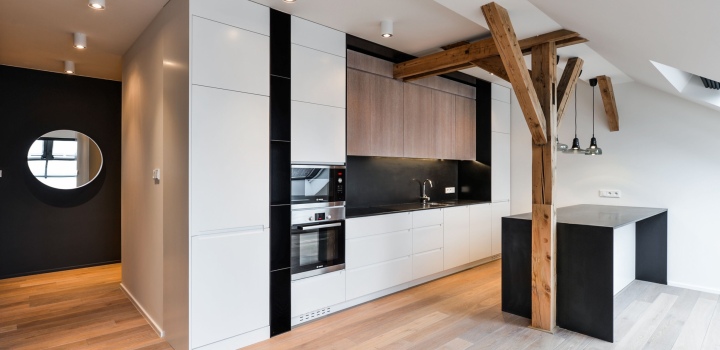
The governor of the central bank, Aleš Michl, in this context admitted that an increase in interest rates might lead to a slowdown in economic growth.
"We will likely reassess economic growth downwards, but our main goal is price stability in the Czech economy,"
said Michl.
No reason to rush, experts say
Members of the bank board Jan Kubíček and Jakub Seidler, however, expressed somewhat different opinions in recent weeks. Kubíček stated in an interview with Reuters that the possibility of further tightening of monetary policy remains open, but sees no reason to rush. Seidler, in an interview with Bloomberg, said that he leans towards leaving interest rates unchanged and waiting for further information on developments not only in the domestic economy.
The board of the Czech National Bank ultimately also left the base interest rate at 3.75 percent. All seven of its members voted for the decision.
The central bank based its decision on a new macroeconomic forecast, which worsened the expected development of the Czech economy this year. The gross domestic product is expected to grow by 2.2 percent for the entire year. The previous forecast in May was much more optimistic, estimating economic growth at 2.5 percent.
The base interest rate has been at the current level since June, when it was increased by a quarter of a percentage point. This was the first rate hike in four years.
“Although inflationary pressures, particularly in the area of services and wage growth, have not completely disappeared, I believe that the current macroeconomic environment does not yet provide a sufficiently strong argument for further tightening of monetary policy. The current interest rate setting can be considered sufficiently restrictive, and the bank board will likely prefer a wait-and-see strategy,"
said Hana Seifertová, chairwoman of the board of Atris investment company, to ČTK in line with the opinion of bankers.
Inflation May Increase
The latest data from the Czech Statistical Office, among other things, show a slowdown in annual inflation. Month-on-month, there was even a drop in the price level.
In the coming months, however, the forecast expects an acceleration in the year-on-year growth of prices. From July's 1.7 percent, it is expected to reach 1.9 percent in August and 2.2 percent in September. Year-on-year inflation is expected to peak at the end of the year.
„According to the new forecast, inflation will temporarily slightly increase at the turn of this year and next,"
said Aleš Michl at the press conference after the board of governors' meeting, adding that core inflation, which is adjusted for regulated prices and volatile items, especially food and energy, including fuel, also remains elevated in the long term. He reminded that it is hovering just below three percent.
“A more sustained reduction in core inflation can be achieved with sufficiently tight monetary policy,”
he reminded.
The group of analysts at Raiffeisenbank also claims that there are still risks in the Czech economy pushing towards higher inflation, such as a tight labor market or rapid growth in real estate prices.
According to Michl himself, a trigger could especially be the growth of money in the economy driven by loans for households or the state. This year, the state budget deficit is expected to amount to 310 billion korunas. For next year, the government has not yet disclosed the planned deficit; Prime Minister Andrej Babiš only stated that it will be significantly below 400 billion korunas.
Other inflationary risks, according to the central bank, include the continued rapid growth of wages and persistent increases in the cost of services. The bank board will also closely monitor the economic impacts of the conflict in the Middle East.
“The market currently expects the Czech National Bank to raise interest rates once more by the end of the year, which would align with the expected movements of the Federal Reserve and the European Central Bank. Such alignment across central banks suggests that not only the global market but also the domestic market perceives the current developments as inflationary, despite some diplomatic signals towards de-escalation,”
Adam Ruschka, an economist from J&T Bank, stated to LP-Life. This confirmed analysts' concerns about further national debt and rising prices.
The interest rates of the central bank influence bank investments and loan interests. For businesses, higher interest rates mean more expensive loans for investments and operations, while for households, it results in more costly mortgages. However, higher interest rates also lead to increased valuation of deposits in accounts.
Sources: author's text, ČTK, own inquiry